
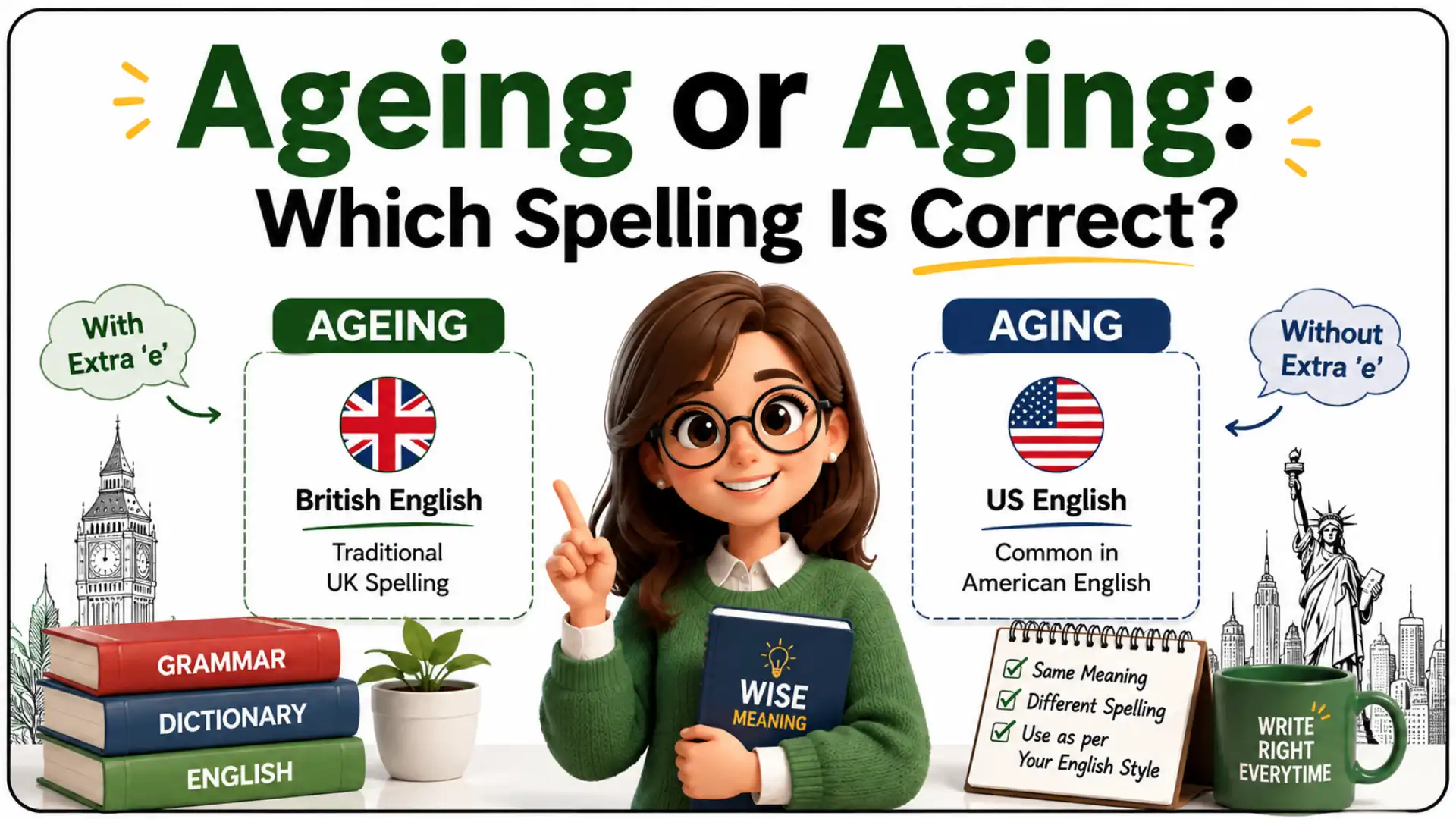
If you have wondered whether ageing or aging is the correct spelling, you are not alone. Both “aging” and “ageing” are correct, but English speakers use them differently depending on the variety of English they follow. Aging is the standard spelling in American English, while ageing is more common in British English. Both words describe the same process of becoming older, so the difference is mainly a matter of spelling rather than meaning.
The main difference between aging vs. ageing can become important in essays, websites, academic writing, and professional communication. In this guide, you will learn when to use aging or ageing, why one spelling includes an extra e, how the words work grammatically, and which spelling you should choose. You will also see clear examples of aging and ageing in sentences, common expressions, and simple rules that help you use the correct spelling confidently.
Quick Answer
Both “aging” and “ageing” are correct spellings. The main difference is the type of English you use. Aging is the standard spelling in American English, while ageing is more common in British English. Both words have the same basic meaning: the process of becoming older.
They also generally have the same pronunciation. If you are writing for US readers, choose aging. If your audience follows UK English, choose ageing. The most important rule is to pick one spelling style and use it consistently throughout your writing.
TL;DR
- 🇺🇸 Aging = standard American English spelling.
- 🇬🇧 Ageing = standard British English spelling.
- ✅ Both spellings are correct.
- 📖 Both words have the same basic meaning.
- 🔊 They are generally pronounced the same.
- ✍️ Use aging for American English writing.
- 📝 Use ageing for British English writing.
- 🎯 In academic or professional writing, follow the required style guide.
- ⚠️ Avoid switching between aging and ageing randomly in the same article.
You Might Also Like That: Cancellation vs Cancelation
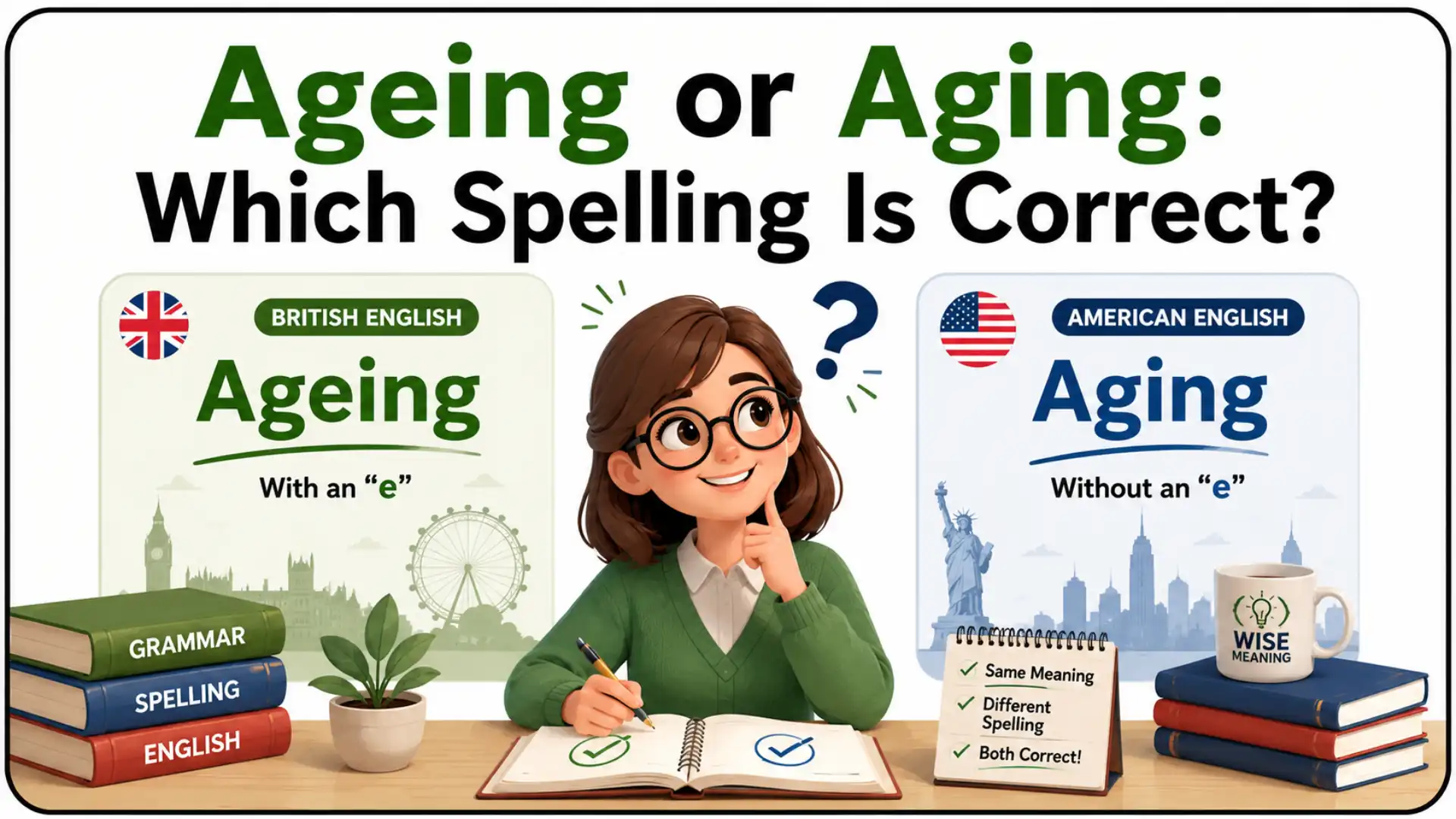
Ageing or Aging: Which Spelling Is Correct?
Both aging and ageing are correct English spellings. The main difference comes from regional spelling rules. Aging is the standard form in American English, while ageing is the usual form in British English.
Both words mean the same thing: becoming older or showing the effects of growing older. You should not treat one as a spelling mistake. Instead, choose the form that matches your audience and writing style. If you write for American readers, use aging. For British readers, use ageing. 🇺🇸🇬🇧
Aging vs. Ageing: Quick Comparison
The difference between aging vs. ageing becomes simple when you compare their main features. Both forms come from the verb age, and both work in similar sentences. The spelling changes according to the variety of English you use.
Aging appears more often in American English, while ageing appears more often in British English. Their meaning and normal pronunciation remain the same. This quick table makes the difference easy to remember. 👇
| Feature | Aging | Ageing |
| English variety | 🇺🇸 American English | 🇬🇧 British English |
| Meaning | Becoming older | Becoming older |
| Spelling | Standard US form | Standard UK form |
| Pronunciation | Generally the same | Generally the same |
| Correct spelling? | ✅ Yes | ✅ Yes |
| Main difference | Regional spelling | Regional spelling |
Why Are Aging and Ageing Spelled Differently?
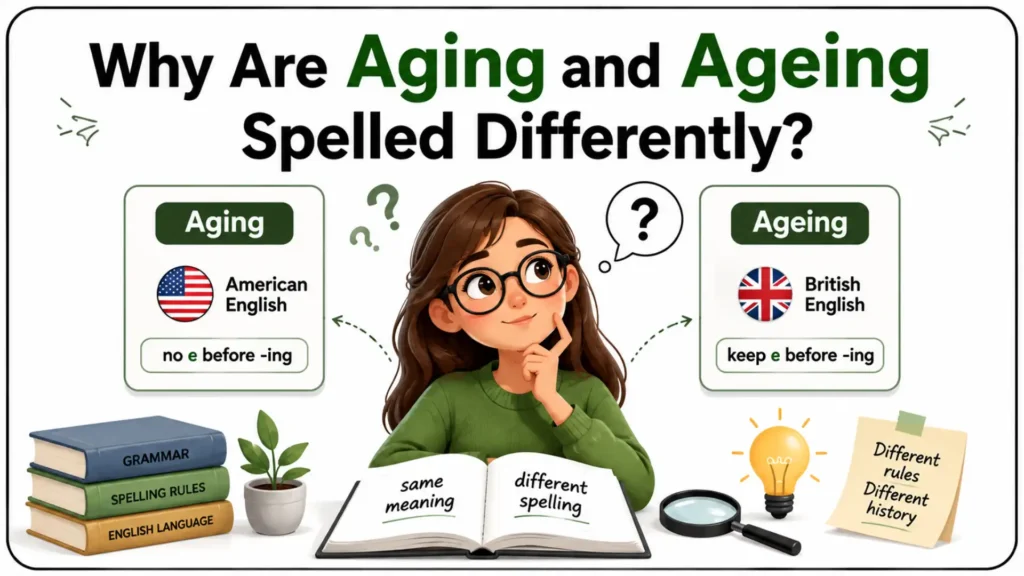
The difference comes from English spelling conventions that developed differently in Britain and the United States. When the verb age takes -ing, British English commonly keeps the final e, producing ageing. American English commonly uses aging instead. This difference does not create a new meaning.
It simply reflects two accepted spelling systems. You can see similar differences between British and American English in words such as colour/color and centre/center. Therefore, the spelling of aging or ageing mainly tells readers which English variety your writing follows.
You Might Also Like That: NS Mean in Text
Aging in American English
Aging is the standard spelling in American English. You will commonly see it in US newspapers, websites, books, academic writing, and everyday communication. Common expressions include aging population, aging process, healthy aging, and anti-aging. For example, an American writer might say, “The country has an aging population.”
If your audience mainly lives in the United States, aging will usually look more natural to them. The key rule is simple: when you choose American English, keep your spelling consistent throughout the entire article or document. 🇺🇸
Ageing in British English
Ageing is the standard spelling in British English and appears frequently in UK publications, websites, books, and formal writing. British writers commonly use phrases such as ageing population, ageing process, healthy ageing, and anti-ageing. For example, a British writer may write, “The country has an ageing population.”
The meaning remains exactly the same as the American form aging. If your audience follows British English, choose ageing and use it consistently. This approach also helps your writing match the spelling style used by your target publication or readers. 🇬🇧
Does Aging or Ageing Have a Different Meaning?
No. Aging and ageing generally have the same meaning. Both describe the process of becoming older or developing characteristics linked with age. The difference between them comes mainly from spelling, not meaning. For example, “aging population” and “ageing population” describe the same idea.
Likewise, aging process and ageing process refer to the same process. This point often causes confusion because the two forms look different. Remember that the spelling changes with the English variety, while the basic definition stays the same. ✅
Aging and Ageing as Parts of Speech
The words aging and ageing can perform different grammatical roles. They can act as a present participle, a gerund, or an adjective, depending on the sentence. For example, “The population is aging” uses the word as part of a verb phrase. In “Aging can affect the body,” it works as a gerund. In “an aging population,” it works as an adjective. British English uses the same patterns with ageing. Understanding these roles helps you use both spellings naturally in everyday, academic, and professional writing.
Aging vs. Ageing Pronunciation
Although aging and ageing have different spellings, they generally have the same pronunciation. The extra e in ageing does not normally create a different sound. This makes the distinction especially useful for English learners because they can focus on the spelling rather than learning two separate pronunciations.
When speaking, listeners usually understand either form without confusion. When writing, however, you should choose the spelling that matches your preferred English variety. Therefore, aging pronunciation and ageing pronunciation are normally the same even though the written forms look different. 🔊
Aging vs. Ageing Examples
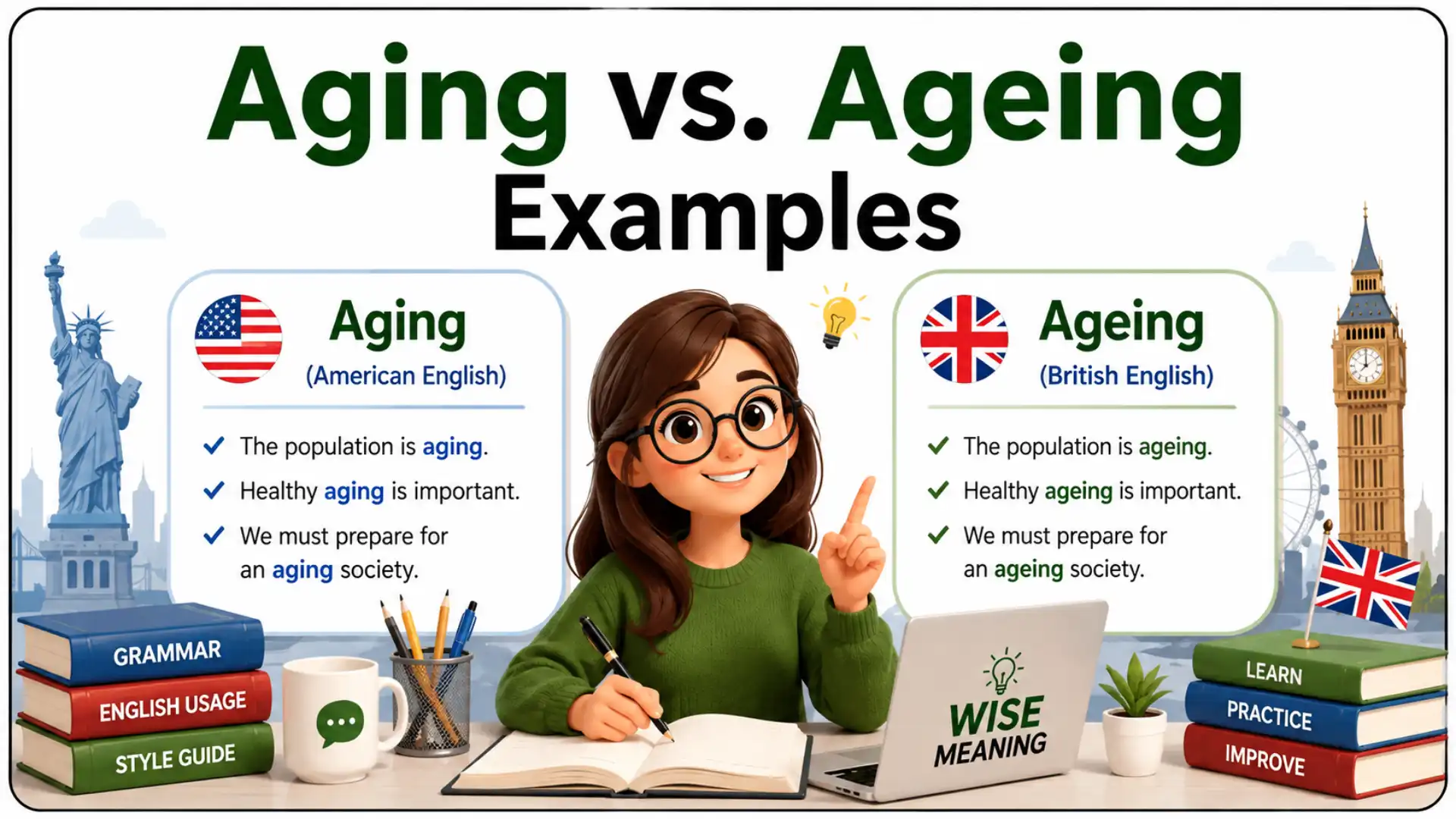
Seeing both forms in real sentences makes the difference much easier to understand. The examples below show how aging and ageing work in everyday and formal writing. Notice that the sentence meaning stays the same when you change the regional spelling.
You Might Also Like That: What Does Count Your Days Mean
Examples With Aging
- The country has an aging population.
- Regular exercise can support healthy aging.
- The company needs to replace its aging equipment.
- Scientists continue to study the aging process.
- She wrote an article about aging gracefully.
These examples follow American English spelling. 🇺🇸
Examples With Ageing
- The country has an ageing population.
- Regular exercise can support healthy ageing.
- The company needs to replace its ageing equipment.
- Scientists continue to study the ageing process.
- She wrote an article about ageing gracefully.
These examples follow British English spelling. 🇬🇧
Common Expressions: Aging vs. Ageing
Many common phrases use aging or ageing, and the same British-American spelling pattern applies. For example, American English normally uses aging process, aging population, healthy aging, and anti-aging.
British English commonly uses ageing process, ageing population, healthy ageing, and anti-ageing. The meaning remains unchanged. If you write an article for a particular audience, keep these compound forms consistent with the spelling style you have selected. This small detail can make your writing look more polished and professional. ✍️
| American English 🇺🇸 | British English 🇬🇧 |
| aging process | ageing process |
| aging population | ageing population |
| healthy aging | healthy ageing |
| anti-aging | anti-ageing |
| aging gracefully | ageing gracefully |
Is “Ageing” More Correct Than “Aging”?
No spelling is universally more correct. Both ageing and aging are accepted forms, but they belong to different regional spelling preferences. British English generally prefers ageing, while American English generally prefers aging. Calling either form “wrong” without considering the English variety can create confusion.
The better approach is to ask which audience you are writing for. If a UK publication asks for British English, choose ageing. If a US publication expects American English, choose aging. Your choice should follow the expected style.
Which Spelling Should You Use?
Choose the spelling that matches your target audience. If you write for readers in the United States, aging is usually the best choice. If you write for readers in the United Kingdom, ageing is usually more suitable.
For academic or professional work, check the required style guide before making your final choice. If you write for an international audience, either form can work, but consistency matters most. Once you choose aging or ageing, use that spelling throughout your article. This simple approach keeps your writing clear and professional. 🎯
Should You Mix Aging and Ageing in the Same Article?
You generally should not mix aging and ageing randomly in the same article. Although both forms are correct, switching between American and British spelling can make your writing look inconsistent. For example, using aging population in one paragraph and ageing population in another may confuse readers about your chosen English style.
Choose one variety before you start writing and follow it throughout the article. You can mention the alternative spelling when explaining the difference, but your main writing should follow one consistent style. This rule applies to websites, essays, reports, and professional documents.
Common Mistakes When Using Aging and Ageing
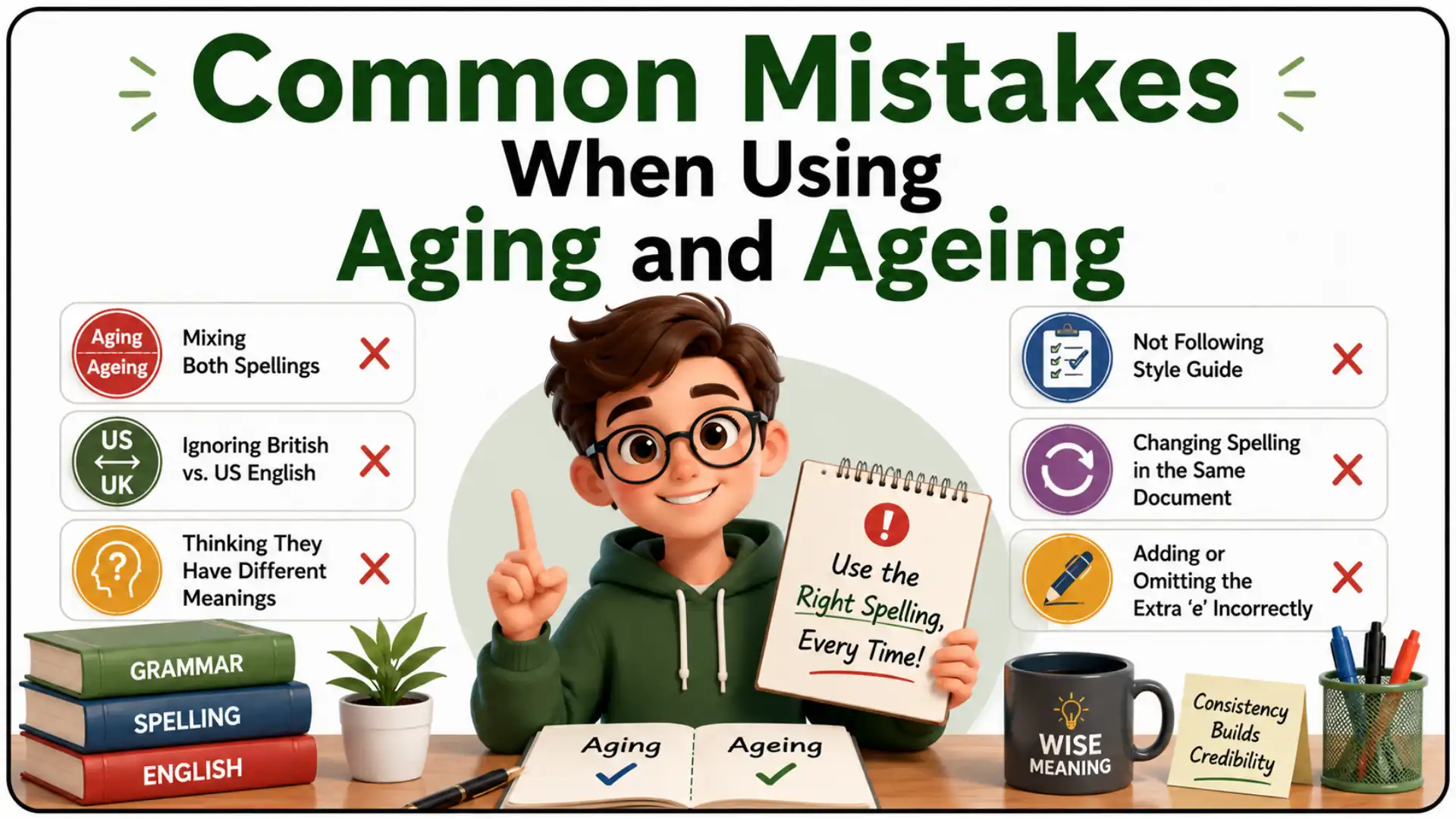
Writers often make a few simple mistakes when dealing with aging vs. ageing. One common mistake involves saying that one spelling is always wrong. Another involves mixing British and American spelling throughout the same document.
You Might Also Like That: Synonyms for This Shows
Some writers also assume that the two forms have different meanings or different pronunciations. They do not normally have these differences. A final mistake involves ignoring the preferred style of a publication or school. ✅ To avoid these problems, identify your audience, choose aging or ageing, and keep the spelling consistent from beginning to end.
Aging or Ageing in Academic and Professional Writing
Academic and professional writers should choose their spelling carefully because different institutions and publications may follow different English styles. If your university, journal, employer, or client uses American English, use aging. If it follows British English, use ageing.
Always check the relevant style guide when one exists. Consistency matters more than choosing one form as universally correct. For example, an American academic paper can use aging population, while a British report can use ageing population. Both forms work correctly when they match the required writing style.
Quick Reference: Aging vs. Ageing
If you need a quick answer, remember this simple rule: aging is generally the American English spelling, while ageing is generally the British English spelling. Both forms describe becoming older and normally have the same pronunciation. Neither spelling is automatically better. Your audience and writing style should guide your choice. This table gives you the essential information at a glance. 📌
| Question | Answer |
| Are both correct? | ✅ Yes |
| US spelling? | 🇺🇸 Aging |
| UK spelling? | 🇬🇧 Ageing |
| Different meanings? | ❌ Generally no |
| Different pronunciation? | ❌ Generally no |
| Which should I use? | Match your English variety |
| Can both appear in English? | ✅ Yes |
Frequently Asked Questions
Is aging or ageing correct?
Both are correct. Aging is standard in American English, while ageing is standard in British English.
What is the difference between aging and ageing?
The main difference is spelling, not meaning. Both describe the process of becoming older.
Is aging American or British English?
Aging is the usual American English spelling.
Is ageing British English?
Yes. Ageing is the usual British English spelling.
Why does ageing have an extra e?
British English commonly keeps the final e when forming ageing, while American English commonly uses aging.
Which spelling should I use in an essay?
Follow the English variety required by your school, university, teacher, publisher, or style guide.
Are aging and ageing pronounced the same?
They are generally pronounced the same, even though their spellings differ.
Conclusion
So, ageing or aging? The answer is simple: both spellings are correct. Use aging when you follow American English and ageing when you follow British English. The two forms have the same basic meaning and normally the same pronunciation. The most important rule is consistency.
Choose the spelling that fits your readers, publication, school, or style guide, and use it throughout your writing. Once you understand this small British-American spelling difference, you can confidently use aging and ageing in essays, articles, websites, and professional communication. ✨