
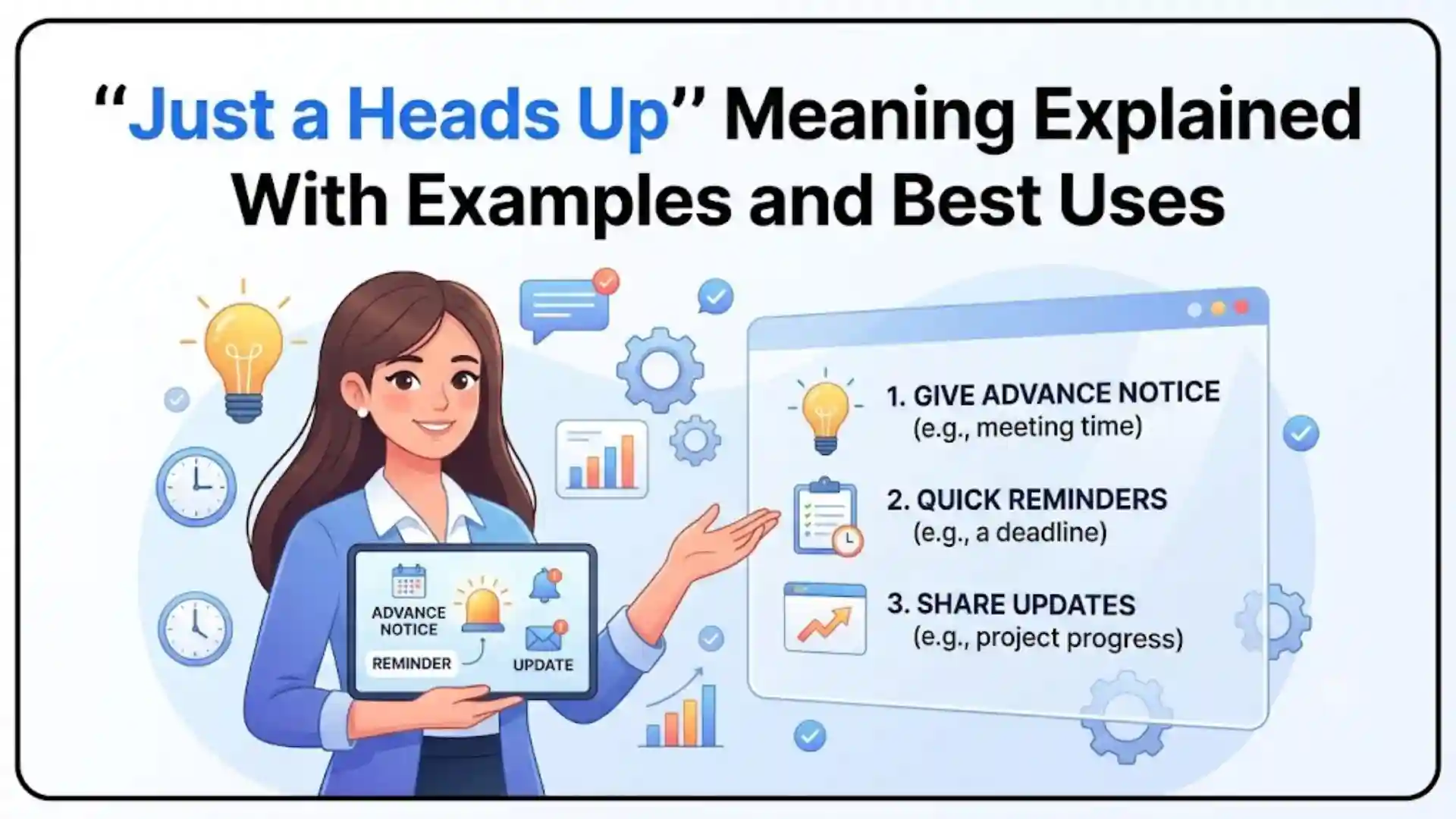
Have you ever received a message that begins with “Just a heads up” and wondered exactly what it means? This common English expression appears in text messages, emails, workplace communication, and everyday conversations. Whether a friend is warning you about traffic or a coworker is reminding you about a meeting, the phrase is used to give someone advance notice before sharing important information. Learning the just a heads up meaning helps you understand the speaker’s intention and use the expression naturally in your own conversations.
If you’re searching for what just a heads up means, you’re in the right place. This guide explains the phrase in simple English, shows how to use just a heads up correctly, and includes real-life examples, professional alternatives, and common mistakes to avoid. You’ll also discover whether just a heads up is professional, if it is formal or informal, and how native English speakers use it in business communication, emails, and casual conversations. By the end, you’ll feel confident using this friendly idiomatic expression in the right situation.
Quick Answer:
“Just a heads up” means giving someone advance notice before sharing important information, a reminder, or a warning. It is a friendly and polite expression commonly used in text messages, emails, workplace communication, and everyday conversations. People use it to prepare someone for what is coming instead of surprising them.
Example: “Just a heads up, the meeting has been moved to 3 PM.”
In this example, the speaker is simply informing the listener about the schedule change in advance so they have time to prepare.
TL;DR
* **Meaning:** A friendly, polite idiom used to give someone advance notice, a reminder, or a quick update so they aren’t caught off guard.
* **Formality:** **Informal to Semi-Formal.** Perfect for casual chats, texts, Slack, and routine internal workplace emails.
* **When to Avoid:** Highly formal documents, legal contracts, or official client notices (use *”Please note”* or *”Please be advised”* instead.
**Key Sentence Pattern:** *”Just a heads up, [information].”* (e.g., *”Just a heads up, the meeting was moved to 3 PM.”*
**How to Reply:** Keep it simple—*”Thanks for the heads up!”* or *”Got it, thanks!”
You Might Also Like That: Trash vs Garbage
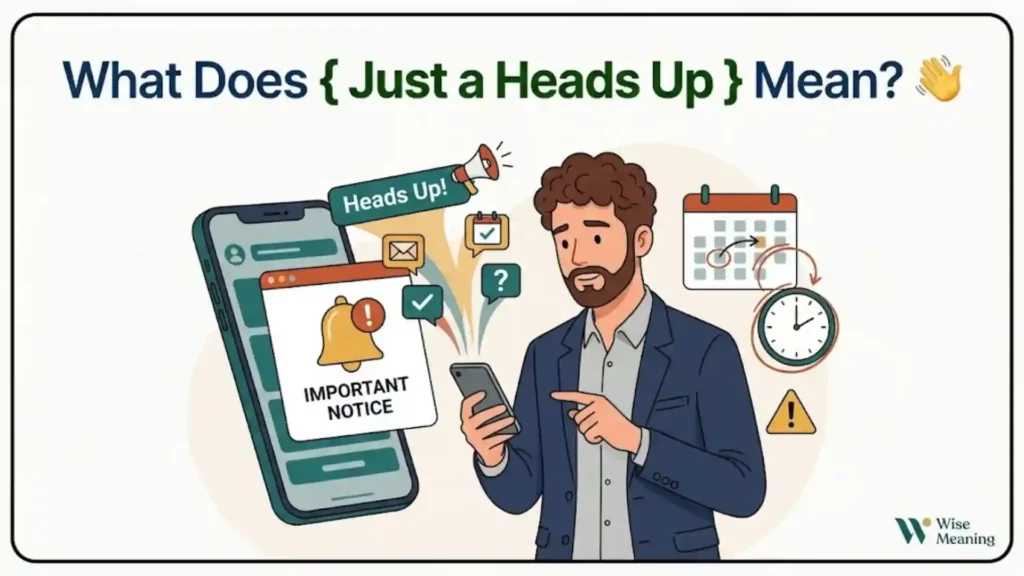
What Does “Just a Heads Up” Mean? 👋
“Just a heads up” is simple. It means giving someone advance notice before sharing information, a reminder, or a warning. Instead of surprising someone, you let them know what is coming so they can prepare. This friendly English expression is common in spoken English, text messages, and workplace communication. If you have ever wondered what just a heads up means, think of it as saying, “I wanted to let you know in advance.“
Unlike a serious warning, just a heads up usually has a friendly and helpful tone. People use it to share updates, schedule changes, or useful information without sounding harsh. Because of its natural and polite style, it is one of the most common everyday English expressions used by native English speakers.
Is “Just a Heads Up” an Idiom? 💬
Yes, “just a heads up” is an idiom. An idiom is a phrase whose meaning cannot always be understood by translating each word separately. The words “heads” and “up” do not literally mean lifting your head. Instead, together they create an expression that means giving someone advance notice or preparing them for something.
This idiomatic expression has become a natural part of conversational English. Native speakers use it because it sounds friendly, polite, and easy to understand. Learning heads up meaning as an idiom will help you recognize it in conversations, emails, and business communication.
When Should You Use “Just a Heads Up”? ⏰
You can use just a heads up whenever you want to prepare someone before sharing important information. It works well when giving a friendly reminder, mentioning a change in plans, or letting someone know about something they should expect. This phrase helps your message sound thoughtful instead of surprising.
Some common situations include reminding a coworker about a meeting, informing a friend about traffic, or telling a family member about a schedule change. In each case, just a heads up shows consideration and respect. Knowing when you should use just a heads up helps you communicate more naturally in everyday and professional situations.
Is “Just a Heads Up” Formal or Informal? 📋
Just a heads up is generally considered an informal expression, but it also fits many professional situations. It sounds friendly and conversational, making it a great choice for coworkers, teammates, and managers. Many people also use just a heads up in an email when sending reminders or updates within their organization.
However, avoid using it in highly formal documents such as legal contracts, official notices, or academic papers. In those cases, expressions like “Please note” or “Please be advised” are more suitable. Understanding whether just a heads up is formal or informal helps you choose the right words for every situation.
Is “Just a Heads Up” Polite? 😊
Yes, just a heads up is usually seen as a polite expression because it prepares someone instead of catching them off guard. It shows that you care enough to share information early, giving the other person time to react or plan ahead. That is why many people ask, “Is just a heads up polite?”
The phrase sounds warm, respectful, and helpful when used correctly. However, your tone and the information you share also matter. If you deliver bad news politely and explain it clearly, just a heads up makes the conversation feel more considerate and friendly.
How to Use “Just a Heads Up” Correctly ✍️
Using just a heads up is easy. Place it at the beginning of your sentence before sharing the important information. This tells the listener that useful information is coming. It works well in emails, text messages, and face-to-face conversations.
Here are some common sentence patterns:
| ✅ Pattern | 📌 Example |
| Just a heads up, + information | Just a heads up, the meeting starts at 9 AM. |
| Just wanted to give you a heads up that… | Just wanted to give you a heads up that the deadline has changed. |
| Here’s a heads up… | Here’s a heads up—we may finish later today. |
These examples show how to use just a heads up naturally in everyday communication.
Examples of “Just a Heads Up” 📝
In Text Messages 📱
Text messages often include just a heads up because it sounds quick and friendly. It prepares the other person without making the message feel too serious.
Examples:
- Just a heads up, I’ll be about 10 minutes late.
- Just a heads up, the restaurant is very busy tonight.
In Everyday Conversations 🗣️
Friends and family use this phrase to share helpful information before something happens.
Examples:
- Just a heads up, Dad will arrive earlier than expected.
- Just a heads up, it might rain this afternoon.
In Workplace Conversations 💼
In the office, this phrase keeps coworkers informed about projects, meetings, or deadlines.
Examples:
- Just a heads up, the client changed tomorrow’s schedule.
- Just a heads up, the report is ready for review.
In Business Emails 📧
Many professionals use just a heads up in an email to sound friendly while sharing updates.
Examples:
- Just a heads up, your presentation has been moved to Friday.
- Just a heads up, I’ll send the final report by the end of the day.
You Might Also Like That: Trash vs Garbage
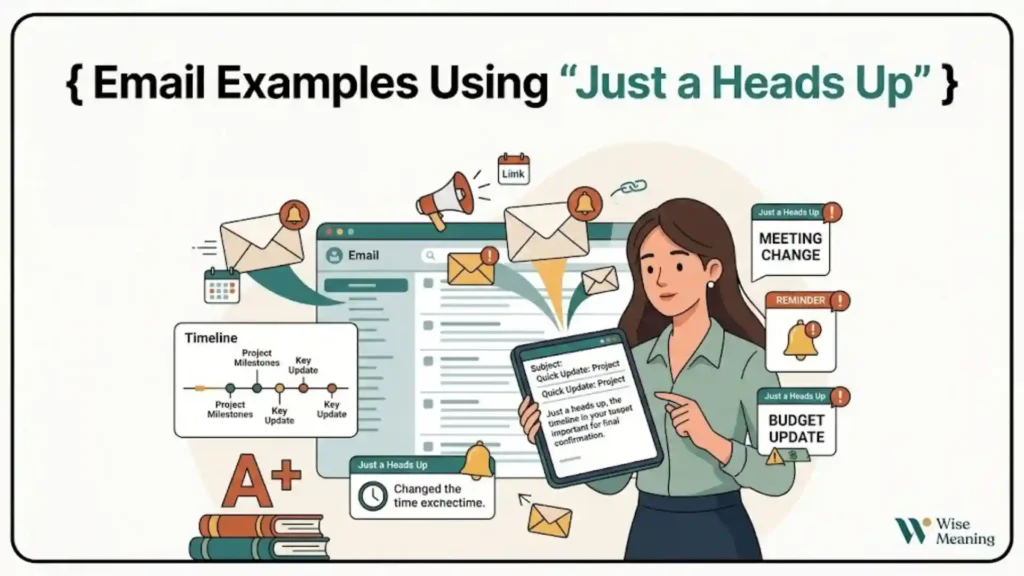
Email Examples Using “Just a Heads Up” 📧
Using just a heads up in an email helps your message sound friendly, clear, and professional. It works best when you want to share an update, remind someone about an event, or give advance notice. However, if you are writing a very formal email, choose alternatives like “Please note” or “Please be advised.” Below are examples for common workplace situations.
Client Email 🤝
Just a heads up, your order will be delivered one day later than expected due to weather conditions. Thank you for your understanding.
Team Update 👥
Just a heads up, our weekly meeting has been moved to 2 PM tomorrow. Please update your calendar.
Meeting Reminder 📅
Just a heads up, don’t forget to bring the project documents for today’s meeting.
Deadline Notification ⏳
Just a heads up, the final deadline for submitting your report is Friday at 5 PM.
Professional Alternatives to “Just a Heads Up” 💼
Although just a heads up is common in business communication, there are times when a more formal phrase is a better choice. Using the right expression depends on your audience and the situation. If you are writing to clients, senior managers, or in official documents, these alternatives can make your message sound more polished while keeping the same meaning.
| ✨ Alternative | ✅ Best Used For |
| Please note | Formal emails and notices |
| Kindly note | Professional communication |
| Please be advised | Official announcements |
| For your information (FYI) | Quick workplace updates |
| I wanted to let you know | Friendly business emails |
| Keep in mind | Helpful reminders |
| As a reminder | Meetings and deadlines |
These phrases are excellent professional alternatives to just a heads up and help you communicate confidently.
Casual Alternatives to “Just a Heads Up” 😊
In everyday conversations, people often use phrases similar to just a heads up. These casual alternatives sound natural and are perfect when chatting with friends, classmates, or family members. They all give someone advance notice without sounding too formal.
Some popular alternatives include:
- FYI
- Just so you know
- By the way
- Quick note
- Thought you’d like to know
- Just letting you know
- Wanted to mention
Each phrase has a slightly different tone, but they all help you share information politely. Choosing the right one makes your spoken English feel more natural.
“Just a Heads Up” vs. Similar Expressions 🔍
Many people confuse just a heads up with other common English phrases. While they are similar, each has a different purpose and tone. Understanding these differences helps you choose the best expression for every situation.
| 📌 Phrase | 🎯 Meaning | 👍 Best Used For |
| Just a Heads Up | Giving advance notice | Friendly reminders and updates |
| FYI | Sharing information | Quick emails and messages |
| Just So You Know | Informing someone | Casual conversations |
| Friendly Reminder | Reminding politely | Deadlines and appointments |
| Please Note | Drawing attention | Formal emails and notices |
Knowing the difference between these expressions improves your English communication and helps you sound more natural.
Common Mistakes to Avoid ❌
Although just a heads up is easy to use, people sometimes make mistakes. One common error is using it in legal documents, contracts, or highly formal writing where a more professional phrase is expected. Another mistake is saying just a heads up without explaining the important information that follows.
Some people also overuse the phrase in every email or conversation. Instead, use it only when you are giving advance notice or preparing someone for upcoming information. Keeping your message clear and meaningful will make your communication stronger and more effective.
How to Respond to “Just a Heads Up” 💬
If someone gives you just a heads up, a simple and polite reply is usually enough. Your response should show that you understand the information and appreciate the update. The exact reply depends on the situation and your relationship with the sender.
Here are a few natural responses:
- Thanks for the heads up!
- I appreciate the heads up.
- Good to know. Thanks!
- Thanks for letting me know.
- I’ll keep that in mind.
- Got it. Thank you!
These replies sound friendly, professional, and natural in both text messages and workplace communication.
Common Situations Where People Use It 🌍
The phrase just a heads up appears in many everyday situations because it helps people share useful information politely. It is especially common in business communication, school, and personal conversations where giving advance notice is helpful.
People often use it for:
- 📅 Meeting reminders
- ⏰ Project deadlines
- 🚗 Travel or traffic updates
- 🏫 School announcements
- 👨👩👧 Family plans
- 🎉 Event schedule changes
- 💻 Workplace updates
- 📦 Delivery notifications
Origin of the Phrase 🕰️
The exact origin of the phrase “heads up” is not completely certain, but it has been part of English for many years. It was first used as a warning to tell someone to look up or pay attention because something might be coming toward them. Over time, the phrase developed into an idiomatic expression that means giving someone advance notice instead of a physical warning.
Today, just a heads up is widely used in American English and is also understood by many English speakers around the world. Whether in business communication, emails, or everyday conversations, it now means “I want to let you know before it happens.”
Why Native English Speakers Use It So Often 🌎
Native English speakers use just a heads up because it sounds friendly, natural, and considerate. Instead of giving information suddenly, they prepare the listener first. This small phrase makes conversations feel smoother and shows respect for the other person’s time and expectations.
In workplace communication, it helps coworkers stay informed about meetings, deadlines, or project updates. In personal conversations, it is used for reminders, travel plans, or unexpected changes. Because it is short, polite, and easy to understand, just a heads up has become one of the most common everyday English expressions used by native speakers.
Cultural Differences in Using “Just a Heads Up” 🌍
Although just a heads up is common in many English-speaking countries, its popularity varies by region. In the United States, people use it frequently in both casual and professional conversations. It is also common in workplaces where a friendly communication style is encouraged.
In some countries, especially in more formal business environments, people may prefer phrases like “Please note,” “Kindly note,” or “Please be advised.” Understanding these cultural differences helps you choose the right expression for your audience. When in doubt, match your language to the level of formality expected in the conversation.

You Might Also Like That: Trash vs Garbage
Frequently Asked Questions ❓
What does “just a heads up” mean?
Just a heads up means giving someone advance notice before sharing important information, a reminder, or a warning. It prepares the listener so they are not surprised.
Is “just a heads up” professional?
Yes. It is suitable for many workplace communication situations and internal emails. However, for highly formal documents or official notices, phrases like “Please note” or “Please be advised” are usually better choices.
Is “just a heads up” formal or informal?
It is mainly an informal expression, but it is widely accepted in modern business communication because it sounds friendly and respectful.
Can I use “just a heads up” in an email?
Yes. Many professionals use just a heads up in an email to share reminders, schedule changes, meeting updates, or deadline notifications in a polite and conversational way.
What are some alternatives to “just a heads up”?
Good alternatives include “Please note,” “FYI,” “Just so you know,” “Kindly note,” “As a reminder,” and “I wanted to let you know.” Choose the phrase based on how formal your message needs to be.
How do you respond to “just a heads up”?
Simple replies work best. You can say:
- Thanks for the heads up!
- I appreciate the heads up.
- Good to know.
- Thanks for letting me know.
- I’ll keep that in mind.
Conclusion 🎯
Now you know the complete just a heads up meaning and how to use this common English expression with confidence. Whether you are sending a text message, writing a business email, or talking with friends, just a heads up is a polite way to give someone advance notice before sharing important information. It helps your communication sound thoughtful, friendly, and natural.
Remember to use just a heads up in the right context, especially in workplace communication and everyday conversations. If you need a more formal option, choose alternatives like “Please note” or “Please be advised.” By understanding how to use just a heads up, when it is appropriate, and what phrases are similar, you can communicate more clearly and confidently in both personal and professional settings.