
If you’ve seen “ISTG” in a text message, chat, or social media post, you may wonder what this texting abbreviation means. ISTG means “I Swear To God.” People use this common piece of internet slang to add emphasis, show that they are serious, express frustration, or make a strong statement. The exact ISTG meaning in text can change depending on the situation and the person’s tone.
In casual conversations, ISTG can sound serious, funny, annoyed, surprised, or even playful. You may see it in texts, DMs, group chats, and social media comments. Understanding the context around the message can help you know what the sender really means. In this guide, we’ll explore what ISTG means in text, how people use it, and what its tone can communicate.
Quick Answer: What Does ISTG Mean in Text?
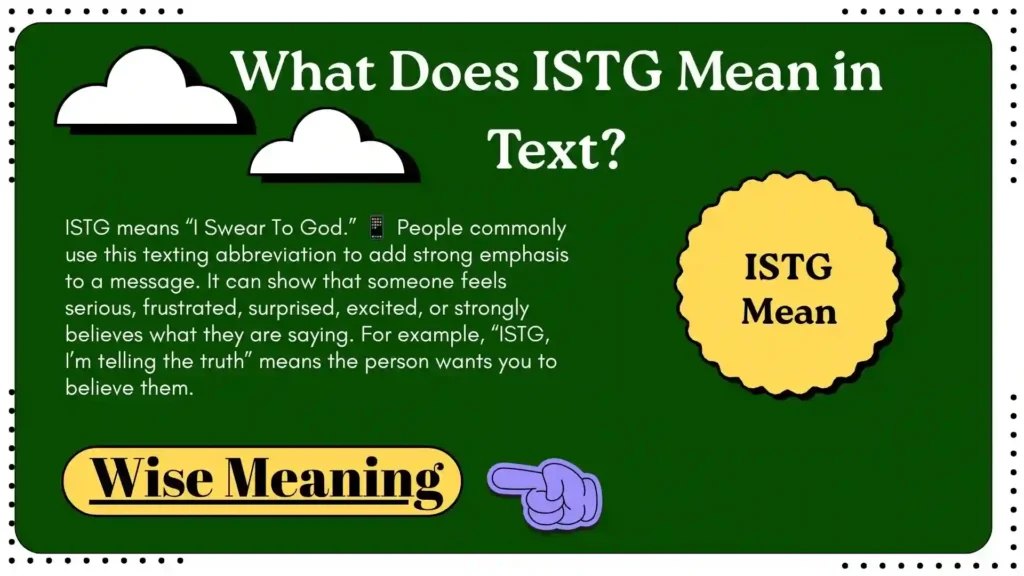
ISTG means “I Swear To God.” 📱 People commonly use this texting abbreviation to add strong emphasis to a message. It can show that someone feels serious, frustrated, surprised, excited, or strongly believes what they are saying. For example, “ISTG, I’m telling the truth” means the person wants you to believe them.
The ISTG meaning in text depends on the situation. Someone might use it seriously, while another person may use it as a joke with friends. You can find ISTG in texting, DMs, group chats, and social media posts. 💬
TL;DR 📌
- ISTG means “I Swear To God.” 🙏
- It is a common texting abbreviation and internet slang.
- People use ISTG to show seriousness, honesty, frustration, surprise, excitement, or emphasis.
- The exact ISTG meaning in text depends on the context and tone.
- ISTG is informal, so it works best in texts, DMs, group chats, and social media.
- It is generally not suitable for formal emails, academic writing, or professional communication.
- ISTG and istg usually have the same meaning; capitalization does not change the definition.
- ISTG can sometimes express a strong promise, but it does not always mean “I promise.”
- The abbreviation is not automatically rude or offensive, although some people may dislike its religious wording.
- When someone texts ISTG, check the surrounding words and emojis to understand whether they are serious, frustrated, joking, or excited. 💬
You Might Also Like That: What Does ISK Mean in Text
What Does ISTG Stand For?
ISTG stands for “I Swear To God.” The letters come from the first letters of the words in the phrase: I + Swear + To + God. It works as an ISTG acronym or texting abbreviation that helps people communicate quickly.
The ISTG full form has a strong tone, but people often use it casually online. When someone writes “ISTG,” they usually want to make their statement sound more serious or emotional. ⭐ The exact feeling depends on the rest of the message and the relationship between the people talking.
What Does ISTG Mean in Simple Words?
In simple words, ISTG means “I’m very serious about what I’m saying” or “I strongly mean this.” The phrase can also work like “I promise” when someone wants to make a strong commitment. However, ISTG does not always mean a promise.
For example, “ISTG this movie is amazing!” shows excitement, not a literal promise. 😄 On the other hand, “ISTG, I didn’t take your phone” shows strong insistence. This is why the ISTG slang meaning can change with context, tone, and the words around it.
How Is ISTG Used in Texting?
People use ISTG in text messages for several reasons. They may want to emphasize a point, show honesty, express frustration, or make a strong promise. Friends may also use it casually when reacting to something funny or surprising. 💬
For example, someone might write, “ISTG, you make me laugh every day 😂” to sound playful. Another person could say, “ISTG, stop doing that” to show annoyance. These ISTG examples show why the surrounding words matter. In casual messaging, ISTG helps people add emotion and intensity without writing a long explanation.
ISTG Meaning Depends on Context and Tone
The ISTG meaning can change based on the sender’s tone and situation. A serious message may use ISTG to show honesty, while a funny message may use it for dramatic effect. 😮 Context helps you understand whether the sender feels serious, frustrated, surprised, excited, or playful.
For example, “ISTG, I’m telling the truth” sounds serious, while “ISTG 😂 this is hilarious” sounds playful. “ISTG, this traffic is terrible” shows frustration. So, what does ISTG mean when someone texts you? Look at the complete message before deciding what emotion the sender wants to express.
Serious or Sincere
“ISTG, I’m telling the truth.” Here, ISTG shows seriousness and sincerity. The sender wants the other person to believe them and understand that they are not joking.
You Might Also Like That: MK Mean in Text
Frustrated or Annoyed
“ISTG, this is getting so annoying.” In this example, ISTG adds frustration or annoyance. The sender uses it to make their emotional reaction stronger.
Surprised or Shocked
“ISTG, I can’t believe that happened!” Here, ISTG shows surprise or disbelief. The sender feels strongly about an unexpected event.
Excited
“ISTG, this is the best concert ever!” In this case, ISTG adds excitement and enthusiasm. It makes the statement sound more energetic.
Playful
“ISTG 😂 you always do this.” The emoji and context make the phrase feel playful rather than angry. Friends often use ISTG this way in casual chats.
Promise
“ISTG, I’ll never do that again.” Here, ISTG can communicate a strong promise or commitment. The sender wants to show that they mean what they say.
ISTG Examples in Text Messages
Seeing ISTG examples in text can make the meaning easier to understand. The same abbreviation can communicate different emotions depending on the sentence. 📱 For example, “ISTG, I didn’t say that” shows insistence, while “ISTG this food is incredible” shows excitement.
You might also see ISTG in group chats, DMs, or casual conversations. A message such as “ISTG 😂 you guys are crazy” can sound humorous, while “ISTG, please stop” can sound annoyed. These examples show why you should always consider the context and tone before interpreting ISTG.
Is ISTG Rude or Offensive?
ISTG is not automatically rude or offensive. Its tone depends on how someone uses it. Friends may use ISTG jokingly, while someone in an argument may use it to sound serious or frustrated. ⚠️ The phrase can feel stronger because it contains the words “I Swear To God.”
Some people may also avoid ISTG because they feel uncomfortable with religious wording. For that reason, consider your audience before using it. ISTG is usually fine in casual texting, but it may not suit every conversation. If you are unsure, choose a simpler phrase such as “I’m serious” or “I promise.”
Is ISTG Formal or Informal?
ISTG is an informal texting abbreviation. People commonly use it with friends, family, social-media followers, and online communities. 💬 It works well in casual chats, DMs, group messages, and social media, but it usually does not belong in formal writing.
You Might Also Like That: Cart vs Kart
Avoid ISTG in academic essays, professional reports, formal emails, job applications, and business communication. Instead, use phrases such as “I assure you,” “I’m serious,” “I can confirm,” or “I sincerely mean this.” Choosing the right language helps you match your message to the audience and situation.
Is ISTG a Religious Expression?
The full phrase “I Swear To God” has religious wording, but people often use ISTG as a casual expression rather than as a serious religious statement. Dictionary-style sources commonly describe its everyday use as a way to express strong feelings such as seriousness, frustration, or surprise.
For example, “ISTG this game is impossible” usually emphasizes frustration rather than making a religious oath. 🙏 Still, people have different views about religious expressions. If you know someone prefers more neutral language, you can avoid ISTG and use “seriously,” “I promise,” or “I’m telling you” instead.
Does ISTG Mean the Same Thing as “I Promise”?
Sometimes, but not always. ISTG can communicate a strong promise when someone says something like, “ISTG I’ll be there tomorrow.” In that situation, the sender wants to show commitment and confidence.
However, ISTG can also express frustration, surprise, excitement, or disbelief. For example, “ISTG this traffic is awful” does not mean “I promise.” 🚗 It simply adds emphasis to the complaint. Therefore, when asking “does ISTG mean I promise?”, the best answer is: it can, but context determines the meaning.
ISTG vs. STG: What’s the Difference?
ISTG means “I Swear To God,” while STG usually means “Swear To God.” Both texting abbreviations communicate a similar idea and can add emphasis or seriousness to a message. 📱
The main difference is the extra “I” in ISTG. For example, “ISTG, I’m telling the truth” directly expresses the speaker’s statement. “STG, that was crazy” has a similar informal feeling. Neither abbreviation works well in formal writing, so save them for casual texting, chats, and social media.
ISTG vs. Other Texting Abbreviations
ISTG belongs to a larger group of texting slang and internet abbreviations. However, related terms do not have the same meaning. Each abbreviation serves a different purpose.
| Abbreviation | Meaning | Common Use |
| ISTG | I Swear To God | Emphasis |
| STG | Swear To God | Emphasis |
| OMG | Oh My God | Surprise |
| TBH | To Be Honest | Honesty |
| FR | For Real | Agreement/emphasis |
| NGL | Not Gonna Lie | Honest opinion |
| SMH | Shaking My Head | Disapproval |
Knowing these differences makes online communication easier to understand. 💡
How Do You Respond to ISTG?
Your response to ISTG should match the sender’s tone and situation. If someone says, “ISTG, I’m telling the truth,” you could reply, “Okay, I believe you.” If they say, “ISTG this movie is amazing!,” you might answer, “Right? 😂”
If someone uses ISTG because they feel frustrated, respond calmly instead of assuming they are angry with you. 💬 You can say, “I understand,” “What happened?” or “I get what you mean.” There is no single correct response because the best reply depends on the message.
ISTG on Social Media and Messaging Apps
You can see ISTG on social media and many messaging platforms. People use it in Instagram DMs, TikTok comments, Snapchat messages, WhatsApp chats, Discord conversations, group chats, and other online spaces. 📱
The basic ISTG meaning does not usually change from one platform to another. What changes is the context. A TikTok comment may use ISTG for humor, while a private message may use it to show seriousness or frustration. Whether you see ISTG in chat, DMs, or social media posts, look at the surrounding words and emojis to understand the intended tone.
You Might Also Like That: TBH Mean in Text
Frequently Asked Questions About ISTG
What does ISTG mean in text?
ISTG means “I Swear To God.” In texting, people use it to show emphasis, seriousness, frustration, surprise, excitement, or a strong promise.
What does ISTG stand for?
ISTG stands for “I Swear To God.”
Is ISTG slang?
Yes. ISTG is informal texting and internet slang commonly used in casual online communication.
Is ISTG rude?
Not always. Its tone depends on the context, wording, and relationship between the people communicating.
Is ISTG a swear word?
It contains the word “swear,” but people commonly use the abbreviation as an informal expression of emphasis.
Is ISTG formal?
No. ISTG is informal and generally does not belong in academic or professional writing.
What does lowercase “istg” mean?
“istg” has the same basic meaning as “ISTG.” Lowercase writing usually reflects casual texting style.
Does ISTG mean “I promise”?
It can express a promise, but it can also show frustration, seriousness, surprise, or excitement.
How do you respond to ISTG?
Read the context first. You can respond with “I believe you,” “Seriously?” “I know!” or another reply that matches the sender’s tone.
Final Thought
ISTG means “I Swear To God,” and people mainly use it in casual texting, chats, DMs, and social media. The phrase can express seriousness, honesty, frustration, annoyance, surprise, disbelief, excitement, or a strong promise. 💬
The most important thing to remember is that context determines the tone. A message with ISTG can sound serious in one conversation and completely playful in another. If you understand the words around it, the punctuation, and even the emojis, you can usually understand what the sender really means. For formal communication, choose clearer and more professional phrases instead.