
Have you ever wondered about the difference between empathy vs sympathy? Although people often use these words interchangeably, they describe two different ways of responding to someone else’s feelings. Empathy means understanding or sharing another person’s emotions and trying to see things from their point of view. Sympathy, on the other hand, means feeling concern, sadness, or care for someone who faces a difficult situation. Understanding sympathy vs empathy can help you communicate more clearly, build stronger relationships, and offer better emotional support when someone needs it.
Knowing the difference between empathy and sympathy can also help you choose the right words in everyday conversations. For example, you might express sympathy when a friend loses a job, but show empathy by listening to their worries and trying to understand how they feel. Both responses have value, and neither is always better than the other. In this guide, you’ll learn what empathy and sympathy mean, explore their key differences, discover real-life examples, and understand when to use each word correctly.
Quick Answer: What Is the Difference Between Empathy and Sympathy? 💡
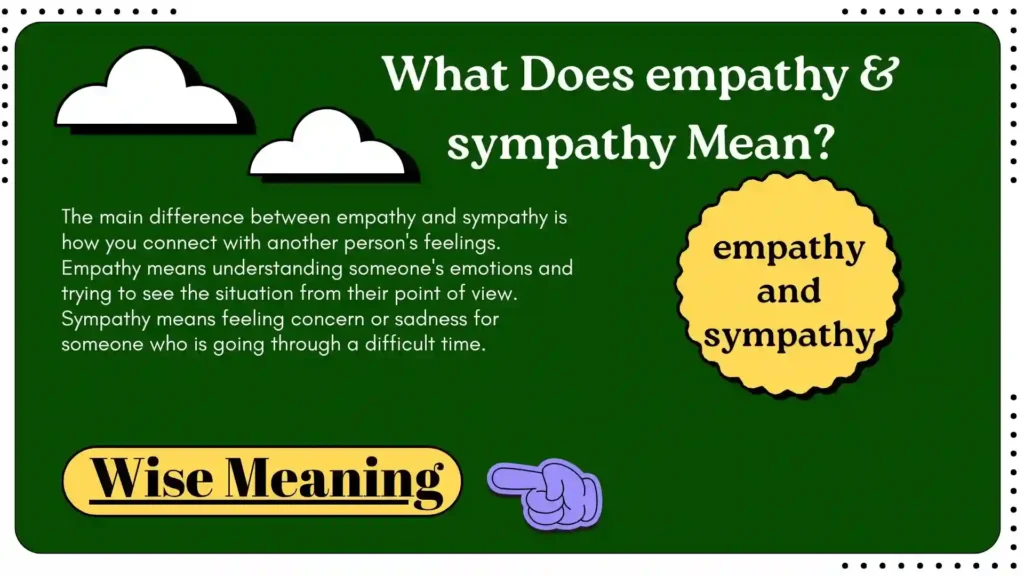
The main difference between empathy and sympathy is how you connect with another person’s feelings. Empathy means understanding someone’s emotions and trying to see the situation from their point of view. Sympathy means feeling concern or sadness for someone who is going through a difficult time.
For example, if your friend loses a job, sympathy means expressing concern about their situation. Empathy means listening to their worries and trying to understand how the experience affects them. ❤️ Both responses can offer comfort, but they express care in different ways.
TL;DR: Empathy vs Sympathy 📝
- 💙 Empathy: Understanding or sharing another person’s feelings.
- 🤗 Sympathy: Feeling concern for someone who faces hardship.
- 👂 Empathy example: “I can understand why you’re feeling upset.”
- 💬 Sympathy example: “I’m sorry you’re going through this.”
- 🌱 Compassion: Caring about someone’s suffering and wanting to help.
- 🤝 Main difference: Empathy focuses on understanding someone’s feelings, while sympathy focuses on concern for their situation.
- ✅ Remember: You can show both empathy and sympathy toward the same person.
You Might Also Like That: ICYMI Meaning
What Does Empathy Mean? 💙
Empathy means understanding another person’s feelings, thoughts, or experiences. It helps you see a situation from their point of view instead of judging it only through your own experience. You do not need to experience the same problem to understand why someone feels sad, worried, or excited.
For example, if your friend feels nervous about a job interview, you can show empathy by listening to their concerns and acknowledging their fears. Phrases such as “I can see why you’re worried” show emotional understanding. Empathy can strengthen relationships, improve communication, and help people feel heard and respected. 🤝
Types of Empathy
People often describe empathy in three main ways:
- 🧠 Cognitive empathy: Understanding another person’s thoughts and perspective.
- ❤️ Emotional empathy: Feeling an emotional response to what someone else experiences.
- 🤗 Compassionate empathy: Understanding someone’s feelings and feeling motivated to help.
These types can work together, but they are not exactly the same. Understanding someone’s emotions does not always mean feeling those emotions yourself. You can also recognize another person’s experience without agreeing with every choice they make.
What Does Sympathy Mean? 💛
Sympathy means feeling concern, sadness, or care for someone who experiences pain, loss, or difficulty. When you express sympathy, you recognize that another person is struggling and want them to know that you care. You do not have to share their feelings or fully understand their experience to show sympathy.
For example, if your coworker loses a loved one, you might say, “I’m so sorry for your loss.” This simple response expresses sympathy and respect. Sympathy can offer comfort during difficult moments, especially when someone needs kindness, support, or condolences rather than advice. 🌷
Common Examples of Sympathy
Here are some natural ways to express sympathy in everyday life:
- 💬 “I’m sorry you’re going through this.”
- 🌷 “My thoughts are with you and your family.”
- 🤝 “That sounds like a difficult situation.”
- 💛 “Please let me know if there’s anything I can do to help.”
These expressions show that you care about someone’s situation. Sympathy does not mean pity or looking down on another person. Genuine sympathy respects their feelings and offers support without making them feel weak or helpless.
Empathy vs Sympathy: Key Differences 📊
Although empathy and sympathy both involve responding to another person’s experience, they place emphasis on different things. Empathy focuses on understanding someone’s feelings or perspective, while sympathy focuses on concern for what they are going through. The distinction is useful in friendships, family relationships, and workplace conversations.
| Feature | Empathy 💙 | Sympathy 💛 |
| Main focus | Understanding feelings | Showing concern |
| Emotional connection | Tries to understand another person’s experience | Recognizes another person’s hardship |
| Common response | “I can understand why you feel that way.” | “I’m sorry this happened to you.” |
| Main purpose | Help someone feel understood | Show care and concern |
| Example | Listening to a friend’s fears | Offering condolences |
A helpful way to remember the difference is “feeling with” versus “feeling for.” This is a simple guide, not a strict rule. Both empathy and sympathy can involve genuine care, and people may express them together in the same conversation. ❤️
Examples of Empathy vs Sympathy in Real Life 🤝
Real-life examples make the difference between empathy and sympathy easier to understand. Both responses can help someone feel supported, but the words you choose may affect how that person feels. The best response often depends on what the person needs at that moment.
For example, when a friend faces a problem, you can express sympathy by showing concern or demonstrate empathy by listening carefully and trying to understand their feelings. You do not need to have experienced the same situation to offer meaningful support. 💙
Empathy vs Sympathy When a Friend Loses a Job 💼
Imagine your friend loses their job and feels worried about the future.
- 💛 Sympathy: “I’m sorry you lost your job. I hope things get better soon.”
- 💙 Empathy: “I can understand why you’re worried. Losing a job can make the future feel uncertain.”
The sympathetic response expresses concern, while the empathetic response acknowledges the friend’s feelings. Both responses can help, and you can combine them by listening and offering practical support.
Empathy vs Sympathy When Someone Experiences Grief 🌷
When someone loses a loved one, sympathy often takes the form of condolences. You might say, “I’m so sorry for your loss.” This shows that you care about their pain.
An empathetic response might be, “I know this is a difficult time. Would you like to talk about how you’re feeling?” ❤️ This response gives the grieving person room to share their emotions. Avoid assuming you know exactly how they feel, even if you have experienced a similar loss.
Empathy vs Sympathy at Work 👥
Suppose a coworker feels stressed because they have too much work to finish. A sympathetic response might be, “I’m sorry you’re dealing with so much pressure.” An empathetic response could be, “It sounds like you’re feeling overwhelmed by these deadlines.”
Both responses show care, but empathy focuses more directly on understanding the coworker’s experience. You can also offer practical help when appropriate. 🤝 Listening first helps you understand whether the person wants advice, assistance, or simply someone who will hear them out.
When Should You Use Empathy or Sympathy? 💡
Use empathy when you want to understand someone’s feelings, listen to their concerns, or help them feel heard. It can be especially useful during personal conversations, disagreements, and difficult moments when someone wants to explain their experience. You can show empathy by asking thoughtful questions and listening without judgment.
Use sympathy when you want to express concern, acknowledge someone’s hardship, or offer condolences. For example, a short message of sympathy may be appropriate when you hear about a distant colleague’s loss. 💛 You do not need to choose only one approach; combining sympathy and empathy can provide meaningful emotional support.
Empathy vs Sympathy vs Compassion ❤️
Empathy, sympathy, and compassion are related, but each has a slightly different meaning. Empathy involves understanding or sharing another person’s feelings. Sympathy involves concern for someone who faces difficulty. Compassion means caring about another person’s suffering and often feeling motivated to help.
For example, you may understand why a friend feels lonely through empathy, feel concerned about their situation through sympathy, and invite them to spend time with you through compassion. 🌱 These responses can overlap, but they are not identical. Together, they can help you communicate with kindness and respond to other people’s needs more thoughtfully.
Empathy and Sympathy Example Sentences ✍️
Learning example sentences can help you understand how to use both words naturally. Empathy often appears when discussing understanding, feelings, or another person’s perspective. Sympathy often appears when discussing concern, sadness, or support during a difficult situation.
Here are some simple examples:
- 💙 “Her empathy helped her understand why her friend felt anxious.”
- 💙 “A good listener shows empathy by paying attention to others.”
- 💛 “We expressed our sympathy after hearing about his loss.”
- 💛 “She felt sympathy for the family facing financial problems.”
- 🤝 “His empathetic response helped me feel understood.”
- 🌷 “They sent a sympathetic message to their grieving neighbor.”
Remember that empathetic describes someone who shows empathy, while sympathetic describes someone who expresses or feels sympathy. These words are related, but they are not always interchangeable.
Frequently Asked Questions (FAQs) ❓
Is Empathy Better Than Sympathy?
Neither empathy nor sympathy is always better. Empathy helps someone feel understood, while sympathy communicates concern and care. A person who is struggling may appreciate both. The best response depends on their needs, the situation, and your relationship with them. 💛
Can You Feel Empathy and Sympathy at the Same Time?
Yes! You can understand someone’s feelings and feel concerned about their situation at the same time. For example, you might understand why a friend feels disappointed after failing an exam while also feeling sorry that they experienced this setback. Empathy and sympathy can work together to provide emotional support. 🤝
What Is the Difference Between Empathy and Pity?
Empathy involves trying to understand another person’s feelings and perspective. Pity often involves feeling sorrow for someone you see as being in an unfortunate situation. Empathy generally encourages connection, while pity can sometimes create a sense of distance or inequality. However, context matters, and people may use these terms differently. 💙
What Is the Difference Between Empathetic and Sympathetic?
Empathetic describes someone who tries to understand another person’s feelings or perspective. Sympathetic describes someone who expresses concern or care for another person’s difficulties. For example, an empathetic friend listens to understand your worries, while a sympathetic friend expresses concern when you face a problem. Both qualities can make relationships more supportive. 🌷
Final Thoughts 🌱
Understanding empathy vs sympathy helps you communicate with greater care and awareness. Empathy allows you to understand another person’s feelings and perspective, while sympathy helps you express concern for their difficulties. Although the two concepts differ, both have an important place in everyday conversations, friendships, families, and workplaces.
The next time someone shares a problem, take a moment to listen before responding. 💙 You can acknowledge their feelings, express concern, or offer help when they need it. You do not have to find perfect words or claim to understand everything. Sometimes, simply showing that you care makes a meaningful difference. Empathy and sympathy can work together to build stronger, kinder relationships. 🤝