
What is the meaning of life? The meaning of life is about finding ❤️ love, 🎯 purpose, happiness, and personal fulfillment through the things that matter most to you. While no single answer fits everyone, many people discover meaning through relationships, personal growth, helping others, and meaningful experiences. Life becomes more meaningful when you understand your values and make choices that reflect them.
Have you ever wondered, “What is the point of life?” or “Why are we here?” You’re not alone. Philosophers, scientists, and spiritual thinkers have explored these questions for centuries. This guide explains different perspectives on the meaning of life and shares simple ways to find your purpose in life.
💡 Quick Answer: What Is the Meaning of Life?
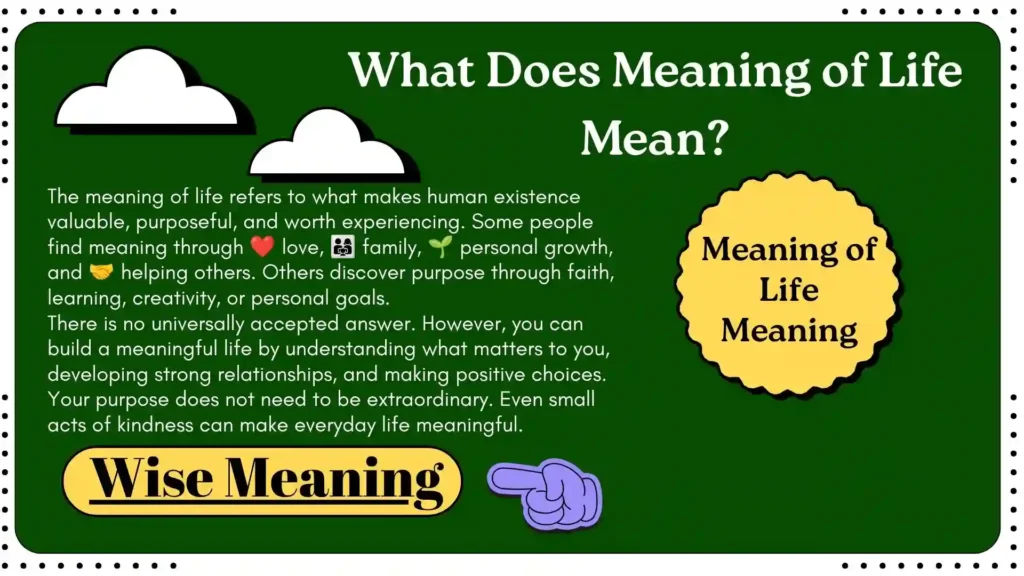
The meaning of life refers to what makes human existence valuable, purposeful, and worth experiencing. Some people find meaning through ❤️ love, 👨👩👧 family, 🌱 personal growth, and 🤝 helping others. Others discover purpose through faith, learning, creativity, or personal goals.
There is no universally accepted answer. However, you can build a meaningful life by understanding what matters to you, developing strong relationships, and making positive choices. Your purpose does not need to be extraordinary. Even small acts of kindness can make everyday life meaningful.
📌 TL;DR — The Meaning of Life in Simple Words
- ❤️ Love: Build caring relationships with others.
- 🎯 Purpose: Follow goals that reflect your values.
- 🌱 Growth: Learn from experiences and challenges.
- 🤝 Kindness: Help others and make a positive difference.
- 😊 Happiness: Enjoy meaningful moments without expecting constant joy.
- 🧠 Understanding: Explore different ideas about human existence.
- 🙏 Faith: Find spiritual purpose if religion matters to you.
- ✨ Personal meaning: Create a life that feels valuable to you.
Key takeaway: Life’s meaning may come from several sources rather than one perfect answer.
You Might Also Like That: ASMR Meaning
🌎 What Is the Meaning of Life?
The question “What is the meaning of life?” asks why humans exist and what makes life valuable. People have explored this question through philosophy, religion, psychology, and personal experience.
Some believe life has a higher purpose, while others think people create meaning through their choices. Both approaches encourage us to consider what truly matters.
💬 The Meaning of Life in Simple Words
In simple words, the meaning of life is what makes your existence feel important. It may involve loving someone, raising a family, learning something new, or helping your community. Meaning can come from ordinary moments, not just major achievements.
🌟 Is There One Universal Meaning of Life?
No single explanation has gained universal agreement. Different cultures, religions, and philosophers offer different answers. Some believe a higher power gives life meaning, while others believe people discover or create their own purpose.
🎯 What Is the Point of Life?
What is the point of life? This question often appears when people think about their future, personal struggles, or place in the world. It asks what makes living worthwhile.
For many people, life’s point involves ❤️ connection, 🌱 growth, meaningful experiences, and helping others. These sources of purpose can change as life changes.
You do not need to achieve fame, wealth, or perfection to live meaningfully. Sharing time with loved ones, learning new skills, and showing kindness can make life valuable. The point of life may involve how you live rather than what you achieve.
🧠 Why Do Humans Search for Meaning?
Humans naturally ask questions about existence, identity, and purpose. We think about the past, imagine the future, and wonder how our choices affect others.
Searching for meaning can help people understand their values and make important decisions. It also encourages reflection during major life changes.
For example, starting a family, changing careers, or losing someone important may lead a person to reconsider their priorities.
🔍 Finding meaning does not require solving every mystery of existence. Sometimes, understanding what matters today provides enough direction for tomorrow.
⚖️ What Is the Difference Between Meaning, Purpose and Happiness?
Meaning, purpose, and happiness connect closely, but they describe different experiences. Understanding these differences can help you build a more balanced life.
| Concept | Simple meaning |
| ❤️ Meaning | Feeling that life matters |
| 🎯 Purpose | Having goals and direction |
| 😊 Happiness | Experiencing joy or satisfaction |
| 🌱 Fulfillment | Feeling satisfied with how you live |
🎯 Meaning vs Purpose
Meaning describes why your life feels valuable. Purpose gives you something important to work toward. For example, caring for your family may give life meaning, while supporting your children’s education may become a personal purpose.
😊 Happiness vs Fulfillment
Happiness often comes from enjoyable moments. Fulfillment can come from meaningful efforts, even when they require hard work. Raising children, studying, or helping others may feel challenging while still providing deep satisfaction.
📚 The Meaning of Life According to Philosophy
Philosophers have explored the purpose of human existence for thousands of years. Their ideas differ, but many encourage people to examine their choices, values, and responsibilities.
Some thinkers connect meaning with living well and developing good character. Others emphasize personal freedom or the challenge of living in an uncertain world.
🏛️ Aristotle and Human Flourishing
The Greek philosopher Aristotle connected a good life with eudaimonia, often translated as flourishing. He believed people should develop virtues, use reason, and build good habits to live well.
🧭 Existentialism and Creating Your Own Meaning
Existentialism explores human freedom, choice, and responsibility. Thinkers such as Jean-Paul Sartre argued that people shape their lives through their actions rather than simply following a fixed purpose.
🌌 Absurdism and Nihilism
Nihilism questions whether life has an objective meaning. Absurdism, associated with Albert Camus, explores the tension between our desire for meaning and a world that offers no clear answer. Camus encouraged people to continue living and engaging with life despite uncertainty.
🔬 What Does Science Say About the Meaning of Life?
Science helps explain how life developed, how living things function, and how humans experience emotions and relationships.
However, the question “What is the meaning of life?” also involves personal values and philosophical beliefs. Scientific research can explore what helps people experience meaning, but it cannot establish one universal purpose for everyone.
🧬 What Biology Can Explain
Biology studies life through processes such as reproduction, adaptation, and evolution. These processes explain important features of living organisms, but they do not tell individuals what goals they should value.
❓ What Science Cannot Determine
Science cannot prove that everyone must follow one specific life purpose. Questions about ultimate meaning often require philosophical reflection, personal judgment, or religious belief alongside scientific knowledge.
🧠 The Psychology of a Meaningful Life
Psychology studies how people experience meaning, purpose, and well-being. Researchers often describe meaning through three connected ideas: coherence, purpose, and significance.
These ideas help explain why people feel that their lives make sense, have direction, and matter.
🧩 Purpose, Coherence and Significance
- 🧠 Coherence: Understanding your experiences and making sense of life.
- 🎯 Purpose: Having meaningful goals that guide your actions.
- ❤️ Significance: Feeling that your existence matters.
A person may experience all three through relationships, work, learning, or community activities.
🌱 How Meaning Affects Well-Being
Research often links a stronger sense of meaning with better psychological well-being. Meaning may help people approach challenges with direction and hope. However, meaningful living does not prevent sadness, stress, or difficult experiences.
🙏 The Meaning of Life in Different Religions
Religions offer different explanations for why humans exist and how people should live. Many traditions emphasize moral responsibility, compassion, spiritual growth, and relationships with others.
Although religious beliefs differ, they often encourage people to consider something beyond immediate personal pleasure.
✝️ Christianity, Islam and Judaism
Christianity commonly emphasizes loving God and others. Islam teaches worship of Allah and living responsibly according to divine guidance. Judaism emphasizes living according to God’s commandments, ethical behavior, and community responsibility.
Each tradition contains different schools of thought and interpretations.
🕉️ Hinduism and Buddhism
Hinduism includes teachings about dharma, karma, spiritual growth, and liberation. Buddhism emphasizes understanding suffering, developing wisdom and compassion, and following a path toward liberation.
These traditions offer different ways to understand life’s purpose.
🌿 Can Life Have Meaning Without Religion?
Yes. Many people find meaning in life without religious beliefs. They may build purpose through relationships, creativity, education, ethical choices, and helping others.
For example, a teacher may find meaning in helping students grow. A parent may value raising children, while an artist may find purpose through creative expression.
Religious and nonreligious people can share important values such as kindness, honesty, and responsibility.
❤️ Meaningful living does not require everyone to follow the same worldview. What matters is examining your beliefs carefully and choosing actions that reflect your values.
❤️ What Makes Human Life Meaningful?
People experience meaning in many ways. Some find it through close relationships, while others value learning, creativity, faith, or community service.
A meaningful life often includes several sources of purpose rather than one permanent goal.
👨👩👧 Love, Friendship and Family
Strong relationships can create belonging and emotional support. Spending time with loved ones, listening carefully, and helping someone through a difficult day can strengthen meaningful connections.
🌱 Learning, Creativity and Personal Growth
Learning new skills and exploring interests can give life direction. Reading, writing, making art, or improving a skill allows people to express themselves and develop confidence.
🤝 Helping Others and Contributing to Society
Helping others can connect personal actions with something larger. Volunteering, teaching, supporting neighbors, or showing everyday kindness may give people a stronger sense of contribution.
🌧️ Does Suffering Make Life Meaningless?
Suffering can make people question their beliefs, goals, and purpose in life. Loss, illness, disappointment, and uncertainty may temporarily weaken a person’s sense of meaning.
However, difficult experiences do not automatically make life meaningless. People sometimes find support through relationships, personal values, or meaningful activities during challenging periods.
Psychiatrist Viktor Frankl explored how people can search for meaning even under severe hardship.
Importantly, suffering is not necessary for personal growth, and nobody needs to find a positive lesson in every painful experience. Seeking support can also be a meaningful choice.
🤖 Can Artificial Intelligence Change How We Understand Human Purpose?
Artificial intelligence raises new questions about human creativity, work, learning, and identity. As technology performs more tasks, people may reconsider what makes human contributions valuable.
Some worry that automation could reduce opportunities for meaningful work. Others believe AI may give people more time for creativity, relationships, and personal interests.
However, technology does not settle the philosophical question of life’s meaning.
🎯 Human purpose can involve caring for others, making ethical choices, building relationships, and pursuing meaningful goals. These activities remain important regardless of technological progress.
⏳ Does the Meaning of Life Change as We Age?
Yes, a person’s sense of purpose can change throughout life. Children may find meaning through play, friendship, and learning. Young adults may focus on independence, education, and relationships.
Later, people may value family responsibilities, community involvement, or personal achievements.
Older adults may reflect on relationships, memories, wisdom, and the difference they have made.
These patterns are not fixed rules. Everyone follows a different path.
🌱 Changing priorities does not mean your earlier goals were meaningless. It simply shows that people grow, learn, and discover new things that matter to them.
🧭 How to Find Meaning and Purpose in Your Own Life
Finding your purpose in life usually takes reflection, experience, and patience. You do not need to discover one perfect mission immediately.
Start by noticing the people, activities, and values that make your days feel worthwhile.
🎯 Identify Your Personal Values
Ask yourself what matters most: kindness, family, honesty, creativity, learning, or independence. Choose a few values and consider how your daily actions reflect them.
❤️ Build Meaningful Relationships
Spend time with people who support you. Listen, express appreciation, and make room for honest conversations. Strong relationships can create connection and belonging.
🌱 Take Small Actions That Matter
Choose one meaningful activity each day. Help someone, learn something useful, work toward a goal, or enjoy a peaceful moment. Small actions can gradually build direction.
💭 What to Do When Life Feels Meaningless
Sometimes, life feels empty, confusing, or repetitive. These feelings may appear during stressful periods, major changes, or times of loneliness.
If you feel this way, start with manageable steps instead of expecting an immediate answer.
- ❤️ Connect: Talk with someone you trust.
- 🌿 Reflect: Notice what matters to you.
- 🚶 Move: Spend time outdoors or stay physically active.
- 🎨 Explore: Try an enjoyable or creative activity.
- 🤝 Seek support: Speak with a mental health professional if these feelings persist or affect daily life.
You do not need to solve life’s biggest questions before taking care of yourself.
❓ Frequently Asked Questions About the Meaning of Life
🌍 Why Are We Here on Earth?
Science explains human existence through natural processes, including evolution. Philosophy and religion explore different answers about ultimate purpose. No single explanation answers every part of this question.
❤️ What Makes Life Worth Living?
Relationships, meaningful experiences, personal values, creativity, and helping others can make life worthwhile. Different people value these things in different ways.
🎯 Is the Meaning of Life Different for Everyone?
People often experience meaning differently. Personal beliefs, relationships, culture, and life experiences influence what each person considers important.
🙏 Can Life Have Meaning Without God?
Yes. Many nonreligious people find meaning through family, friendship, learning, ethical choices, and contributing to their communities. Religious traditions offer other perspectives.
⏳ What Is the Point of Life If We All Die?
Some philosophers argue that life’s limited length can make experiences and relationships especially valuable. Others find meaning through faith or the lasting effects of their actions.
😊 Is Happiness the Purpose of Life?
Happiness can contribute to a good life, but it is not the only possible purpose. Love, responsibility, learning, and helping others may provide meaning even during difficult times.
✨ Final Thought
What is the meaning of life? There is no single answer that everyone accepts. Philosophy, science, psychology, and religion offer different ways to explore this important question.
For many people, life’s meaning grows through ❤️ love, 🎯 purpose, 🌱 personal growth, and 🤝 helping others.
You do not need a perfect life or one extraordinary achievement to experience meaning. Start with your values, care for your relationships, and make choices that matter to you.
Remember: A meaningful life does not always begin with finding the right answer. Sometimes, it begins with taking one small, thoughtful action today.