
Have you ever seen someone write “no cap” in a text message, TikTok comment, or Instagram post and wondered what it means? The slang expression no cap means no lie, honestly, or for real. People use it to show that they are telling the truth, expressing a genuine opinion, or not exaggerating something. This popular phrase appears in everyday conversations, social media posts, and online chats, especially among younger generations.
Understanding the no cap meaning can help you follow modern internet slang and communicate more naturally online. Whether someone says “That movie was amazing, no cap” or “I’m serious, no cap,” the expression adds emphasis to their statement. In this guide, you’ll learn what no cap means in texting, where the phrase originated, how to use it in sentences, and how it differs from cap and other similar slang expressions.
Quick Answer: What Does No Cap Mean? ⚡
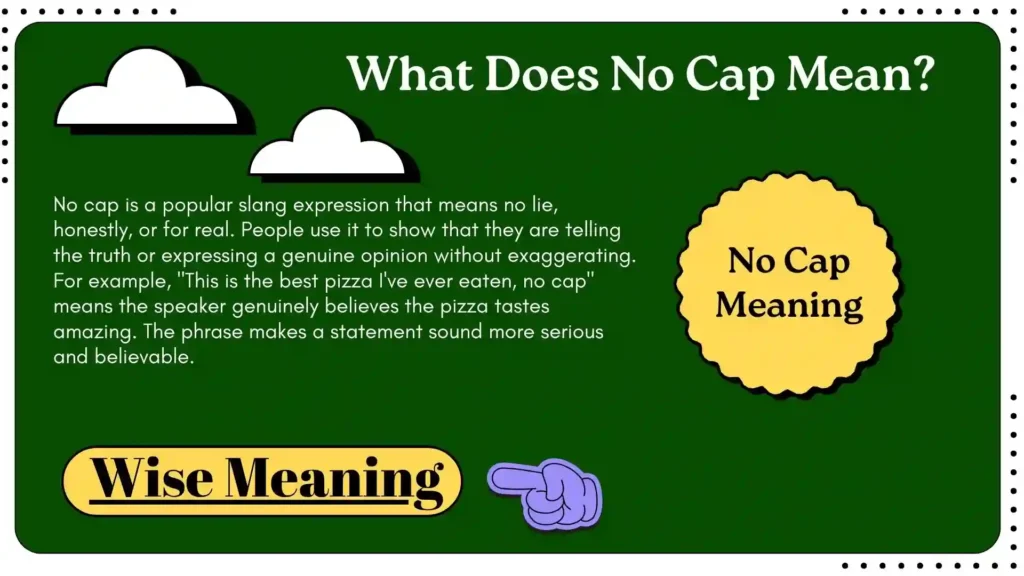
No cap is a popular slang expression that means no lie, honestly, or for real. People use it to show that they are telling the truth or expressing a genuine opinion without exaggerating. For example, “This is the best pizza I’ve ever eaten, no cap” means the speaker genuinely believes the pizza tastes amazing. The phrase makes a statement sound more serious and believable.
People commonly use no cap in text messages, social media comments, and casual conversations. It is an informal expression, so it works better with friends than in professional situations.
You Might Also Like That: LTR Means in Text
What Does No Cap Mean in Texting and Social Media? 📱
In texting, no cap means that someone is being honest or serious about what they are saying. People add this phrase to messages when they want others to believe their words. It can also show that they genuinely like something or strongly agree with an opinion. For example, someone might text, “You’re the funniest person I know, no cap.” This means they truly believe their friend is funny.
On social media, people use no cap in TikTok comments, Instagram captions, Snapchat messages, and online conversations. You may also see it in memes, videos, and posts. For example, “This song never gets old, no cap” shows that the person really enjoys the music.
What Does Cap Mean in Slang? 🧢
Cap means a lie or an exaggerated statement in slang. When someone says “That’s cap,” they suggest that another person is not telling the truth. The word can also describe someone who makes claims that are not real or believable. For example, “You said you finished the whole project in ten minutes? That’s cap!” means the speaker doubts that claim.
People also use capping to describe the act of lying or exaggerating. “Stop capping” means stop lying or telling stories that are not true. Understanding cap makes the meaning of no cap much easier because both expressions have opposite meanings.
How to Use No Cap in Everyday Conversations 💬
You can use no cap when you want to make your statement sound honest, serious, or genuine. It usually works at the beginning or end of a sentence. Most people use it with friends, family members, and people they know well. For example, “No cap, I really enjoyed that movie” shows that the speaker genuinely liked it.
Here are a few simple examples:
| Situation | Example |
| Compliment | “You look amazing, no cap.” |
| Friendship | “You’re a great friend, no cap.” |
| Food | “This burger tastes delicious, no cap.” |
| Music | “That song is amazing, no cap.” |
| Opinion | “No cap, this is my favorite game.” |
No Cap Examples in Text Messages 📩
People often use no cap in casual text messages to emphasize their feelings or opinions. It helps make a message sound natural and friendly. For example, “I miss our old school days, no cap” shows genuine feelings. Similarly, “That was the funniest video ever, no cap” expresses a real reaction. You can also use it when agreeing with someone. These no cap examples show how the phrase adds emphasis without changing the main meaning of a sentence.
No Cap Examples in Real-Life Conversations 🗣️
People also use no cap while speaking with friends or having casual conversations. It can make their statements sound more natural and expressive. Here are some examples:
- “No cap, that was the best party ever.”
- “You’re really good at basketball, no cap.”
- “I could eat this food every day, no cap.”
- “That was a difficult exam, no cap.”
These sentences show how people use the expression to emphasize their honest opinions.
Where Did No Cap Come From? 📚
The expression no cap has roots in African American English (AAVE) and Black American slang. The word “cap” has been used to describe lying or boasting, while “no cap” emphasizes honesty. The expression became more widely known through Black speech, hip-hop culture, and rap music. Artists and musicians helped bring the phrase to a larger audience through songs and everyday conversations.
Social media platforms later helped spread the expression among younger generations. TikTok, Instagram, and other online communities made it even more popular. Today, people use no cap in different countries and online spaces to express honesty or emphasize their opinions.
No Cap vs Cap: What’s the Difference? ⚖️
The main difference between cap and no cap is their meaning. Cap refers to a lie or an exaggerated statement, while no cap means someone is being honest or telling the truth. People often use both expressions in casual conversations and online messages. Understanding this difference helps you recognize modern slang more easily.
| Expression | Meaning | Example |
| Cap | A lie or exaggeration | “That’s cap!” |
| No cap | No lie or honestly | “I’m serious, no cap.” |
| Capping | Lying or exaggerating | “Stop capping!” |
| You cappin’ | You’re lying | “You cappin’ right now?” |
Other Slang Expressions Similar to No Cap 🔥
Several slang expressions have meanings similar to no cap. People use them to show honesty, agreement, or strong feelings. However, their exact meanings and tones can change depending on the conversation. Some expressions sound more serious, while others feel more casual.
Here are some common alternatives:
- For real: Used to show that something is genuine.
- No lie: Means someone is telling the truth.
- Honestly: Shows a sincere opinion.
- Deadass: Means seriously or genuinely.
- On God: Used to strongly emphasize a statement.
- Straight up: Means honestly or directly.
These expressions can replace no cap in some casual situations, but they are not always interchangeable.
Can No Cap Have Different Meanings? 🤔
Although no cap usually means no lie or honestly in slang, its meaning can change with context. In ordinary English, a cap can mean a limit or maximum amount. Therefore, the phrase “no cap” can sometimes describe something without a limit. For example, “There is no cap on the number of entries” means people can submit as many entries as they want.
In casual conversations, however, most people use no cap as a slang expression. Always look at the surrounding words to understand whether someone means no lie or no limit.
Can No Cap Be Used Sarcastically? 😏
Yes, people can use no cap sarcastically, depending on their tone and the situation. Although the phrase usually emphasizes honesty, someone may use it jokingly to make fun of an exaggerated or unbelievable statement. For example, a friend might say, “You’re the smartest person in the world, no cap” in a playful or teasing way.
The meaning depends on the speaker’s intention, facial expression, and conversation. So, do not assume that every person who says no cap is making a serious statement. Context helps you understand the real message.
When Should You Use No Cap? ✅
You can use no cap in informal situations when you want to emphasize that you are being honest. It works well in text messages, online chats, social media comments, and conversations with friends. It can also make compliments and personal opinions sound more expressive.
However, avoid using this slang expression in formal emails, academic writing, job applications, or professional meetings. In these situations, choose simple alternatives such as honestly, genuinely, seriously, or without exaggeration. These expressions sound more suitable in formal communication.
Frequently Asked Questions About No Cap ❓
Does No Cap Mean No Lie?
Yes. No cap means no lie, honestly, or for real. People use it to show that they are being truthful or expressing a genuine opinion. For example, “This is the best game ever, no cap” means the speaker truly believes it.
What Does No Cap Mean on TikTok?
On TikTok, no cap means someone is being honest or serious about a statement. Users often add it to video captions, comments, and reactions to emphasize their opinions or feelings.
What Does the No Cap Emoji Mean? 🚫🧢
The combination 🚫🧢 represents no cap. The crossed-out cap emoji suggests that someone is not lying or exaggerating. People use it in comments and messages to emphasize honesty.
Is No Cap a Positive or Negative Expression?
No cap is generally a neutral expression. It can support positive statements, negative opinions, compliments, or serious comments. Its meaning depends on the situation and the speaker’s intention.
How Do You Respond When Someone Says No Cap?
You can respond naturally based on the conversation. For example, you might say “For real,” “I believe you,” “Same here,” or “No doubt.” If you disagree, you can simply explain your opinion.
Is No Cap Still Used Today?
Yes. People still recognize and use no cap in online conversations, social media posts, and casual speech. However, its popularity can vary between age groups and online communities.
Final Thoughts 💭
Understanding the no cap meaning makes it easier to follow modern slang and online conversations. The expression simply means no lie, honestly, or for real, and people use it to emphasize genuine opinions and truthful statements. You will often see it in text messages, TikTok comments, Instagram posts, and everyday conversations. Remember that cap means a lie, while no cap means the opposite. Use this expression with friends and in casual situations, but choose more formal words in professional communication. Most importantly, pay attention to context because the meaning can change depending on how someone uses it.