
Have you ever received a text that simply says “Really?” and wondered what the other person actually meant? The truth is that “really” in text can have different meanings depending on the context, the tone, and even the punctuation. Sometimes it shows surprise, while other times it expresses excitement, doubt, or even sarcasm. Because text messages do not include facial expressions or voice tone, a single word like “really” can easily be misunderstood.
If you’ve searched for what does really mean in text, really meaning in texting, or really meaning in text, you’re in the right place. This guide explains the text message meaning of “really” with simple examples and everyday situations. You’ll learn how people use it in online messaging, how its meaning changes in different text conversations, and how to understand the sender’s intent with confidence. By the end, you’ll know exactly how to interpret “really” and respond in a natural way.
Quick Answer
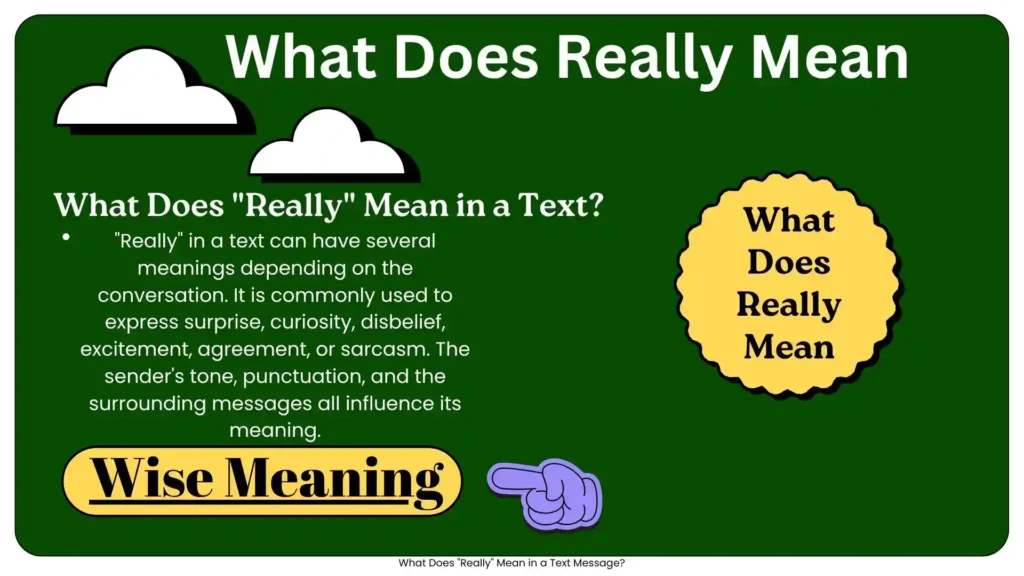
“Really” in a text can have several meanings depending on the conversation. It is commonly used to express surprise, curiosity, disbelief, excitement, agreement, or sarcasm. The sender’s tone, punctuation, and the surrounding messages all influence its meaning.
For example, “Really?” often shows surprise or asks for confirmation, while “Really!” expresses excitement or strong emotion. A message like “Really…” may suggest disappointment or frustration. Since text messages lack facial expressions and voice tone, always consider the full conversation before deciding what the sender means.
TL;DR
“Really” in a text message doesn’t have one fixed meaning. Depending on the context, punctuation, and tone, it can express surprise, curiosity, excitement, disbelief, emphasis, agreement, or sarcasm. For example, “Really?” usually asks for confirmation or shows surprise, “Really!” expresses excitement, while “Really…” may suggest disappointment or frustration. Since text messages lack facial expressions and voice tone, always read the surrounding conversation, emojis, and punctuation to understand what the sender truly means.
You Might Also Like That: Too Cute vs To Cute
📌 At a Glance
| 💬 Text | 😊 Common Meaning | 🎯 Tone |
| Really | Interest or emphasis | Neutral |
| Really? | Surprise, curiosity, or doubt | Curious |
| Really! | Excitement or strong agreement | Positive |
| Really… | Disappointment or frustration | Negative |
| Realllly | Strong emotion or playful exaggeration | Depends on context |
In short: There is no single “really meaning in text.” The word changes its meaning based on context, punctuation, and the relationship between the people texting.
What Does “Really” Mean in a Text Message?
The meaning of “really” in text depends on the conversation and the sender’s intention. In most cases, people use it to show surprise, interest, disbelief, or strong emphasis. Unlike face-to-face conversations, text messages do not include voice tone or facial expressions. Because of this, you need to read the surrounding messages before deciding what the word means.
Sometimes, “really” is positive and shows excitement. Other times, it can sound doubtful or sarcastic. Looking at the context, punctuation, and your relationship with the sender will help you understand the text message meaning more accurately.
Common Meanings of “Really” in Texting
People use “really” for many reasons during online messaging. It can express emotions, add emphasis, or simply keep the conversation going. The exact meaning changes based on the message, punctuation, and situation. Below are the most common uses.
Showing Surprise 😲
Many people type “Really?” when they hear unexpected news. It shows genuine surprise and invites the other person to explain more. In this case, the sender usually wants additional details instead of questioning your honesty.
Example:
- “I got free concert tickets.”
- “Really? That’s awesome!”
Expressing Doubt 🤔
Sometimes “really?” shows uncertainty or disbelief. The sender may not fully believe what they just read. This meaning is common when the information sounds unusual or unexpected.
Example:
- “I finished the project in one hour.”
- “Really? That was fast.”
Adding Emphasis 💬
People often use “really” to strengthen what they want to say. It makes their feelings sound stronger and more sincere.
Example:
- “I really enjoyed the movie.”
- “I really appreciate your help.”
Here, “really” simply adds emphasis and makes the message more meaningful
Showing Excitement 🎉
Sometimes the word expresses happiness or excitement. Friends often use it when sharing good news or celebrating an achievement.
Example:
- “I’m going on vacation next week.”
- “Really! That’s exciting.”
The tone feels warm and positive.
Being Sarcastic 🙄
Not every use of “really” is friendly. Sometimes it carries a sarcastic tone, especially when paired with eye-roll emojis or certain punctuation.
Example:
- “I forgot my homework again.”
- “Really… What a surprise.”
The surrounding conversation usually makes the sarcasm easy to recognize.
How Context Changes the Meaning
The context of the conversation matters more than the word itself. The same message can have different meanings depending on who sends it and what happened before. A close friend might use “really” playfully, while a coworker may use it in a serious way.
Always read the previous messages before making assumptions. Looking at the full text conversation, emojis, and the relationship between the sender and receiver helps you understand the real meaning in text without confusion.
You Might Also Like That: Aww Meaning in Text
What Does “Really?” Mean with Different Punctuation?
Punctuation changes how people understand “really” in digital communication. Even a single symbol can completely change the tone.
- Really 😊 – Calm interest.
- Really? 🤔 – Surprise or curiosity.
- Really! 🎉 – Excitement and enthusiasm.
- Really… 😕 – Disappointment or frustration.
- Realllly 😲 – Strong emotion or playful exaggeration.
Pay attention to punctuation because it often reveals the sender’s emotional tone better than the word alone.
What Does “Really” Mean from a Girl?
When a girl texts “really,” the meaning depends on the conversation. She may feel surprised, excited, curious, or simply interested in learning more. If she asks “Really?” after good news, she probably wants you to continue the conversation.
In some situations, it may also show disbelief or playful teasing. Instead of guessing, read the rest of the conversation and notice whether she uses emojis or asks follow-up questions. These clues often explain her real intention.
What Does “Really” Mean from a Guy?
A guy may use “really” for many of the same reasons. He might express surprise, ask for clarification, or react to exciting news. Sometimes he simply wants to keep the conversation active by encouraging you to explain more.
If the message includes exclamation marks or positive emojis, it usually sounds friendly and supportive. If it appears alone after a surprising statement, it may simply mean he wants more information before responding.
Examples of “Really” in Real Conversations
Reading examples makes the really meaning in texting easier to understand.
😊 Surprise
- A: “I won the competition.”
- B: “Really? Congratulations!”
🎉 Excitement
- A: “We’re going to the beach.”
- B: “Really! I can’t wait.”
🤔 Doubt
- A: “I met a famous actor today.”
- B: “Really? Which one?”
These examples show how context changes the meaning without changing the word itself.
How to Reply When Someone Says “Really”
Your reply should match the sender’s intention. If they sound curious, give more details. If they seem surprised, explain what happened. When the tone is positive, continue the conversation naturally.
For example, if someone replies with “Really?”, you could say, “Yes, it happened this morning,” or “I couldn’t believe it either.” Friendly, clear responses help avoid misunderstandings and keep the conversation enjoyable.
Common Misunderstandings
Many people misunderstand “really” because text messages do not include body language or voice tone. A curious question may look sarcastic, while an excited response might seem rude if you read it too quickly.
Instead of assuming the worst, check the full conversation and think about the sender’s usual texting style. Looking at emojis, punctuation, and previous messages often gives you the answer. This simple habit reduces confusion in online communication.
Does “Really” Always Mean the Same Thing?
No. “Really” does not always have one fixed meaning. It changes depending on the situation, the relationship between the people talking, and the words around it. That is why understanding text interpretation is important.
The same word can express happiness in one conversation and disbelief in another. Reading only one message without context often leads to the wrong conclusion. Always consider the complete conversation before deciding what the sender means.
Similar Words Used Instead of “Really”
Many people use other expressions instead of “really” in casual conversations. These words may have similar meanings, but each creates a slightly different tone.
- Seriously 😮 – Shows surprise or asks for confirmation.
- Actually 💬 – Corrects or adds information.
- Literally 🔥 – Adds strong emphasis.
- For real 😄 – Casual way to ask if something is true.
Choosing the right word depends on the situation and the style of the conversation.
When “Really” Can Be Positive or Negative
The word “really” is not naturally positive or negative. Its meaning depends on how someone uses it. It becomes positive when showing excitement, appreciation, or encouragement. It becomes negative when expressing sarcasm, frustration, or disappointment.
Before reacting, look at the sender’s overall tone instead of focusing on one word. This approach helps you understand the message correctly and respond more confidently during text conversations.
You Might Also Like That: Grammar Meaning
Frequently Asked Questions
❓ What does “really” mean in texting?
It usually shows surprise, interest, emphasis, or disbelief. The exact meaning depends on the conversation.
❓ Is “really?” positive or negative?
It can be either. Read the surrounding messages and punctuation to understand the sender’s tone.
❓ Can “really” be sarcastic?
Yes. People often use it sarcastically when they want to express frustration or disbelief.
❓ How should I respond to “Really?”
Answer with more details if the person sounds curious. If they seem excited, continue the conversation naturally.
Final Thoughts
Understanding what does really mean in text becomes much easier when you focus on the context, tone, and punctuation instead of the word alone. Whether someone uses “really” to show surprise, excitement, doubt, or sarcasm, the surrounding conversation usually reveals the true meaning.
The next time you receive a message with “Really?”, don’t rush to judge its intent. Read the entire conversation, notice any emojis or punctuation, and think about your relationship with the sender. These simple steps will help you understand really meaning in text with confidence and communicate more effectively in everyday online messaging.