
“Thank you for your cooperation” is one of the most common professional thank-you phrases used in business communication, customer service, and workplace communication. People often use this polite expression to show appreciation after someone follows instructions, provides support, or works together to complete a task. If you have ever wondered about the “thank you for your cooperation”, when to use it, or whether it sounds formal, this guide will answer all your questions in simple words. You will also learn the thank you meaning, understand why this phrase matters, and discover better ways to express gratitude.
Whether you are writing a business email, replying to a client, communicating with coworkers, or improving your business English, choosing the right words can leave a positive impression. In this guide, you will explore the meaning of thank you, learn professional alternatives to thank you for your cooperation, see practical examples, compare similar expressions, and find tips for writing polite and confident messages. By the end, you will know how to use “thank you for your cooperation” naturally and professionally in different situations.
Quick Answer
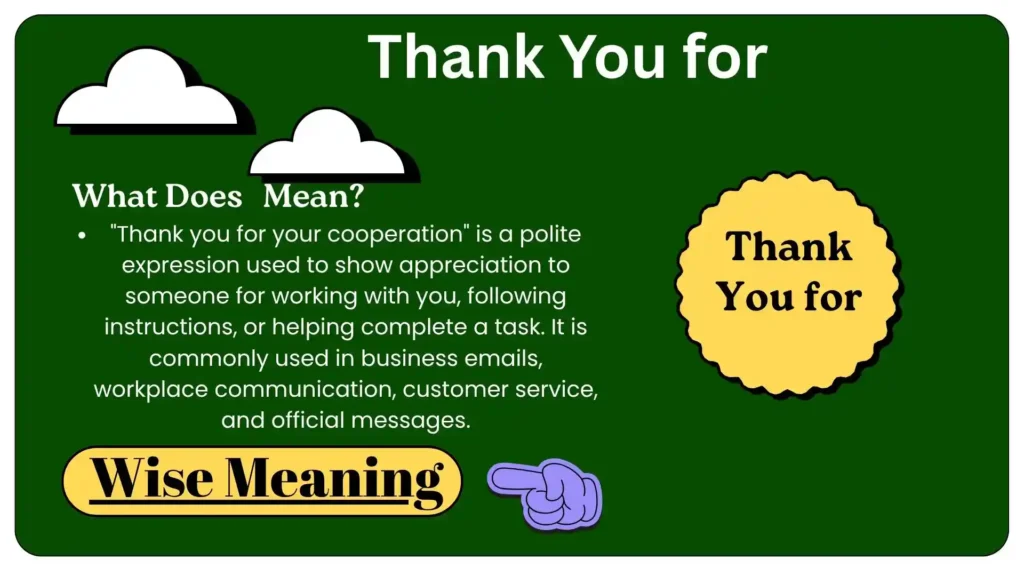
“Thank you for your cooperation” is a polite expression used to show appreciation to someone for working with you, following instructions, or helping complete a task. It is commonly used in business emails, workplace communication, customer service, and official messages.
Example:
“Thank you for your cooperation during the office relocation.”
Simple meaning: Thank you for your help and willingness to work together.
TL;DR
“Thank you for your cooperation” is a polite, professional expression used to show appreciation when someone works with you, follows instructions, or helps complete a task. It is commonly used in business emails, workplace communication, customer service, official notices, and formal messages. The phrase is grammatically correct and best suited to professional or semi-formal situations. For a more natural or varied tone, you can also use alternatives such as “We appreciate your cooperation,” “Thank you for your support,” “Thank you for your assistance,” or “Thank you for your understanding,” depending on the context. In casual conversations with friends or family, simpler phrases like “Thanks for your help” or “I really appreciate it” usually sound more natural.
You Might Also Like That: Grammar Meaning
What Does “Thank You for Your Cooperation” Mean?
The phrase “thank you for your cooperation” means you are showing gratitude to someone for working with you, following instructions, or helping complete a task. It is a polite and respectful way to recognize another person’s effort. You will often hear or read this expression in business emails, customer service messages, workplace notices, and official letters.
💡 Simple meaning: Thank you for helping, understanding, and working together.
People usually use this phrase after someone has cooperated. In some cases, companies also use it in advance when asking customers or employees to follow a request. Because it sounds respectful and professional, it is a popular choice in business communication and professional writing.
What Does “Thank You” Mean?
The meaning of “thank you” is simple. It is an expression of appreciation and gratitude toward someone who has done something kind, helpful, or thoughtful. Whether a person offers support, gives advice, or performs a small favor, saying thank you shows respect and good manners.
😊 Why it matters: Saying thank you builds stronger relationships, creates trust, and makes people feel valued. It is one of the easiest ways to show kindness in both personal and professional situations. Even a short thank-you message can leave a lasting positive impression.
When Should You Say “Thank You for Your Cooperation”?
Use “thank you for your cooperation” when someone follows instructions, completes a request, or works together with you. It fits many professional situations, especially in offices, schools, healthcare, customer support, and government communication.
📌 Common situations include:
- ✔️ After completing a project
- ✔️ Following company policies
- ✔️ Responding to an email request
- ✔️ Waiting patiently during delays
- ✔️ Helping solve a problem
- ✔️ Supporting a team effort
This phrase lets people know that you appreciate their time and willingness to cooperate.
Is “Thank You for Your Cooperation” Formal or Informal?
Yes, “thank you for your cooperation” is generally considered a formal expression. It appears most often in professional emails, business letters, official announcements, and customer service messages. Because it sounds polite and respectful, it is suitable for workplace communication.
🎯 You can also use it in semi-formal situations, such as writing to parents, clients, or customers. However, when speaking with close friends or family, simpler expressions like “Thanks for your help” or “Thanks for working with me” usually sound more natural and friendly.
Is “Thank You for Your Cooperation” Grammatically Correct?
✅ Yes, “thank you for your cooperation” is completely grammatically correct. It follows standard English grammar and has been widely accepted in both spoken and written communication for many years.
The phrase contains two important parts:
| 📝 Part | Meaning |
| Thank you | Shows appreciation |
| For your cooperation | Explains what you are thankful for |
Using this phrase correctly helps your message sound polite, clear, and professional.
You Might Also Like That: Grammar Meaning
Other Ways to Say “Thank You for Your Cooperation”
Sometimes repeating the same phrase can sound dull. Using different professional thank-you phrases keeps your writing fresh while expressing the same appreciation.
Formal Alternatives
🏢 These alternatives work well in official communication.
- We appreciate your cooperation.
- Thank you for your assistance.
- Your support is greatly appreciated.
- We sincerely appreciate your help.
- Thank you for your continued cooperation.
These phrases are ideal for reports, notices, and formal letters.
Professional Alternatives
📧 Business emails often sound better with natural wording.
- Thank you for your support.
- We value your partnership.
- Thank you for working with us.
- We appreciate your collaboration.
- Thank you for your understanding.
These alternatives keep emails polite without sounding repetitive.
Friendly Alternatives
😊 For everyday conversations, you can use:
- Thanks for helping.
- Thanks a lot.
- I really appreciate it.
- You’re amazing.
- Thanks for being so helpful.
These expressions create a warm and personal tone.
Customer Service Alternatives
🤝 Customer service teams often use:
- We appreciate your patience.
- Thank you for choosing us.
- Thank you for your understanding.
- We appreciate your continued support.
- Thank you for your trust.
These phrases help maintain positive customer relationships.
Thank You for Your Cooperation Examples
Seeing real examples makes it easier to understand when to use the phrase.
Business Emails
📧 Thank you for your cooperation during the project. Your quick responses helped us finish everything on time.
Workplace Communication
💼 Thank you for your cooperation in following the new office guidelines.
Customer Support
🎧 Thank you for your cooperation while we resolved your issue. We appreciate your patience.
School or Academic Use
🎓 Thank you for your cooperation in completing the required documents before the deadline.
Everyday Conversations
🙂 Thank you for your cooperation while we organized the event together.
When You Should Avoid This Phrase
Although this expression is useful, it does not fit every situation. Avoid using it when speaking with close friends or family because it may sound too formal. It can also sound distant if you use it in casual text messages.
⚠️ Instead, choose simpler expressions like “Thanks for helping” or “I really appreciate your support.” Matching your words to the situation makes your communication sound more natural and sincere.
Common Mistakes People Make
Many people use “thank you for your cooperation” incorrectly by saying it before anyone has actually helped. Although this sometimes appears in official notices, it is often better to thank people after they cooperate.
❌ Common mistakes include:
- Using it in casual chats.
- Repeating it too often.
- Using it when “thank you for your understanding” is more appropriate.
- Forgetting to personalize the message.
Adding a person’s name or mentioning what they did makes your appreciation feel genuine.
Thank You for Your Cooperation vs Thank You for Your Understanding
These phrases look similar, but they have different meanings.
| 📊 Phrase | Best Used When |
| Thank you for your cooperation | Someone follows instructions or works together. |
| Thank you for your understanding | Someone accepts a delay, mistake, or inconvenience. |
💡 If a customer waits longer than expected, thank them for their understanding. If they provide requested information or follow instructions, thank them for their cooperation.
Thank You for Your Cooperation vs Thank You for Your Collaboration
Both expressions show appreciation, but they describe different situations.
🤝 Cooperation means people work together by following requests, rules, or instructions.
🚀 Collaboration means people actively share ideas and work together to create something.
Choose cooperation when people support a process. Choose collaboration when they contribute as partners in a project.
Thank You vs Thanks
Both expressions are correct, but they have different levels of formality.
| ⭐ Expression | Best For |
| Thank you | Professional communication, emails, official messages |
| Thanks | Friends, family, casual conversations |
If you are writing to a manager, customer, teacher, or client, thank you usually sounds more respectful than simply saying thanks.
Similar Gratitude Expressions
Using different expressions keeps your writing interesting and natural.
✨ Popular alternatives include:
- Thank you for your patience.
- Thank you for your assistance.
- Thank you for your support.
- Thank you for your understanding.
- Much appreciated.
- We appreciate your help.
- Your cooperation is appreciated.
Using the right phrase depends on the situation, the audience, and the level of formality.
Tips for Writing Professional Thank-You Messages
Writing a good thank-you message is easier than many people think. Keep your sentences short, mention exactly what you appreciate, and maintain a polite tone.
📝 Quick tips:
- ✔️ Be specific.
- ✔️ Keep it short.
- ✔️ Use professional language.
- ✔️ Mention the person’s contribution.
- ✔️ End with a positive closing.
A sincere message often has a stronger impact than a long one.
You Might Also Like That: Grammar Meaning
Frequently Asked Questions
❓ What does “thank you for your cooperation” mean?
It means you appreciate someone’s help, support, or willingness to work with you.
❓ Is it polite?
Yes. It is one of the most polite and professional ways to express gratitude.
❓ Is it formal?
Yes. It is commonly used in workplaces, official notices, and business emails.
❓ Can I use it in emails?
Absolutely. It is suitable for clients, coworkers, managers, and customers.
❓ What is another way to say it?
You can say “We appreciate your cooperation,” “Thank you for your assistance,” or “Thank you for your support.”
❓ Is it grammatically correct?
Yes. It follows standard English grammar and is widely accepted.
❓ Can I use it with customers?
Yes. Customer service teams often use this phrase to thank customers for their patience and cooperation.
❓ Is “Thanks for your cooperation” acceptable?
Yes. It is correct but slightly less formal than “Thank you for your cooperation.”
Final Thoughts
🎉 “Thank you for your cooperation” is a simple yet powerful expression that shows appreciation, respect, and professionalism. Whether you use it in business emails, workplace communication, customer service, or official messages, it helps build positive relationships and encourages future cooperation. Understanding the thank you for your cooperation, choosing the right alternative, and using the phrase in the correct situation will make your communication clearer and more effective.
Now that you know the meaning of thank you, the best professional alternatives, and practical examples, you can confidently express gratitude in a way that sounds natural, respectful, and sincere.