
Have you ever received an email that ended with the phrase “it would be greatly appreciated” and wondered what it actually means? Or maybe you’re writing a professional email and want to know if it’s the right phrase to use. You’re not alone. Many English learners, professionals, and students search for the meaning of “it would be greatly appreciated”, whether it is grammatically correct, and how to use it in a polite and natural way.
In simple terms, “it would be greatly appreciated” is a polite expression used to ask for help, a favor, or cooperation while showing gratitude in advance. It is common in business English, formal writing, and professional communication, especially in emails and workplace requests. In this guide, you’ll learn that it would be greatly appreciated, see real-life examples, discover formal alternatives, understand the grammar behind the phrase, and avoid common mistakes so you can use it confidently in the right situations.
Quick Answer
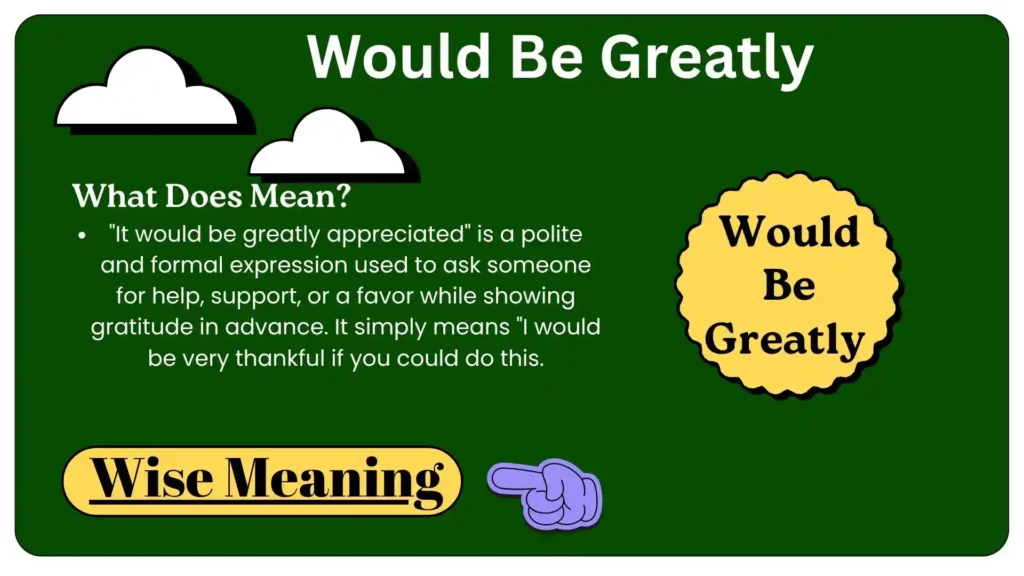
“It would be greatly appreciated” is a polite and formal expression used to ask someone for help, support, or a favor while showing gratitude in advance. It simply means “I would be very thankful if you could do this.
“ The phrase is commonly used in professional emails, business communication, formal letters, and workplace requests because it sounds respectful and courteous. Although it is grammatically correct and widely accepted, it may sound too formal in casual conversations, where simpler alternatives like “I’d appreciate it” or “Thanks for your help” are more natural.
TL;DR
“It would be greatly appreciated” is a polite, formal, and grammatically correct expression used to request help, support, or cooperation while showing gratitude in advance. It simply means “I would be very thankful if you could do this.” The phrase is widely used in professional emails, business communication, workplace requests, customer service, and formal letters because it sounds respectful and courteous. While it is ideal for formal situations, it may feel too formal in casual conversations, where alternatives like “I’d appreciate it,” “Thanks for your help,” or “I would be grateful” sound more natural. Using this expression appropriately helps you make requests politely and leaves a positive, professional impression.
You Might Also Like That: GOAT Meaning
What Does “It Would Be Greatly Appreciated” Mean? 😊
The phrase “it would be greatly appreciated” is a polite expression used to ask someone for help, support, or a favor. It tells the other person that you will be very thankful if they do what you are requesting. You will often see this phrase in professional emails, business communication, and formal writing because it sounds respectful and courteous. If you have ever searched for the it would be greatly appreciated meaning or what does it would be greatly appreciated mean, the simple answer is that it politely shows gratitude in advance while making a request.
Meaning in Plain English
In everyday English, “it would be greatly appreciated” simply means “I would really appreciate it if you could help.” It is an indirect and respectful way to ask someone to do something without sounding demanding. Instead of giving an order, the speaker leaves the choice to the other person while expressing thanks beforehand. This approach is common in business English, professional communication, and formal emails, where maintaining a polite tone is important.
What the Speaker Is Really Saying
When someone writes “it would be greatly appreciated,” they are not only making a request—they are also showing respect, courtesy, and appreciation. The hidden message is, “Your help matters to me, and I will be thankful if you can assist.” This phrase works well in situations where you want to sound professional or ask for a favor without putting pressure on the reader. That is why it remains one of the most popular professional English expressions.
Word-by-Word Breakdown 🔍
Understanding each word helps you use the phrase correctly.
| 📖 Word | ✅ Meaning |
| It | Refers to the action or favor you are requesting. |
| Would | Makes the sentence polite and less direct. |
| Greatly | Means very much or to a large extent. |
| Appreciated | Means being thankful or grateful for someone’s help. |
Together, these words create a respectful sentence that means “Your help would be valued very much.” This word-by-word explanation makes the meaning of it would be greatly appreciated easier to understand, especially for English learners.
Is “It Would Be Greatly Appreciated” Grammatically Correct? ✔️
Why It Is Correct
Yes, “it would be greatly appreciated” is grammatically correct. It follows standard English grammar and is widely used by native speakers in professional emails, formal letters, and workplace communication. If you have wondered, “Is it correct to say it would be greatly appreciated?”, the answer is yes. The phrase is natural, polite, and suitable for formal situations where you want to request help respectfully.
Passive Voice Explanation
This phrase uses the passive voice because it focuses on the action being appreciated instead of the person doing the appreciating. The subject is “it,” while the person giving thanks is not directly mentioned. Passive voice is common in formal writing because it creates a softer and more professional tone. It helps requests sound respectful rather than demanding.
You Might Also Like That: Grammar Meaning
Is Passive Voice Appropriate Here?
Absolutely. While the active voice is usually easier to read, this is one of the few situations where the passive voice sounds more natural. It reduces pressure on the reader and makes the request feel more polite. That is why businesses, schools, and organizations often use this phrase in business correspondence, customer service, and professional communication.
When Should You Use This Phrase? 📌
Use “it would be greatly appreciated” whenever you need to make a polite request in a formal setting. It works best when asking for assistance, documents, information, feedback, or cooperation. Because it sounds respectful, it is commonly used in professional emails, business writing, workplace communication, and academic writing. It also fits situations where you want to show gratitude before receiving help.
📧 Common Situations
- 💼 Professional emails
- 🏢 Workplace requests
- 🤝 Customer support communication
- 🎓 Academic writing
- 📄 Formal letters
- 📬 Requesting documents or information
- 📝 Asking for feedback
- 👥 Business communication
Using the phrase in these situations helps you sound courteous, professional, and respectful. However, in casual conversations with friends or family, simpler alternatives like “I’d appreciate it” or “Thanks for your help” usually sound more natural.
When Should You Avoid Using It? 🚫
Although “it would be greatly appreciated” is a polite and professional phrase, it is not the best choice for every situation. In casual conversations, text messages, or chats with close friends and family, it may sound too formal or distant. Instead, use simpler expressions like “I’d appreciate it” or “Thanks for your help.” Choosing the right words for the situation helps your message sound natural and easy to understand.
❌ Avoid Using It In:
| 🚫 Situation | ✅ Better Alternative |
| Texting a friend | I’d appreciate it. |
| Talking to family | Thanks for your help! |
| Casual team chat | Could you help me with this? |
| Social media messages | Thanks in advance! |
| Everyday conversations | Can you help me, please? |
Using the right professional wording for formal situations and simpler language for informal ones improves your communication skills and makes your requests feel more genuine.
Is It Formal or Informal? 🎯
Professional Situations
Yes, “it would be greatly appreciated” is considered a formal expression. It is commonly used in business English, professional communication, workplace emails, and formal writing. The phrase shows respect while asking for assistance, making it suitable for managers, clients, teachers, and colleagues. If you are writing a professional email or a business letter, this expression helps create a polite and respectful tone without sounding too direct.
Casual Conversations
In everyday conversations, this phrase can feel overly formal. Native English speakers usually choose shorter and more natural expressions when talking to friends or family. Saying “I’d really appreciate it,” “Can you help me?” or “Thanks!” sounds warmer and fits casual situations better. Matching your language to the situation is an important part of professional communication and English usage.
How to Use “It Would Be Greatly Appreciated” ✍️
Sentence Structure
The phrase is usually placed after a polite request. It works best when you clearly explain what you need before expressing your appreciation. This structure makes your request easy to understand and keeps the sentence respectful. Whether you’re writing a business email, a formal letter, or a request for information, using this phrase at the end often sounds the most natural.
Placement in a Sentence
Here are a few examples:
- If you could send the report today, it would be greatly appreciated.
- Your quick response would be greatly appreciated.
- Any assistance would be greatly appreciated.
- It would be greatly appreciated if you could review the document.
These examples show how the phrase fits naturally into professional writing and business correspondence.
Common Patterns
Here are the most common sentence patterns used by native speakers:
| 📝 Pattern | ✅ Example |
| It would be greatly appreciated if… | It would be greatly appreciated if you could reply today. |
| Your + noun + would be greatly appreciated. | Your feedback would be greatly appreciated. |
| Any + noun + would be greatly appreciated. | Any assistance would be greatly appreciated. |
| Your prompt + noun + would be greatly appreciated. | Your prompt response would be greatly appreciated. |
Using these patterns makes your professional emails sound clear, polite, and grammatically correct.
Examples of “It Would Be Greatly Appreciated” 💡
Seeing the phrase in real situations makes it much easier to understand. Below are examples that show how to use “it would be greatly appreciated” correctly in different settings.
📧 Business Email
It would be greatly appreciated if you could send the updated proposal before Friday.
🏢 Workplace Communication
Your assistance with this project would be greatly appreciated.
🎓 School or College
It would be greatly appreciated if you could explain this topic again.
🤝 Customer Service
Any information regarding my order would be greatly appreciated.
💬 Everyday Conversation
I’d appreciate it if you could help me move these boxes.
These examples show that while the phrase is most common in formal writing and business communication, a simpler alternative often sounds better in everyday conversations. Choosing the right wording helps you communicate politely while matching the tone of the situation.
Professional Email Examples 📩
Using “it would be greatly appreciated” in a professional email helps you make requests without sounding demanding. It expresses gratitude, maintains email etiquette, and creates a respectful tone. Whether you are contacting a client, manager, teacher, or colleague, this phrase can make your message more courteous and professional.
📌 Example 1: Request for Documents
Dear Sarah,
Could you please send the signed agreement by tomorrow? It would be greatly appreciated.
Thank you for your time.
📌 Example 2: Request for Feedback
Hello James,
If you could review the attached report and share your feedback, it would be greatly appreciated.
I look forward to hearing from you.
📌 Example 3: Follow-Up Email
Dear Team,
A quick update on the project status would be greatly appreciated before the meeting.
Thank you for your cooperation.
These examples demonstrate why the phrase is popular in business English, professional communication, and formal email writing. It allows you to make polite requests while showing appreciation in advance.
You Might Also Like That: Grammar Meaning
Frequently Asked Questions
What does “it would be greatly appreciated” mean?
“It would be greatly appreciated” means “I would be very thankful if you could do this.” It is a polite and formal way to ask for help, a favor, or assistance while expressing gratitude in advance.
Is “it would be greatly appreciated” grammatically correct?
Yes, it is grammatically correct. The phrase uses the passive voice, which is common in formal writing, business English, and professional communication because it sounds polite and respectful.
Can I use “it would be greatly appreciated” in an email?
Absolutely. This phrase is widely used in professional emails, business correspondence, and formal letters when requesting information, documents, feedback, or assistance in a courteous manner.
Is “it would be greatly appreciated” formal or informal?
It is a formal expression. It is best suited for workplace communication, academic writing, customer service, and business emails. For casual conversations, simpler phrases like “I’d appreciate it” are more natural.
What are some alternatives to “it would be greatly appreciated”?
Some common alternatives include “I would appreciate it,” “Your assistance would be appreciated,” “I would be grateful,” “Your help would be appreciated,” and “Thank you in advance.” Choose the one that best matches the tone and situation.
Can I use “it would be greatly appreciated if you could”?
Yes. “It would be greatly appreciated if you could…” is a common and natural sentence pattern used to make polite requests in professional and formal settings.
Conclusion 🎯
“It would be greatly appreciated” is a respectful and professional phrase that expresses gratitude while making a polite request. It is commonly used in business English, professional emails, formal writing, and workplace communication because it helps maintain a courteous tone. By understanding its meaning, grammar, proper usage, and better alternatives, you can choose the right expression for every situation. Whether you’re writing an email, requesting assistance, or communicating professionally, using this phrase correctly will make your message sound more polished, respectful, and effective.