
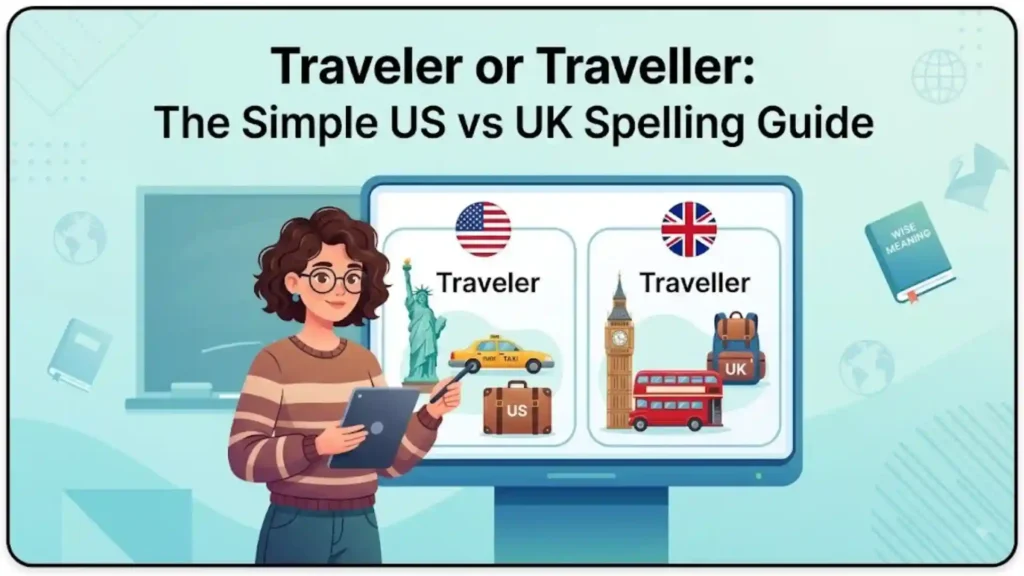
If you have ever wondered whether traveler or traveller is correct, you are not alone. Both spellings are correct, but they belong to different English varieties. Traveler is the common American English spelling, while traveller is the common British English spelling. The difference is mainly about regional spelling, not meaning.
This small spelling difference can confuse students, writers, bloggers, and anyone learning English. The good news is that the rule is simple. Once you know which English variety you are using, you can easily choose the right form. Let’s look at the traveler vs traveller difference, examples, regional use, and related spellings.
Quick Answer:
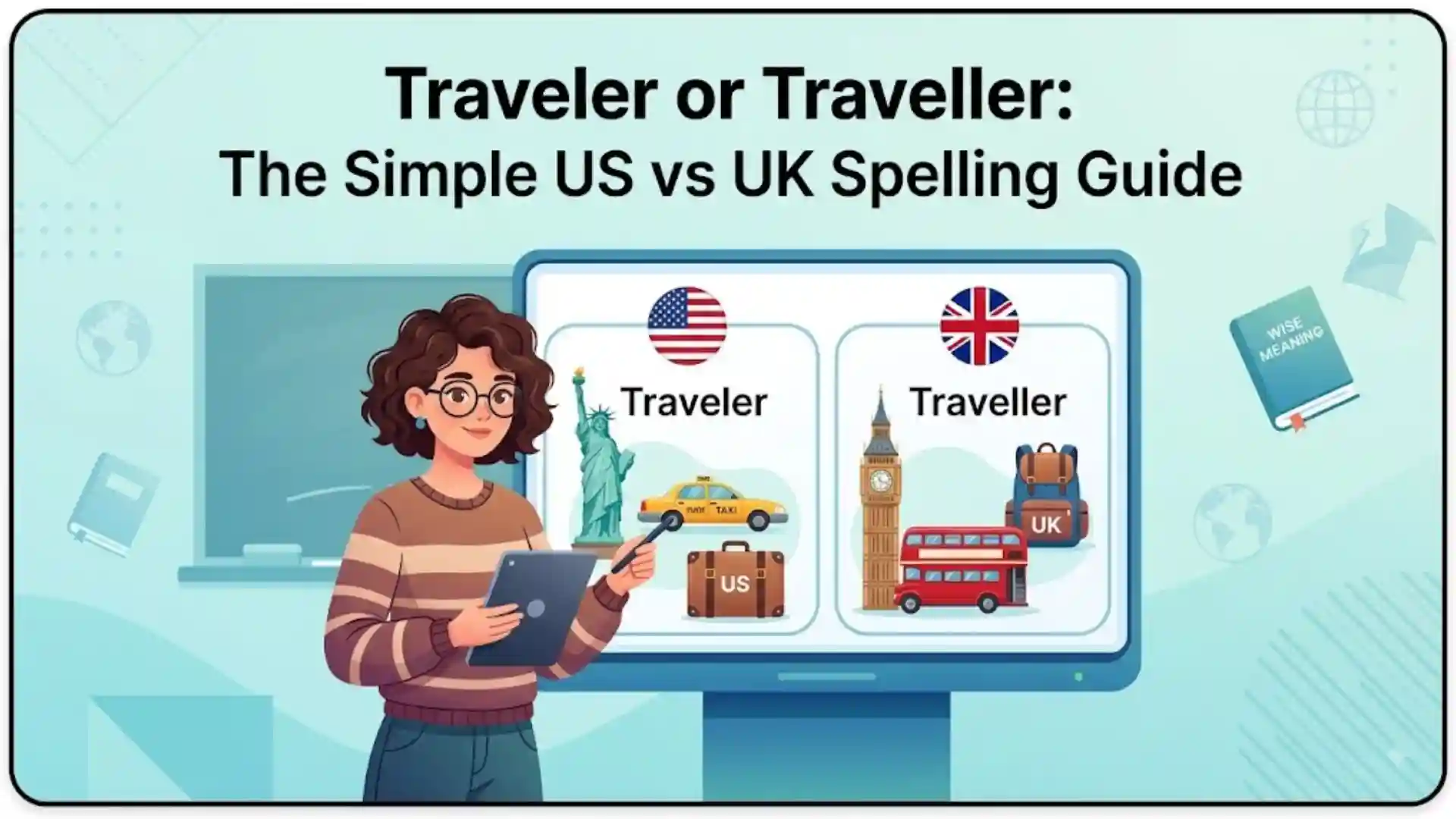
Traveler and traveller are both correct. The main difference is the English variety. American English usually uses traveler, with one l, while British English usually uses traveller, with two l’s.
| Spelling | Common Usage | Meaning |
| 🇺🇸 Traveler | American English | A person who travels |
| 🇬🇧 Traveller | British English | A person who travels |
So, if you are writing for a US audience, choose traveler. If you are writing for a UK audience, choose traveller. The meaning does not change. The most important thing is to choose the spelling that fits your readers and use it consistently.
TL;DR 🚀
Traveler and traveller are both correct spellings, but they follow different English varieties. Traveler is the standard spelling in American English 🇺🇸, while traveller is commonly used in British English 🇬🇧.
The meaning stays the same: both words describe a person who travels. The same difference appears in related forms, such as traveling/travelling and traveled/travelled.
👉 US English: Use traveler
👉 UK English: Use traveller
👉 International writing: Follow your target audience or style guide
The key is consistency—choose the spelling that matches your audience and use it throughout your writing.
You Might Also Like That: Of Course or Ofcourse
Traveler vs Traveller: What’s the Difference?
The main difference between traveler and traveller is the number of l’s. The American form is traveler, while the British form is traveller. Both words describe a person who travels from one place to another.
The words also have the same basic pronunciation and meaning. You should not think of them as two different words. Instead, think of them as regional spelling variations. This same pattern appears in related words such as traveling and travelling or traveled and travelled. Understanding this simple rule makes the traveler vs traveller question much easier.
Traveler vs Traveller Around the World 🌍
English spelling can vary beyond the simple American English vs British English comparison. Countries such as Canada, India, Australia, New Zealand, and Ireland may use spelling conventions influenced by British English, although actual usage can vary by region, organization, or publication.
For this reason, avoid saying that every country follows one strict rule. Some writers and organizations may prefer traveller, while others may use traveler. When writing for an international audience, check the spelling preferred by your target publication or audience. If you cannot find a specific rule, choose one English variety and use it consistently. This approach keeps your writing clear and prevents unnecessary spelling changes.
Which Spelling Should You Use?
Choosing between traveler or traveller becomes easy when you know your target audience. Use traveler when you write primarily for people in the United States. Use traveller when you write for a British English audience. In countries that commonly follow British spelling, such as Australia and New Zealand, traveller may also be the preferred form.
You should also follow the style guide of your school, workplace, publisher, or website when one exists. If you write for an international audience, choose one spelling system and stay consistent. In other words, do not choose a spelling because you think one is “more correct.” Choose the form that best fits your readers and your writing style.
Why Do Traveler and Traveller Have Different Spellings?
The different spellings come from the broader development of American and British English. Over time, English developed different spelling preferences in different regions. American English adopted or maintained several shorter spelling forms, while British English retained forms that often use additional letters.
You can see this pattern in words such as color/colour, center/centre, and traveled/travelled. The difference between traveler and traveller follows the same general pattern. This does not mean that one version has a different meaning or grammatical function. Instead, the spelling reflects the variety of English being used. Understanding this pattern can help you recognize why both traveler spelling and traveller spelling appear in reliable English writing.
Traveler, Traveller, Traveling, and Travelling
The spelling difference does not stop with traveler and traveller. You can see the same regional pattern in several related forms. American English normally uses one l, while British English commonly uses two l’s in these words.
| American English 🇺🇸 | British English 🇬🇧 |
| traveler | traveller |
| traveling | travelling |
| traveled | travelled |
This pattern makes it easier to remember the correct spelling. If you choose American English, use traveler, traveling, and traveled. If you choose British English, use traveller, travelling, and travelled. Keeping these forms consistent will make your writing look more polished.
You Might Also Like That: Of Course or Ofcourse
Traveler in American English
Traveler is the standard American English spelling. It uses one l before the ending. You will commonly see this form in US newspapers, websites, books, schools, and everyday writing.
For example, an American writer might say, “The traveler arrived at the airport early.” Another example is, “The experienced traveler packed everything before leaving home.” If your readers mainly live in the United States, traveler is usually the best choice. You should also follow the same American pattern with words such as traveling and traveled. This keeps your writing clear and consistent.
Traveller in British English
Traveller is the standard British English spelling. It uses two l’s, which makes it different from the American form. You will often see traveller in British books, newspapers, websites, and educational writing.
For example, you could write, “The traveller arrived at the station before noon.” You could also say, “The young traveller planned a long journey across Europe.” If you are writing for a UK audience, traveller is usually the natural choice. British English also commonly uses travelling and travelled. Using these related forms together helps your article maintain a consistent British English style.
Traveler vs Traveller Around the World 🌍
English does not follow exactly the same spelling rules in every country. While the US and UK provide the clearest examples, countries such as Canada, India, Australia, New Zealand, and Ireland may have their own common preferences.
For example, many countries that use British-style English commonly prefer traveller, but actual usage can vary between people, companies, and publications. That means you should avoid saying that every country always uses one spelling. If you are writing for a specific country, check its usual English style. For international content, choose one spelling system and use it consistently throughout your article.
Which Spelling Should You Use?
Choosing between traveler or traveller is easy when you know your audience. If you write mainly for people in the United States, use traveler. If you write for people in the United Kingdom, use traveller.
You should also consider your school, company, publisher, or website style guide. Some organizations have a clear preference for American or British English. If you are writing for a worldwide audience, pick the spelling that matches your main readers. Most importantly, do not switch between the two forms without a reason. Consistency makes your writing look cleaner and more professional.
Why Do Traveler and Traveller Have Different Spellings?
The difference comes from the development of American and British English. Over time, English developed different spelling habits in different regions. American English often uses shorter spelling forms, while British English keeps some traditional spellings.
You can see similar differences in words such as color and colour, center and centre, and traveled and travelled. The same idea explains traveler and traveller. Neither spelling has a different meaning. The spelling simply shows which form of English the writer follows. Once you understand this pattern, many other American and British spelling differences become easier to recognize.
Traveler, Traveller, Traveling, and Travelling
The difference between traveler and traveller also appears in related forms of the word. American English generally uses one l, while British English often uses two.
| American English 🇺🇸 | British English 🇬🇧 |
| traveler | traveller |
| traveling | travelling |
| traveled | travelled |
This gives you a simple pattern to remember. If you choose American English, use traveler, traveling, and traveled. If you choose British English, use traveller, travelling, and travelled. Using the same pattern throughout your writing will help you avoid unnecessary spelling mistakes.
Examples of Traveler and Traveller in Sentences
Examples can make the difference much easier to understand. In American English, you might write:
- “The traveler arrived at the hotel late.”
- “Every traveler should carry a valid passport.”
- “The experienced traveler planned the trip carefully.”
In British English, the same ideas would use traveller:
- “The traveller arrived at the hotel late.”
- “Every traveller should carry a valid passport.”
- “The experienced traveller planned the trip carefully.”
Notice that the meaning stays the same. Only the spelling changes. This is why traveler and traveller are not different in meaning.
Can You Use Traveler and Traveller in the Same Article?
You can mention both forms when you are explaining the spelling difference, but you should normally avoid switching between them randomly. For example, using traveler in one paragraph and traveller in another may make your writing look inconsistent.
If you choose American English, stay with traveler, traveling, and traveled. If you choose British English, use traveller, travelling, and travelled. There are some exceptions. You may keep a different spelling inside a direct quotation, official name, or title. Outside those cases, choose one English variety and stick with it.
Common Mistakes to Avoid
Many writers make simple mistakes when choosing between traveler and traveller. One common mistake is thinking that traveller is wrong. It is not. It is the normal British English spelling. Another mistake is believing that traveler is always the only correct form. American English commonly uses it, but British English prefers traveller.
Some writers also mix related forms, such as traveler with travelling. While readers can understand the sentence, consistent spelling looks better. Finally, do not create a meaning difference between the two words. Traveler and traveller mean the same thing. The main difference is regional spelling.
Traveler or Traveller: Simple Decision Guide
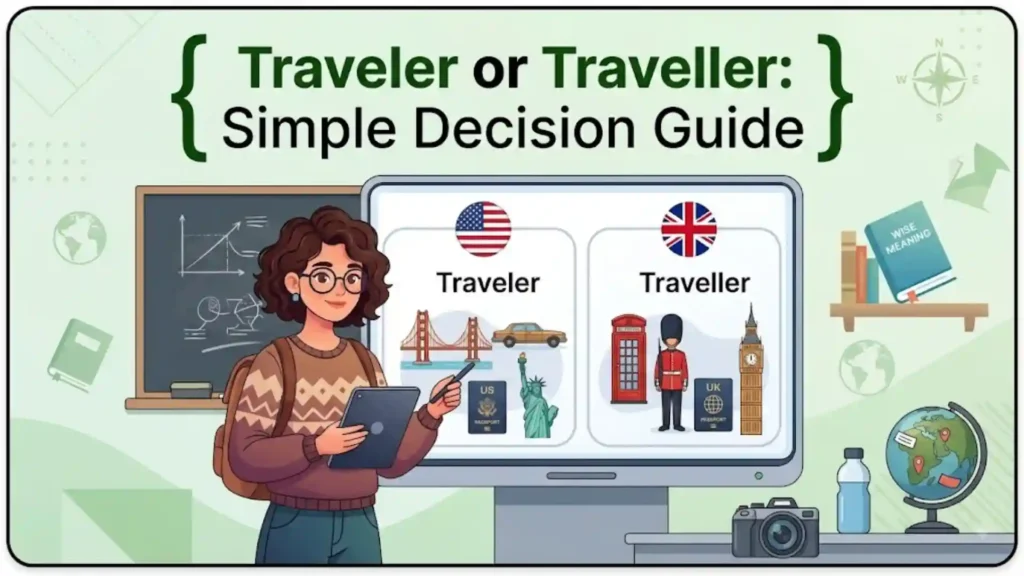
If you still cannot decide which form to use, this simple guide can help:
| Your Audience | Recommended Spelling |
| 🇺🇸 United States | Traveler |
| 🇬🇧 United Kingdom | Traveller |
| 🇦🇺 Australia | Traveller is common |
| 🇳🇿 New Zealand | Traveller is common |
| 🇮🇳 India | British-style spelling is common |
| 🌍 International | Match your main audience |
If your school, company, or publisher provides a style guide, follow it. For international websites, think about where most of your readers live. The best choice is not about one spelling being better. It is about using the right spelling for your audience.
You Might Also Like That: Of Course or Ofcourse
Frequently Asked Questions
Is traveler or traveller correct?
Both are correct. Traveler is the common American English spelling, while traveller is the common British English spelling. Both words have the same basic meaning.
Is traveler American or British?
Traveler is mainly the American English spelling. It uses one l.
Is the traveller British English?
Yes. Traveller is the standard British English spelling and uses two l’s.
How do Americans spell traveller?
Americans generally spell it traveler, with one l.
How do British people spell traveler?
British English generally uses traveller, with two l’s.
Are traveler and traveller pronounced differently?
Usually, no. The spelling changes, but the two forms normally have the same pronunciation and meaning.
Is traveling or travelling correct?
Both are correct. Traveling is common in American English, while travelling is common in British English.
Conclusion
So, traveler or traveller—which one should you use? The answer depends on the English variety you follow. Traveler is the standard American English spelling, while traveller is the standard British English spelling. Both forms are correct, and both have the same basic meaning.
The easiest rule is simple: 🇺🇸 use traveler for American English, and 🇬🇧 use traveller for British English. For other countries, follow the spelling preferred by your audience or style guide. Above all, keep your spelling consistent. Once you understand this small regional difference, choosing between traveler and traveller becomes simple.