
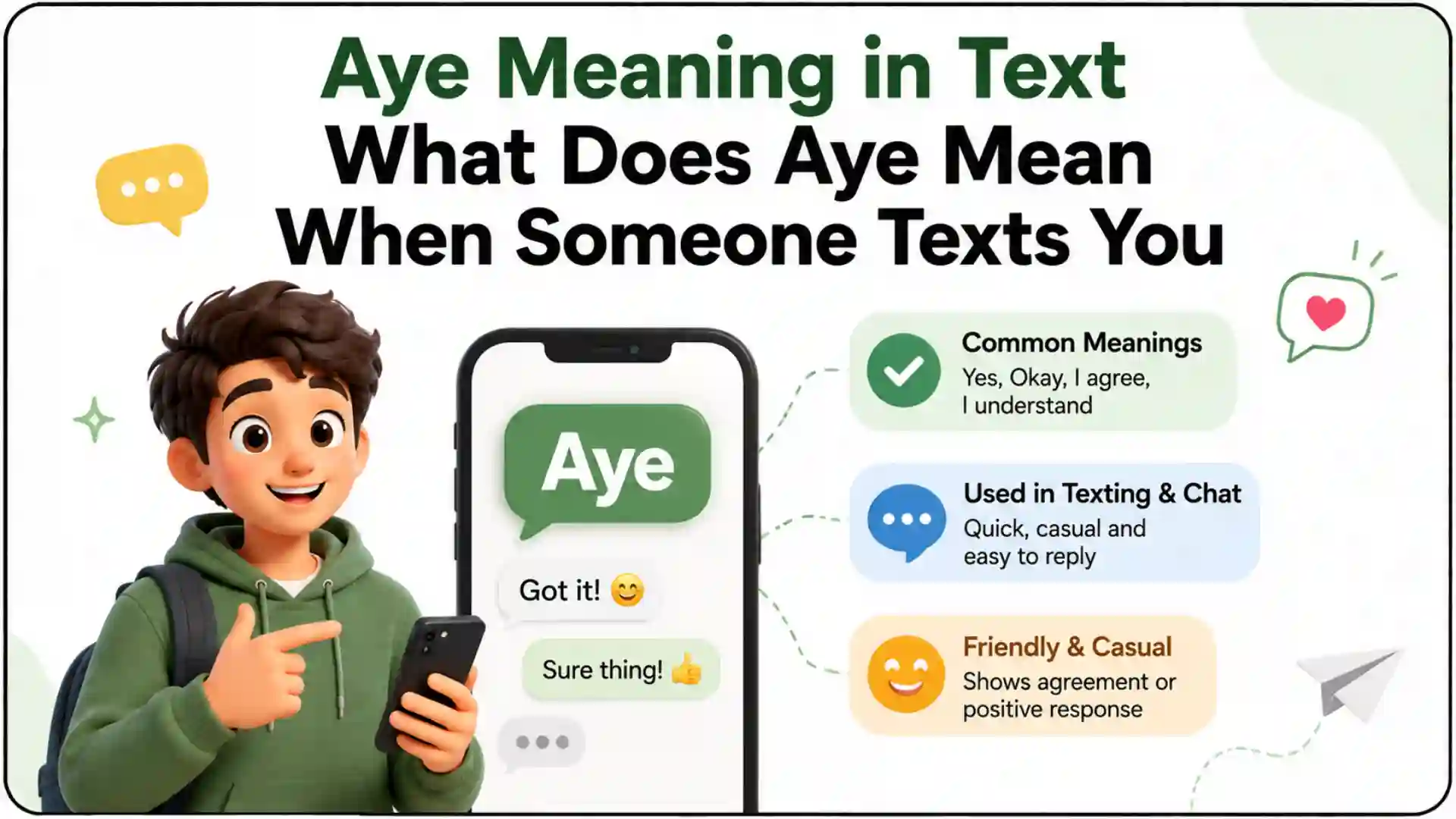
If you have seen someone reply “aye” in a text message, you may wonder what they mean. In most casual conversations, “aye” means “yes,” “yeah,” “okay,” or “I agree.” It is usually a short way to confirm something or show agreement.
However, aye can have different meanings depending on the context. It can also refer to an affirmative vote, and in older or Scottish usage, it can mean “always” or “ever.” Understanding the sentence around it makes the meaning much easier to identify.
Quick Answer: What Does “Aye” Mean in Text?
In text messages, “aye” usually means “yes,” “yeah,” “okay,” or “I agree.” It is generally a casual response and can be used when someone wants to confirm something without writing a longer reply.
For example:
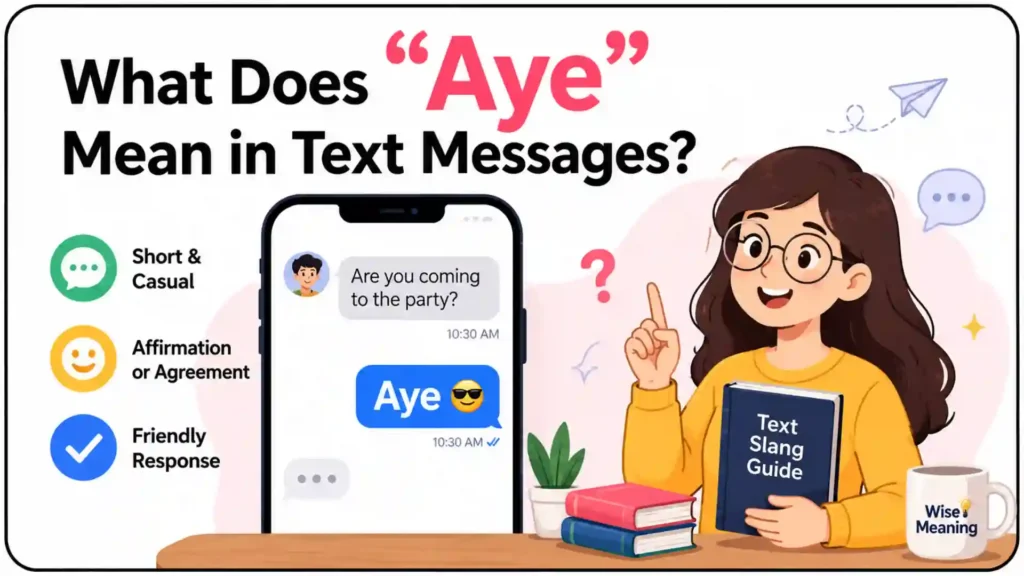
“Are you coming with us?”
“Aye.”
Here, “aye” simply means “yes.” The tone can be friendly, casual, or short depending on the conversation.
TL;DR
- 📱 “Aye” in text usually means “yes,” “yeah,” “okay,” or “I agree.”
- 💬 It is generally casual and can be used as a short reply.
- 👍 “Aye” is not automatically rude; its tone depends on the conversation and context.
- 🇬🇧 It is commonly associated with British, Scottish, and Northern English usage.
- 🗳️ In voting, “aye” means an affirmative vote or a vote in favor.
- ⏳ In older or Scottish usage, “aye” can mean “always” or “ever.”
- ♾️ “For aye” means “forever” or “always.”
- ⚓ “Aye aye!” can express agreement or acceptance, especially in traditional sailor language.
- 🔎 When someone texts “aye,” the safest first interpretation is usually “yes” or “I agree,” unless the context suggests another meaning.
You Might Also Like That: Past Tense of See
What Does “Aye” Mean in Text Messages?
When people use “aye” in texting, they usually use it as a quick answer. It can show agreement, confirmation, acceptance, or simple acknowledgment.
Common meanings include:
- Yes
- Yeah
- I agree
- Okay
- Sure
- I understand
For example, if someone asks, “Did you finish the work?”, replying “Aye” means “Yes, I finished it.” If someone says, “That was a great movie,” and you reply “Aye,” you are showing that you agree.
Examples of “Aye” in Texting
Here are some simple examples:
Question: “Are you free tonight?”
Reply: “Aye.”
➡️ Meaning: Yes, I am.
Question: “You got my message?”
Reply: “Aye.”
➡️ Meaning: Yes, I got it.
Statement: “That was a good game.”
Reply: “Aye, it was.”
➡️ Meaning: I agree.
Suggestion: “Let’s meet at 7.”
Reply: “Aye, sounds good.”
➡️ Meaning: Okay, I agree.
What Does “Aye” Mean Depending on Context?
The meaning of “aye” can change slightly based on the conversation. Most of the time, it shows agreement, but the exact feeling behind it depends on what came before it.
For example, “Aye!” may sound more excited than “Aye.” A simple “aye” can also be a short acknowledgment. If someone sends only one word, it may feel more direct than a longer reply such as “Yes, definitely!”
👉 Context is important. Look at the question, the previous messages, punctuation, and the overall tone before deciding what the sender means.
Is “Aye” Rude, Polite, or Casual?
“Aye” is not automatically rude. It is usually casual and can sound friendly when used between people who are comfortable with each other.
Still, a one-word reply can sometimes sound short, blunt, or uninterested. For example, replying only “Aye.” to a long message may feel less warm than saying “Yeah, absolutely!”
In a formal email, school assignment, business message, or professional setting, “yes” is usually a safer choice. Use “aye” when the situation naturally allows casual or regional language.
Is “Aye” Slang?
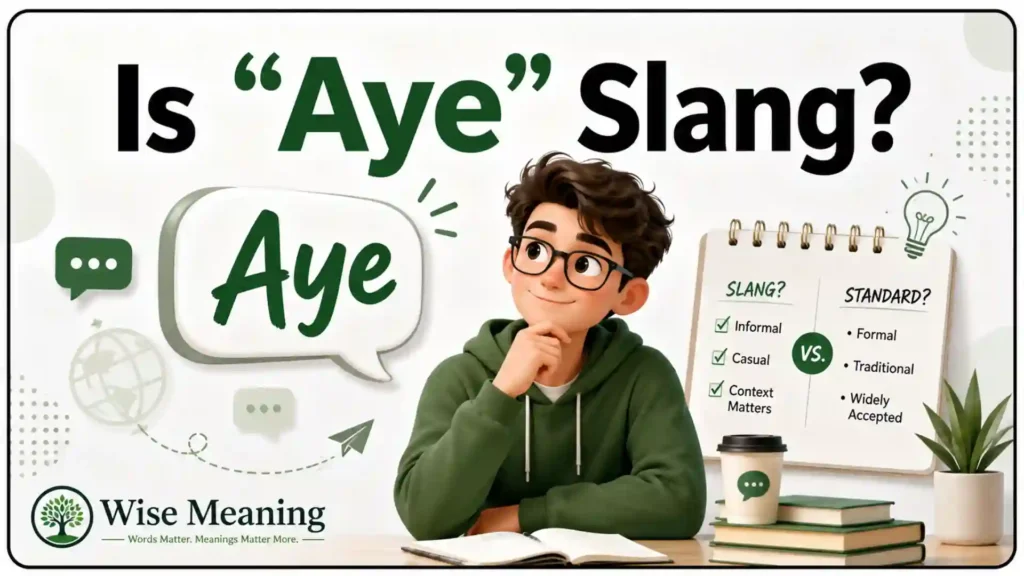
Aye is a real English word, not simply modern internet slang. Dictionaries list it as a word meaning “yes,” and they also record other meanings and uses.
People may think it is slang because it is often heard in casual speech, texting, or regional English. It is especially linked with Scottish and Northern English usage.
So, it is more accurate to say that “aye” is an established word that can be used casually, rather than calling it only a texting slang term.
You Might Also Like That: BK Meaning in Text
Aye vs. Yes vs. Yeah vs. Yup
Although these words can all express agreement, their tone is slightly different.
| Word | Common Meaning | Typical Tone |
| Aye | Yes / agreement | Casual or regional |
| Yes | Affirmation | Neutral or formal |
| Yeah | Yes | Casual |
| Yup | Yes | Casual or playful |
| Okay | Agreement / acknowledgment | Neutral or casual |
“Yes” is the safest choice in formal situations. “Yeah” and “yup” are common in casual chats. “Aye” can feel more regional or distinctive, especially to people who are not used to hearing it.
What Does “Aye” Mean From a Guy or a Girl?
“Aye” does not have a special meaning based on whether a guy or girl sends it. The word itself still normally means yes, agreement, or acknowledgment.
If someone texts you “aye,” look at the rest of the conversation instead of trying to read a hidden meaning into the word. Their other words, punctuation, and the topic being discussed can tell you much more about their tone.
For example, “Aye, definitely!” sounds more enthusiastic than simply “Aye.”
What Does It Mean When Someone Texts “Aye”?
When someone sends “aye” as a reply, they may be:
- Agreeing with you
- Confirming something
- Accepting a suggestion
- Answering “yes”
- Acknowledging what you said
The safest interpretation is usually “yes” or “I agree,” unless the surrounding conversation clearly suggests another meaning.
What Does “Aye” Mean in British or Scottish English?
In British and Scottish English, “aye” has a long history of use as another word for “yes.” It is especially associated with Scotland and Northern England.
You may hear or read it in regional speech, traditional writing, songs, or older expressions. This is one reason some people find the word unusual when they first see it.
For example:
“Will you come with us?”
“Aye.”
The meaning is simply “Yes.” The regional setting explains why the speaker chose “aye” instead of the more common “yes.”
You Might Also Like That: SMH Meaning
Other Meanings of “Aye”
The word “aye” does not always mean “yes.” It has another established meaning connected with time.
“Aye” Meaning “Always” or “Ever”
In older or Scottish usage, “aye” can mean “always,” “ever,” or “continually.” This meaning is different from the affirmative “aye” that means “yes.”
For example:
“Their friendship will endure for aye.”
Here, “for aye” means “forever.”
This is why you should not assume that every appearance of “aye” means “yes.” The words around it help you understand which meaning is intended.
What Does “For Aye” Mean?
“For aye” means “forever” or “always.” It is an older or literary expression and may appear in poems, songs, stories, or traditional language.
For example:
“They promised to remain friends for aye.”
The meaning is:
“They promised to remain friends forever.”
This is very different from using “aye” as a simple answer to a question. The phrase “for aye” gives you the clue that the word is being used in its time-related sense.
“Aye” as a Vote
Aye can also be used when talking about voting. In this context, it means an affirmative vote or a vote supporting a proposal.
For example:
“The proposal received 40 ayes and 15 noes.”
Here, the ayes are the people or votes supporting the proposal.
You may also hear the phrase “the ayes have it.” It means that more people voted in favor of the proposal than against it. This use is common in parliamentary or formal voting language.
What Does “Aye Aye” Mean?
“Aye aye!” is a separate expression from simply saying “aye.” It can be used to show that someone accepts an instruction and will follow it.
For example:
“Aye aye, Captain!”
This expression is often linked with sailors and nautical speech and may also be used humorously in everyday conversations.
⚠️ Do not confuse “aye aye” with “aye-aye.” With a hyphen, aye-aye is the name of a small nocturnal primate from Madagascar. The two expressions have completely different meanings.
You Might Also Like That: What Does [sic] Mean in Text
How to Use “Aye” in a Sentence
You can use “aye” in different ways depending on the meaning you want.
Texting:
“Are you ready?”
“Aye.”
Agreement:
“That was a difficult test.”
“Aye, it was.”
Regional speech:
“Will you join us?”
“Aye, I will.”
Voting:
“All those in favor, say aye.”
Older meaning:
“Their love lasted for aye.”
These examples show why context matters when understanding the word.
Common Mistakes When Understanding “Aye”
One common mistake is assuming that “aye” always means “yes.” That is usually true in a short reply, but not in every sentence.
Another mistake is assuming that aye is only slang. It is an established word with traditional and regional uses.
People also sometimes confuse “aye” with “aye aye” or “aye-aye.” These forms can have different meanings.
Finally, do not assume that a short “aye” is rude. Its tone depends on the situation, the speaker, and the rest of the conversation.
Frequently Asked Questions
What does aye mean in text?
In text messages, “aye” usually means “yes,” “yeah,” “okay,” or “I agree.” It is generally casual and often used as a short response.
Does aye mean yes?
Yes. One of the main meanings of “aye” is “yes.” It is especially associated with older, regional, British, and Scottish English.
Is aye slang?
Not exactly. Aye is an established English word, although it can be used casually and may sound like slang to some readers.
Is aye rude?
No, not by itself. Aye is usually casual. However, a very short reply such as “Aye.” can sometimes sound blunt depending on the conversation.
Is aye British or Scottish?
Aye is strongly associated with Scottish and Northern English usage, although it also appears in other English contexts, especially in voting and traditional expressions.
What does “for aye” mean?
“For aye” means “forever” or “always.” This is an older or literary use of the word.
What does “aye aye” mean?
“Aye aye!” is an expression of acceptance or agreement to follow an instruction. It is often associated with sailors and may also be used humorously.
What does an aye vote mean?
An aye vote is an affirmative vote, meaning the person supports a proposal, motion, or decision.
Is aye the same as yeah?
They can have the same basic meaning, but “aye” can sound more regional or traditional, while “yeah” is much more common in everyday casual English.
What does aye mean from a guy or girl?
The word has no special meaning based on gender. In most messages, it simply means yes, agreement, or acknowledgment. Context gives you more information about the tone.
Final Thought
The most common aye meaning in text is simple: yes, yeah, okay, or I agree. It is usually a casual way to confirm something or show agreement.
But aye has more than one meaning. It can also refer to an affirmative vote, while older or Scottish usage can mean always or ever, as in “for aye,” meaning forever. So, when you see “aye” in a message, start with “yes” as the likely meaning, then use the surrounding context to understand the exact tone.