
If you text someone every day, go on dates, share feelings, or become physically close but never officially call each other a couple, you may be in a situationship. The situationship meaning describes a romantic or sexual connection that feels like more than friendship but does not have a clear relationship label or commitment. Unlike a traditional committed relationship, both people may leave their relationship status, expectations, or future uncertain.
So, what is a situationship, and how does it differ from dating or a relationship? A situationship can look different for everyone, but it usually involves emotional connection, intimacy, and unclear commitment. In this guide, we’ll explain what situationship means, share simple examples and common signs, compare it with relationships and friends with benefits, and answer the most common questions about this modern dating arrangement.
Quick Answer: What Does Situationship Mean? 💡
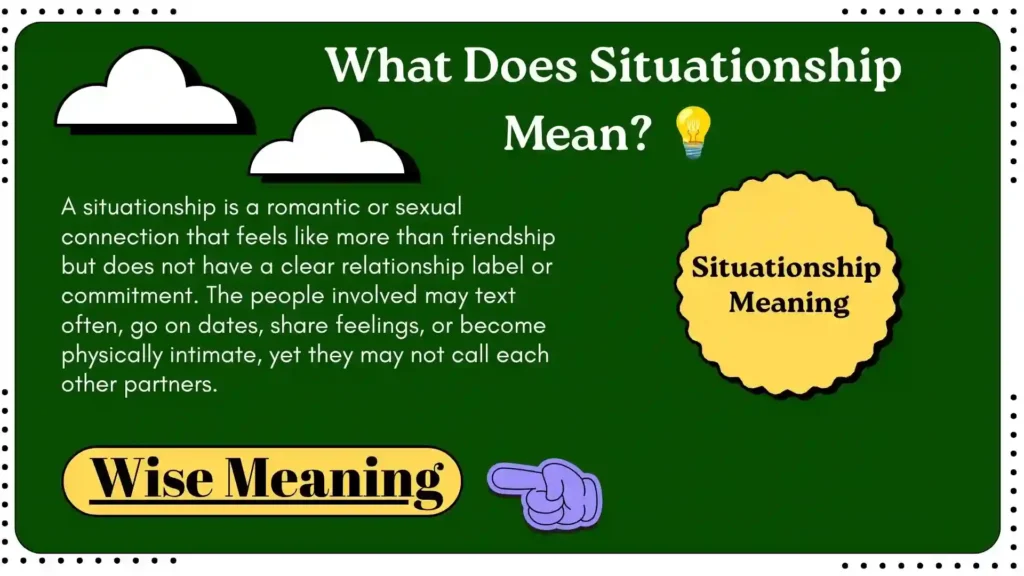
A situationship is a romantic or sexual connection that feels like more than friendship but does not have a clear relationship label or commitment. The people involved may text often, go on dates, share feelings, or become physically intimate, yet they may not call each other partners.
In simple terms, a situationship is a relationship without a clear definition. The people involved may enjoy spending time together but remain unsure about their relationship status, exclusivity, or future. The exact situationship meaning can vary, but uncertainty and unclear commitment usually sit at the center of it.
TL;DR 📌
- 💡 Situationship meaning: A romantic or sexual connection without a clearly defined relationship or commitment.
- ❤️ More than friendship: It often includes emotional closeness, dates, or physical intimacy.
- 🏷️ No clear label: The people involved may not call themselves a couple.
- ❓ Unclear expectations: Commitment, exclusivity, and future plans may remain uncertain.
- 👀 Common signs: Frequent texting, mixed signals, intimacy, and uncertainty about where you stand.
- 🔄 Not the same as FWB: A situationship can involve stronger romantic or emotional feelings.
- 💕 Can become a relationship: It can develop into a committed relationship when both people want the same thing.
- 🗣️ Communication matters: Clear conversations about boundaries, expectations, and commitment can reduce confusion.
- ⚖️ Not always bad: A situationship can work when both people understand and genuinely accept the arrangement.
You Might Also Like That: AWL Mean in Text
What Is a Situationship? ❤️
So, what is a situationship in everyday life? It usually describes two people who have a romantic or physical connection but have not agreed on what their relationship actually is. They may act like a couple in many ways without making the relationship official.
A situationship can develop naturally while two people are dating, or it can continue because neither person wants to define it. Some people enjoy the freedom of this arrangement, while others may feel confused. The key difference is usually unclear expectations, commitment, or relationship labels.
Common Features of a Situationship
A situationship may include several relationship-like behaviors, but the people involved often leave important things undefined. Common features include:
- 💬 Regular communication through texts or calls
- ❤️ Emotional closeness or romantic feelings
- 📅 Going on dates or spending free time together
- 🤝 Physical or sexual intimacy
- 🏷️ No clear relationship label
- 🔐 Unclear exclusivity
- 🗣️ Little discussion about commitment
- 🔮 An uncertain future together
Not every situationship includes all these signs. What matters most is the lack of clear agreement about the relationship.
Situationship Examples 💬
A simple example can make the situationship meaning much easier to understand. Imagine two people who text every morning, meet several times a week, go out for dinner, and have strong feelings for each other. They may even spend holidays together, but neither person calls the other a boyfriend, girlfriend, or partner.
Another example involves two people who enjoy dating and physical intimacy but never discuss whether they are exclusive. A third example could involve one person wanting a committed relationship while the other prefers to keep things casual. These situations show how romantic connection and uncertainty can exist at the same time.
Signs You May Be in a Situationship 👀
You may be in a situationship when the connection feels romantic but your relationship status remains unclear. You might spend a lot of time together, communicate regularly, and share personal feelings, yet you still don’t know where you stand.
Look for these common signs:
- ❓ You don’t know what to call the relationship.
- 🏷️ You avoid or never discuss a label.
- 💬 You communicate often but avoid serious conversations.
- 🔐 Exclusivity remains unclear.
- 🔮 You don’t know what the future looks like.
- ❤️ One or both people have feelings but avoid commitment.
- ⚠️ You receive mixed signals.
- 🎯 Your relationship goals may not match.
One sign alone doesn’t define a situationship. The overall pattern matters.
Situationship vs. Relationship ❤️🩹
The biggest difference between a situationship and a committed relationship is clarity. In a committed relationship, both people usually understand their relationship status, expectations, and level of commitment. They may also discuss exclusivity and future plans.
A situationship can include many of the same activities as a relationship, such as dates, intimacy, and emotional support. However, the people involved may not clearly agree that they are a committed couple. That doesn’t automatically make a situationship bad. The important question is whether both people understand and accept the arrangement.
| Situationship | Committed Relationship |
| 🏷️ Often has no clear label | 🏷️ Has a clear label |
| ❓ Expectations may be unclear | ✅ Expectations are usually discussed |
| 🔐 Exclusivity may be uncertain | 🔐 Exclusivity is usually discussed |
| 🔮 Future may be unclear | 🎯 Future expectations are clearer |
| ❤️ Commitment may be uncertain | 🤝 Commitment is established |
Situationship vs. Dating 📅
Situationship vs dating can seem confusing because a situationship may begin through dating. Dating itself does not always mean that two people have entered a committed relationship. People can date casually while they learn about each other and decide what they want.
The main difference comes from clarity and expectations. Two people can casually date while openly understanding that they are keeping things casual. In a situationship, the romantic connection often continues without a clear agreement about what it means. Therefore, situationship and casual dating can overlap, but they are not always the same.
Situationship vs. Friends With Benefits 🔄
A situationship vs FWB comparison helps because both arrangements can involve physical intimacy without a traditional relationship. Friends with benefits, or FWB, usually describes friends who have a sexual relationship without becoming a committed couple.
A situationship can include physical intimacy too, but it often involves a wider romantic or emotional connection. The two people may go on dates, develop feelings, or act like partners while keeping their status unclear. In short, FWB often focuses on friendship and physical intimacy, while a situationship can involve romance, emotions, and uncertainty.
Is a Situationship a Relationship? 🤔
Is a situationship a relationship? Not necessarily. A situationship can contain many things people normally associate with a relationship, including affection, intimacy, dates, regular communication, and emotional support. However, the people involved may not have agreed to a committed relationship.
The word situationship mainly highlights the undefined nature of the connection. Some people may consider their situationship a type of relationship, while others may not. Instead of focusing only on the label, look at what both people have actually agreed to. Communication, expectations, and mutual understanding matter more than a label alone.
Is a Situationship Good or Bad? ⚖️
A situationship is not automatically good or bad. It depends on what both people want and whether they feel comfortable with the arrangement. Some people prefer a flexible connection without immediate commitment, especially when they are still learning about each other.
Problems can appear when one person wants a committed relationship while the other wants to stay casual. Unclear expectations can then create confusion, disappointment, or emotional stress. A healthy arrangement requires honest communication and respect for boundaries. If both people understand the situation and genuinely want the same thing, an undefined connection may work for them.
Can a Situationship Become a Relationship? 💕
Yes, a situationship can become a relationship when both people want to move toward commitment. However, spending more time together does not automatically change the relationship. Both people need to communicate clearly about what they want.
A healthy transition may involve discussing commitment, exclusivity, expectations, and future plans. One person should not assume that the other person wants the same outcome. If both people agree to become committed partners and their actions match that decision, the situationship can develop into a more defined relationship.
How Long Can a Situationship Last? ⏳
There is no fixed answer to how long a situationship can last. Some situationships may continue for a few weeks, while others can last for months or even longer. Time alone does not determine whether something qualifies as a situationship.
The more important factor is whether the relationship remains undefined. A connection can last a long time while still having unclear expectations or commitment. If both people feel comfortable, they may continue the arrangement. If one person wants clarity or a committed relationship, the lack of definition may eventually become a problem.
How to Handle a Situationship 🗣️
If you’re in a situationship, start by deciding what you want. Ask yourself whether you’re comfortable with the current arrangement or whether you want commitment, exclusivity, or a clearer relationship status.
Then have an honest conversation with the other person. Ask what they want and listen carefully to their answer. You can discuss boundaries, expectations, communication, and future plans without turning the conversation into an argument. If your goals match, you can decide how to continue. If they don’t, you can choose what works best for your emotional needs.
How to End a Situationship ✋
If a situationship no longer works for you, ending it clearly can prevent more confusion. Explain your decision honestly and avoid sending mixed messages afterward. You don’t need to blame the other person or prove that your choice is correct.
After ending the connection, set clear boundaries. You may need to reduce contact, stop romantic communication, or take some time away from the person. Ending a situationship can feel difficult when emotions exist, but clear communication can help both people understand that the connection has ended.
Situationship Meaning in Text and Social Media 📱
The situationship meaning in text and social media is usually the same basic idea: an undefined romantic or sexual connection. People often use the word casually when talking about someone they date, text, or spend time with without having an official relationship.
For example, someone might text, “We’re in a situationship,” to explain that they are more than friends but aren’t officially a couple. Social media users may also use the term for relationships with mixed signals, unclear commitment, or no label. Because people use slang differently, the exact situation can vary from person to person.
Frequently Asked Questions About Situationships ❓
What is a situationship in simple terms?
A situationship is a romantic or sexual connection without a clearly defined relationship status. Two people may date, communicate regularly, or become intimate without agreeing that they are a committed couple.
What does situationship mean in dating?
In dating, a situationship usually means two people have a romantic connection but haven’t clearly defined their commitment, exclusivity, or future. It can be more involved than casual dating but less clearly defined than a committed relationship.
Is a situationship the same as casual dating?
Not always. Casual dating can still have clear expectations. A situationship usually involves more uncertainty about the relationship’s status, commitment, or future.
Is a situationship the same as FWB?
No. FWB usually focuses on friendship and sexual intimacy, while a situationship may include romantic feelings, dates, emotional closeness, and physical intimacy without a clear commitment.
How do you know if you’re in a situationship?
You may be in one if you regularly spend time together, communicate like a couple, or share intimacy but remain unsure about your relationship label, commitment, or future.
Can a situationship become a relationship?
Yes. It can become a committed relationship when both people want that change and openly discuss commitment, expectations, exclusivity, and future plans.
How long can a situationship last?
There is no set length. A situationship can last weeks, months, or longer. Its undefined status matters more than how long it lasts.
Can you have feelings in a situationship?
Yes. A situationship can involve strong emotional feelings. Romantic or emotional attachment does not automatically mean that both people want the same level of commitment.
How do you end a situationship?
Be honest about your decision, communicate clearly, and set healthy boundaries afterward. Reducing contact may help you move forward if continued communication makes the situation harder.
Final Thought 💭
The simplest situationship meaning is a romantic or sexual connection that exists without a clearly defined committed relationship. Two people may share dates, intimacy, emotions, and regular communication while remaining uncertain about their relationship status.
A situationship isn’t automatically unhealthy or wrong. What matters is clarity, communication, mutual expectations, and respect. If both people want the same arrangement, it may work. If one person wants commitment while the other wants to remain undefined, an honest conversation can help both people decide what comes next.