
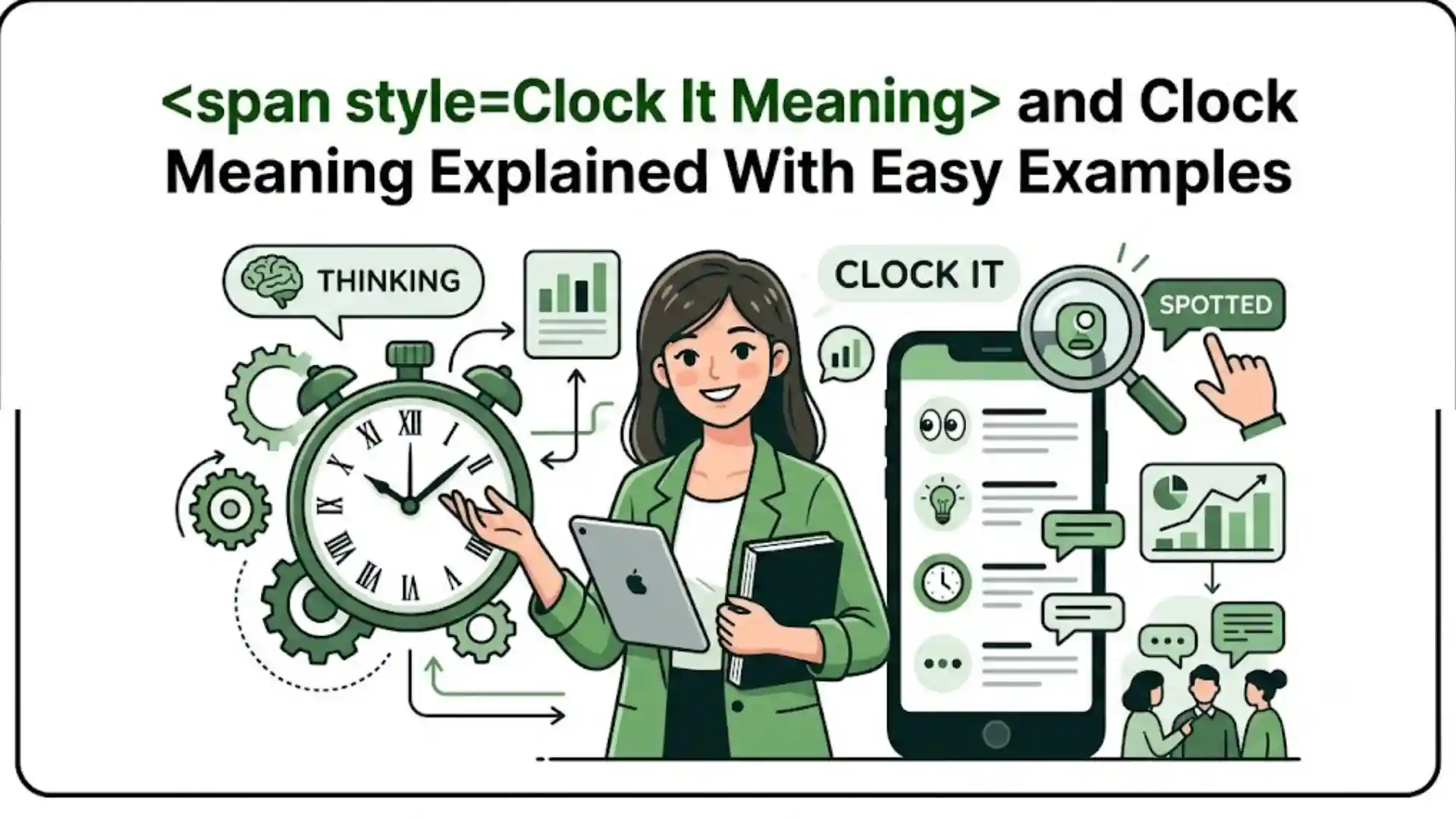
The phrase “clock it” has become increasingly popular across TikTok, Instagram, X (formerly Twitter), and everyday texting. If you’ve seen someone comment, “Did you clock it?” or “I clocked that immediately,” you may have wondered what they actually meant. While the word clock traditionally refers to telling time, its modern slang meaning is completely different. Today, its meaning usually refers to noticing, recognizing, or understanding something that others might miss. Knowing the clock’s meaning in different situations helps you better understand online conversations and casual speech.
Although clock is a common slang expression, the word clock has several meanings depending on the context. It can describe recognizing a detail, measuring time or speed, or even hitting someone in informal speech. In this guide, you’ll learn what does clock mean, what does clock mean, how people use clock meaning in text, clock meaning on social media, and clock meaning on TikTok. You’ll also discover real-life examples, common slang uses, and the origin of this popular expression, making it easy to understand and use naturally in your own conversations.
⚡ Quick Answer
Clock means to notice, recognize, or quickly understand something that other people may not see right away. In modern slang, especially on TikTok, Instagram, and other social media platforms, people use the phrase when someone spots a hidden detail, realizes the truth, or catches a mistake. For example, if a friend notices a subtle joke that everyone else misses, you could say they clocked it. Although clock meaning changes with context, this slang definition is the one most people mean in online conversations today.
TL:DR
**”Clock it”** is modern slang that means to **notice, catch, or instantly recognize something** that others might overlook—whether that’s a subtle facial expression, a hidden lie, an inside joke, or a small detail in a video. While traditionally used as a noun for telling time or a verb for measuring speed (*”the radar clocked him at 90 mph”*) and physical blows (*”getting clocked”*), its dominant online meaning today is all about sharp perception. The phrase originated within Black and Latino LGBTQ+ Ballroom culture as a term for spotting hidden truths or calling out specifics, before mainstream social media platforms like TikTok, Instagram, and X launched it into everyday digital communication.
You Might Also Like That: Skillset or Skill Set
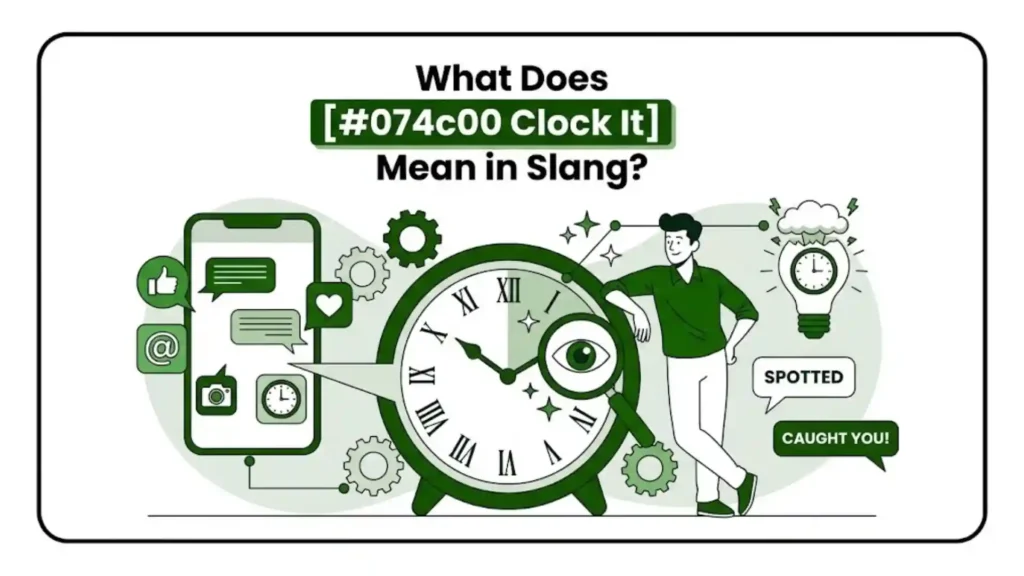
What Does “Clock It” Mean in Slang?
👀 The Modern Slang Meaning
In today’s internet culture, the clock’s meaning is all about recognizing, noticing, or figuring something out. People often use it when someone quickly understands a situation or catches a clue before others do. You may see comments like, “She clocked it immediately,” or “Did anyone else clock that?” In these examples, clock simply means the person noticed or understood something important. This clock slang expression has become common among Gen Z and Gen Alpha users.
💬 Why Do People Use “Clock It”?
People use clock it because it is short, expressive, and easy to understand in casual conversations. Instead of saying “I noticed that” or “I realized it,” they simply say “I clocked it.” The phrase works well in text messages, social media comments, videos, and everyday chats. It also adds personality to conversations, making it popular in online slang and texting slang. Today, many people use clock meaning in text naturally without even thinking about its original meaning.
📝 Examples of “Clock It” in Everyday Conversations
These examples show how the phrase fits naturally into daily speech.
| 💬 Sentence | ✅ Meaning |
| I clocked your new hairstyle right away. | I noticed it immediately. |
| Did you clock it during the movie? | Did you notice that detail? |
| Everyone laughed because she clocked the joke first. | She understood it first. |
| He clocked that something was wrong. | He realized something was wrong. |
| Nobody clocked the mistake until later. | Nobody noticed the mistake. |
What Does “Clock” Mean?
The word clock has several meanings, so understanding the clock’s meaning depends on the situation. While many people think of a clock as something that tells time, it can also work as a verb or a slang expression. This is why you may find different definitions in conversations, books, or online posts. Learning these meanings helps you understand what a clock means in different contexts without confusion.
🕒 Literal Meaning of Clock
The most common meaning of clock is a device that shows the time. You see clocks in homes, schools, offices, and public places every day. In this context, the word has nothing to do with slang. For example, “The clock on the wall says 10 o’clock.” This is the traditional clock meaning that everyone learns first. However, modern English also uses clocks in several other ways, especially in informal speech.
🎯 Clock as a Slang Word
As slang, clock usually means to notice, recognize, or identify something quickly. For example, if someone says, “I clocked your expression,” they mean they noticed your facial expression immediately. This clock meaning slang is very common in texting, social media, and casual conversations. The expression helps people communicate quickly while sounding natural and modern. That is why clock slang meaning continues to grow in popularity online.
🌍 Why Does “Clock” Have Different Meanings?
English words often develop new meanings over time, and clock is a perfect example. Depending on the situation, it may refer to telling time, measuring speed, recognizing something, or even hitting someone in informal speech. The surrounding words usually make the intended meaning clear. Understanding these different uses makes it easier to follow conversations, interpret clock meanings in chat, and use the expression confidently in your own everyday English.
You Might Also Like That: Skillset or Skill Set
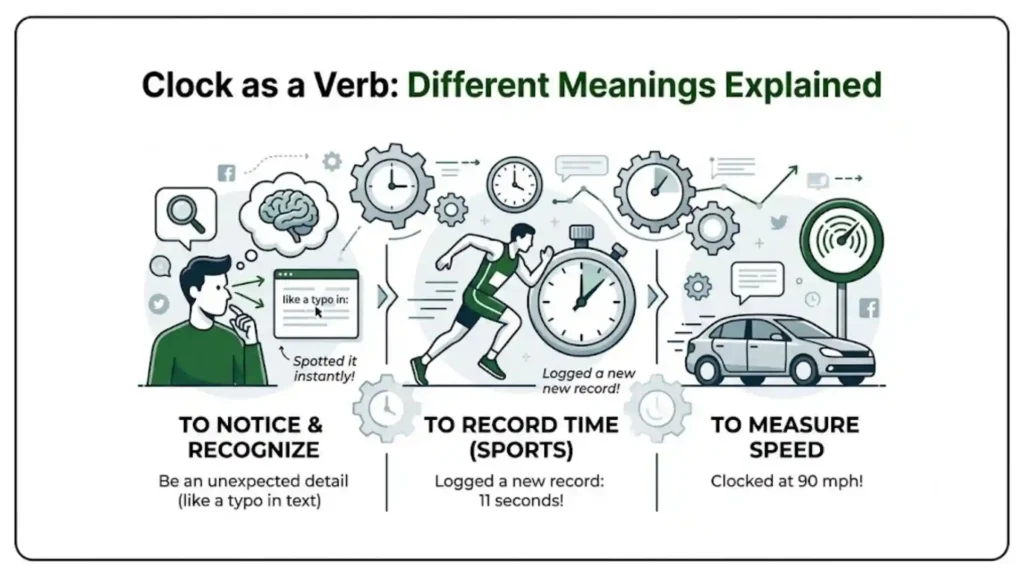
Clock as a Verb: Different Meanings Explained
The word clock is more than just a noun. It also works as a verb, and its meaning changes depending on the situation. You might hear someone use it while talking about texting, sports, driving, or even casual conversations. Understanding these meanings helps you know what a clock means in different contexts and prevents confusion. Let’s look at the most common ways people use this versatile word.
👀 To Notice or Recognize
One of the most popular slang meanings of clock is to notice, recognize, or spot something quickly. This is the meaning most people use on TikTok, Instagram, and in everyday conversations. For example, if someone says, “I clocked your new shoes,” they mean they noticed them immediately. This version of clock meaning slang is friendly, informal, and widely used in modern English.
⏱️ To Measure Time
Another meaning of clock is to record or measure time. Athletes, runners, and race officials often use it when tracking how long an activity takes. For example, “She clocked a time of 11 seconds in the race.” In this case, clock has nothing to do with slang. Instead, it refers to accurately measuring time, making it one of the traditional meanings of the word.
🚗 To Record Speed
The verb clock can also mean to measure someone’s speed. Police officers may use radar to clock a speeding vehicle, while sports commentators may say a baseball pitcher clocked a fastball at a certain speed. For example, “The police clocked the car at 90 mph.” Here, clock means to record speed using equipment rather than simply noticing something.
👊 To Hit Someone (Informal)
In informal English, clock can also mean to hit someone, usually with a punch. For example, “He got clocked during the fight.” This meaning is less common than the slang meaning of notice, but you may still hear it in movies, TV shows, or casual speech. Always pay attention to the sentence because the context clearly shows which clock meaning is being used.
What Does “Clock It” Mean in Texting?
📱 How People Use It in Messages
In texting, clock it usually means to notice, understand, or catch something. Friends often use it when discussing a hidden detail, a joke, or someone’s behavior. Instead of typing a long explanation, they simply write, “Did you clock it?” This short phrase makes conversations quicker and sounds more natural. That’s why clock meaning in text has become common in messaging apps and online chats.
💬 Examples in Text Messages
Here are a few examples showing what does clock it mean in texting.
| 📲 Text Message | ✅ Meaning |
| Did you clock what she said? | Did you notice what she said? |
| I clocked that joke instantly. | I understood the joke immediately. |
| Nobody clocked the mistake. | Nobody noticed the mistake. |
| You really clocked it! | You recognized it correctly. |
| I didn’t clock that at first. | I didn’t notice it at first. |
These examples show why clock meaning in chat is all about recognizing or understanding something.
What Does “Clock It” Mean on TikTok and Social Media?
🎵 Why the Phrase Became Popular
The phrase clock became widely known through TikTok, where creators often use it in videos and comments. Today, you’ll also find it on Instagram, X (formerly Twitter), Reddit, and other social platforms. Users often say “clock it” when someone notices a hidden detail, understands a joke, or points out something that others missed. This widespread use has made clock meaning on TikTok one of the most searched slang topics.
🌐 How People Use It Online
On social media, it usually encourages others to pay attention. Someone might comment, “Only a few people clocked it,” meaning only a few noticed the hidden clue. Another user might write, “She clocked his attitude immediately,” meaning she recognized his behavior. Because of these everyday uses, clock meaning on social media has become closely connected with words like notice, spot, recognize, and catch. The phrase is simple, expressive, and easy to use across different online communities.
Where Did “Clock It” Come From?
🌈 Ballroom and LGBTQ+ Culture
Although it is now common on social media, the phrase has much deeper roots. It became popular in ballroom culture, a creative community closely connected with many LGBTQ+ performers. In this setting, clocking often meant recognizing or calling attention to something about a person’s appearance, style, or behavior. Over time, the phrase became a regular part of conversations within the community before spreading to wider audiences.
📲 From Communities to Everyday Slang
As social media grew, TikTok, Instagram, and other platforms introduced clocks to millions of people around the world. Influencers, creators, and everyday users began using it in videos, captions, and comments. Today, many people use the phrase without knowing its history. Understanding the origin of clocks helps you appreciate how language changes over time and how internet culture can turn community expressions into popular everyday slang.
You Might Also Like That: Skillset or Skill Set
❓ Frequently Asked Questions
What does “clock it” mean?
Clock means to notice, recognize, or quickly understand something. People often use this slang when someone spots a hidden detail, realizes the truth, or catches something that others miss. Today, the phrase is common on TikTok, Instagram, and in everyday conversations.
What does “clock” mean in slang?
In slang, clock usually means to notice, recognize, or identify something. For example, if someone says, “I clocked your reaction,” they mean they noticed your reaction immediately. The exact clock meaning slang depends on the context.
What does “clock” mean in texting?
In text messages and online chats, clock means to understand, notice, or catch something. If a friend texts, “Did you clock it?” they are asking if you noticed or understood what happened. This is the most common clock meaning in text today.
What does “clock someone” mean?
The phrase clock someone has more than one meaning. It can mean to notice or recognize someone, especially in casual conversations. In other situations, particularly informal English, it can also mean to hit someone. Always use the surrounding context to understand the intended meaning.
What does “clocked” mean?
Clocked is the past tense of clock. It usually means noticed, recognized, or understood something. For example, “She clocked the mistake immediately” means she noticed the mistake right away. In different contexts, it can also mean recorded a speed or time.
Is “clock it” rude?
No, clock is not usually rude. It is an informal slang phrase used in friendly conversations and on social media. However, the tone matters. Depending on how it is said, it may sound playful, sarcastic, or slightly critical when pointing out someone’s mistake.
Where did “clock it” originate?
The modern slang phrase clock originated in ballroom culture and was widely used within LGBTQ+ communities. Over time, it spread through pop culture and social media, becoming a popular expression on platforms like TikTok, Instagram, and X (formerly Twitter).
How do you use “clock it” in a sentence?
Here are a few simple examples:
- I clocked your new haircut as soon as you walked in.
- Did you clock the hidden clue in the video?
- She clocked that something wasn’t right.
- Nobody clocked the typo until later.
🎯 Conclusion
Understanding the clock ‘s meaning is easier once you know the context. In modern slang, clock it usually means to notice, recognize, or quickly understand something that others may overlook. While the traditional clock meaning relates to telling time, today’s conversations also use the word to describe recognizing details, measuring time or speed, and, in some informal situations, hitting someone. The intended meaning always depends on the surrounding words and situation.
Whether you see the phrase in text messages, TikTok videos, Instagram comments, or everyday conversations, knowing what clock it means helps you understand modern English more naturally. With its roots in ballroom culture and its widespread use across social media, clock has become a popular expression that continues to evolve. By learning its different meanings and practicing the examples in this guide, you’ll be able to recognize and use clocks confidently in both online and real-life conversations.