
Have you ever received instructions, read an email, or gotten a text message and replied with “Got it, thank you”? It is one of the most common English expressions people use to show they understand, acknowledge, and appreciate the information they received. Whether you’re chatting with a friend, replying to your manager, or responding to a customer, this simple phrase helps confirm that you’ve understood the message. If you’ve ever wondered what does “Got It” mean, what does “Got It, Thank You” mean, or whether it’s appropriate in different situations, you’re in the right place.
In this guide, you’ll learn the meaning of “Got It”, when to use it, and whether “Got It, Thank You” is polite or professional. We’ll also explain “Got It” in English, compare it with similar expressions like “Understood” and “Noted,” and share practical examples for emails, workplace communication, texting, and everyday conversations. By the end, you’ll know exactly when to say “Got It,” when to choose a better alternative, and how to sound natural and confident in any situation.
🚀 Quick Answer
“Got it, thank you” means “I understand your message, and I appreciate you telling me.” It combines acknowledgment with gratitude, making it a polite and natural response in many situations. People commonly use this phrase in emails, text messages, workplace communication, and everyday conversations to confirm they have received and understood information.
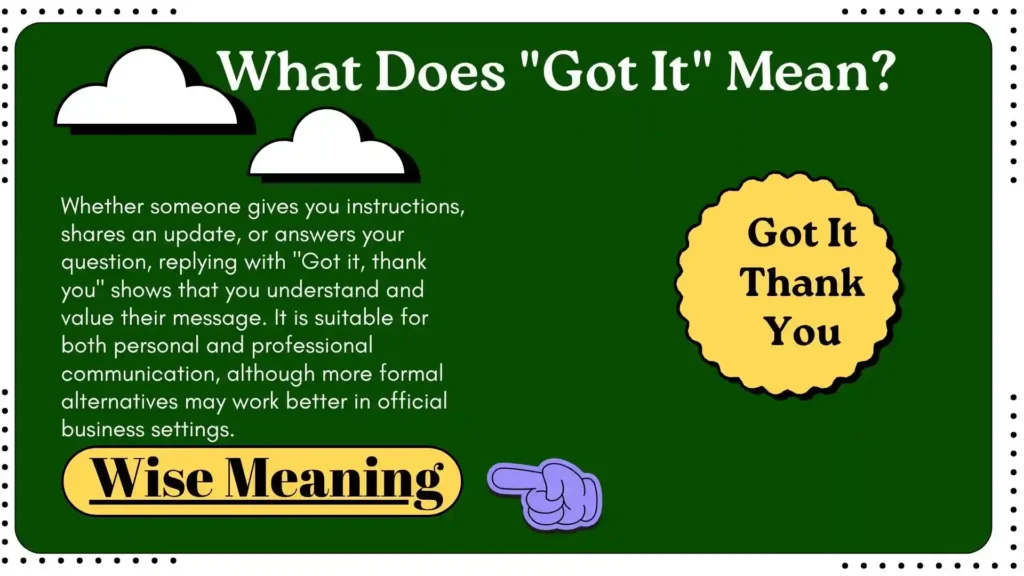
Whether someone gives you instructions, shares an update, or answers your question, replying with “Got it, thank you” shows that you understand and value their message. It is suitable for both personal and professional communication, although more formal alternatives may work better in official business settings.
TL;DR
“Got it, thank you” means “I received your message, I understand it, and I appreciate the information.” It combines clear confirmation with politeness, making it a reliable, friendly response in modern workplaces and casual chats.
- Is it polite? Yes. Adding “thank you” removes the bluntness of a simple “Got it.”
- Is it professional? Safe for internal team chats, Slack, and everyday emails with coworkers.
- When to avoid it: In formal emails to clients, senior executives, or official business contacts.
You Might Also Like That: S Meaning Explained
What Does “Got It” Mean?
📖 Simple Definition
The phrase “Got it” simply means “I understand,” “I received your message,” or “I know what you mean.” Although the word “got” usually relates to receiving something, in this expression it means you have successfully understood the information someone shared.
Native English speakers use “Got it” every day because it is short, clear, and friendly. You’ll hear it during meetings, classroom discussions, customer service calls, and casual chats. Whether someone explains a task or gives directions, saying “Got it” lets them know you understand and are ready to move forward.
💬 What Does “Got It, Thank You” Mean?
Adding “thank you” makes the phrase warmer and more respectful. Instead of only confirming your understanding, you also express appreciation for the person’s help or information.
For example:
| 💡 Situation | ✅ Response |
| Your manager sends new instructions. | Got it, thank you! |
| A teacher explains your assignment. | Got it, thank you. |
| A friend shares the meeting time. | Got it, thanks! |
This small addition makes your response sound more thoughtful and polite, especially in professional communication, business emails, and customer interactions.
😊 Is “Got It, Thank You” Polite?
Yes. “Got it, thank you” is generally considered a polite and respectful phrase. It tells the other person that you understood their message and appreciate the time they took to explain or share information.
However, your tone also matters. Saying it sincerely creates a positive impression, while using it in a rushed or impatient way may sound less friendly. In most situations, especially in workplace communication, emails, and text messages, this phrase is perfectly acceptable. If you’re writing to a senior executive or communicating in a very formal setting, you may choose phrases like “Understood, thank you” or “Thank you for the information.”
📝 Is “Got It” Formal or Informal?
“Got it” is usually an informal expression, but it is widely accepted in modern workplaces. You can safely use it with coworkers, clients you know well, classmates, friends, and family members.
For formal documents or highly professional emails, longer responses often sound more appropriate. For example, instead of simply writing “Got it,” you could say “I understand your instructions. Thank you.” Choosing the right phrase depends on the relationship, the situation, and the level of formality. Knowing when to use “Got it” helps you communicate naturally while remaining respectful.
📅 When Should You Use “Got It, Thank You”?
Use “Got it, thank you” whenever you want to confirm that you’ve understood information and appreciate the sender’s message. It works well in both personal and professional communication because it is clear, polite, and easy to understand.
Whether you’re replying to a quick text or acknowledging detailed instructions at work, this phrase saves time while showing respect. Below are some of the most common situations where it fits naturally.
💼 At Work
In the workplace, “Got it, thank you” is an excellent way to acknowledge instructions, project updates, meeting schedules, or task assignments. It lets your manager or coworker know that you’ve received the information and understand what to do next.
Example:
Manager: “Please send the report before 3 PM.”
You: “Got it, thank you. I’ll send it before the deadline.”
This response is simple, professional, and keeps communication efficient.
📧 In Emails
Many people wonder, “Can I say ‘Got it’ in an email?” The answer is yes, especially in internal business emails or messages between coworkers. It confirms receipt without making your reply too long.
For more formal communication, you may use alternatives like “Understood, thank you” or “Thank you for the clarification.” Choosing the right response depends on your audience and the purpose of the email.
📱 In Text Messages
“Got it, thank you” is very common in texting, WhatsApp, Messenger, and other chat apps. It quickly tells the sender that you’ve seen and understood the message.
Example:
Friend: “Dinner starts at 7 PM.”
You: “Got it, thanks! See you then.”
Because texting is naturally casual, this response sounds friendly and effortless.
You Might Also Like That: HG Meaning
🗣️ During Everyday Conversations
People also use “Got it” in face-to-face conversations when someone explains directions, gives advice, or shares important information. It shows you’re paying attention and understand what was said.
For example, if someone explains how to complete a task, replying with “Got it, thank you!” reassures them that no further explanation is needed. This makes conversations smoother and helps avoid misunderstandings while creating a positive and respectful interaction.
✔️ Is “Got It” Grammatically Correct?
Yes, “Got it” is grammatically correct in everyday English. It is a common English expression that native speakers use to show they understand something. Although the complete sentence could be “I’ve got it” or “I have got it,” people often shorten it to “Got it” in conversations and messages.
This shortened form sounds natural in spoken English, text messages, and workplace communication. While it isn’t usually used in formal writing, it is perfectly acceptable in casual and professional conversations where a quick acknowledgment is appropriate.
🔄 “Got It” vs Similar Expressions
Different phrases can express understanding, but each has a slightly different meaning. Choosing the right one depends on the situation and how formal you want to sound.
| 📝 Expression | 💡 Meaning | 📍 Best Used For |
| Got It | I understand. | Everyday conversations, chats, work |
| Understood | I clearly understand. | Professional emails, meetings |
| Noted | I have recorded the information. | Office communication |
| I Understand | I fully understand your point. | Formal and casual conversations |
| Okay | I accept or agree. | Informal chats |
| Received | I have received your message. | Customer support, official emails |
Each expression works well, but “Got it” feels warmer and more conversational than “Noted” or “Received.”
📌 Got It vs Understood
Both phrases show understanding, but “Understood” sounds more formal and direct. It is common in business emails, reports, and professional discussions. “Got it” sounds friendlier and is often used in daily conversations or team chats.
📌 Got It vs Noted
“Noted” means you have acknowledged the information and may remember it for later. “Got it” focuses more on immediate understanding. In many workplaces, “Got it” sounds more natural, while “Noted” is preferred for formal communication.
📌 Got It vs I Understand
“I understand” clearly states your understanding and can sound more personal. “Got it” is shorter and quicker, making it ideal for text messages and fast workplace conversations.
📌 Got It vs Okay
Although both responses are common, “Okay” may only show agreement. “Got it” confirms that you actually understood the information. That’s why many people prefer “Got it” when replying to instructions or explanations.
📌 Got It vs Received
“Received” simply confirms that a message arrived. It doesn’t always show understanding. “Got it” tells the sender you’ve both received and understood the message, making it more complete in everyday communication.
🌟 Other Ways to Say “Got It, Thank You”
Using the same phrase repeatedly can sound repetitive. Fortunately, there are many professional and casual alternatives that express the same idea while keeping your communication fresh and natural.
Some excellent alternatives include:
- ✅ Understood, thank you.
- ✅ Noted with thanks.
- ✅ Thanks, I understand.
- ✅ Message received.
- ✅ I appreciate the information.
- ✅ Will do, thank you.
- ✅ Sounds good, thanks.
- ✅ Certainly, thank you.
- ✅ Much appreciated.
- ✅ Thank you for letting me know.
Choose the option that best matches the situation and the level of formality.
💼 Professional Alternatives for Business Emails
When writing to a client, manager, or senior colleague, a more formal acknowledgment can leave a better impression. These responses sound polite while maintaining professionalism.
| 📧 Professional Alternative | ⭐ Best Situation |
| Understood, thank you. | Business emails |
| Noted with thanks. | Office communication |
| Thank you for the clarification. | Receiving explanations |
| I appreciate the update. | Project updates |
| Message received. Thank you. | Confirming receipt |
| Thank you. I’ll take care of it. | Task assignments |
| Thank you for the information. | Formal replies |
These phrases work well in professional communication, helping you sound respectful and confident.
😊 Casual Alternatives for Friends and Family
When chatting with friends or family, you can keep your replies relaxed and friendly. Casual responses feel more natural and fit everyday conversations.
Here are some popular alternatives:
- 👍 Gotcha!
- 👍 Sounds good!
- 👍 Will do!
- 👍 No problem!
- 👍 Okay, thanks!
- 👍 Perfect, thanks!
- 👍 Thanks, I got it!
- 👍 Awesome, thank you!
- 👍 Sure thing!
- 👍 All set, thanks!
These expressions make conversations feel warm, natural, and easy without sounding too formal.
💬 Examples of “Got It, Thank You” in Different Situations
Seeing real-life examples makes it easier to know when to use the phrase correctly. Here are a few common situations.
| 🌍 Situation | 💬 Example |
| 💼 Workplace | “Got it, thank you. I’ll finish the report today.” |
| 🤝 Customer Service | “Got it, thank you for your assistance.” |
| 🎓 School | “Got it, thank you. I’ll complete the assignment tonight.” |
| 📱 Text Message | “Got it! Thanks for letting me know.” |
| 🌐 Social Media Chat | “Got it, thanks! I’ll check it out.” |
These examples show why “Got it, thank you” is one of the most useful phrases in daily English, business communication, and online conversations. It confirms understanding, shows appreciation, and helps conversations end on a positive note.
You Might Also Like That: WTV Meaning
❓ Frequently Asked Questions
What does “Got It, Thank You” mean?
“Got It, Thank You” means “I understand your message, and I appreciate you sharing it.” It combines acknowledgment with gratitude, making it a polite response in emails, workplace communication, text messages, and everyday conversations. It lets the sender know that you’ve received and understood the information.
Is “Got It” polite?
Yes, “Got It” is generally considered polite when used with the right tone. Adding “thank you” makes it even more respectful and friendly. In very formal situations, you may choose alternatives like “Understood, thank you” or “Thank you for the information.”
Is “Got It” professional?
Yes, “Got It” is acceptable in many modern workplaces, especially in team chats, internal emails, and quick business conversations. For highly formal communication with clients or executives, longer responses such as “Understood, thank you” or “Noted with thanks” may be more appropriate.
Can I say “Got It” in an email?
Absolutely. You can use “Got It” in business emails, especially when replying to coworkers or managers. If the email is formal, consider using “I understand. Thank you.” or “Thank you for the clarification.” to sound more professional.
What is another way to say “Got It, Thank You”?
There are many excellent alternatives, including:
- Understood, thank you.
- Noted with thanks.
- Thanks, I understand.
- Message received.
- Thank you for the update.
- I appreciate the information.
- Will do, thank you.
- Sounds good, thanks.
Choose the one that best fits your situation and level of formality.
What is the difference between “Got It” and “Understood”?
Both phrases show that you understand the information. However, “Got It” sounds more casual and conversational, while “Understood” is slightly more formal. That’s why “Understood” is common in business emails, whereas “Got It” is popular in everyday conversations and workplace chats.
What does “Got It” mean in texting?
In text messages, WhatsApp, Messenger, or other chat apps, “Got It” means “I understand,” “I received your message,” or “Message received.” It’s a quick and friendly way to acknowledge information without writing a long reply.
🎯 Conclusion
“Got It, Thank You” is a simple yet powerful English expression that shows both understanding and appreciation. Whether you’re replying to an email, acknowledging workplace instructions, responding to a text message, or chatting with friends, this phrase helps keep communication clear, polite, and natural. Understanding the meaning of “Got It”, knowing when to use it, and choosing the right level of formality can improve your everyday communication.
Now that you know what “Got It” means, whether it’s professional, and the best alternatives for different situations, you can respond with confidence in any conversation. Use the examples and tips in this guide to choose the most appropriate phrase, communicate more effectively, and leave a positive impression in both personal and professional settings.