
Have you ever shared good news with someone and heard them reply, “I’m glad to hear that”? It may seem like a simple phrase, but it carries warmth, kindness, and genuine happiness. If you’ve ever wondered what “I’m glad to hear that” means or what “I’m glad” means, you’re not alone. Many English learners and even fluent speakers search for the meaning of “I’m glad to hear that” to understand when and how to use it naturally in conversations.
Whether you’re speaking with friends, coworkers, classmates, or writing a professional email, knowing when to use “I’m glad to hear that” can help your English sound more natural and polite. In this guide, you’ll learn the I’m glad to hear that meaning, the glad meaning in English, how it compares to similar expressions like “I’m happy to hear that,” and the best ways to use it in real-life situations. You’ll also discover practical examples, common mistakes, and helpful alternatives so you can use this friendly phrase with confidence.
🚀 Quick Answer
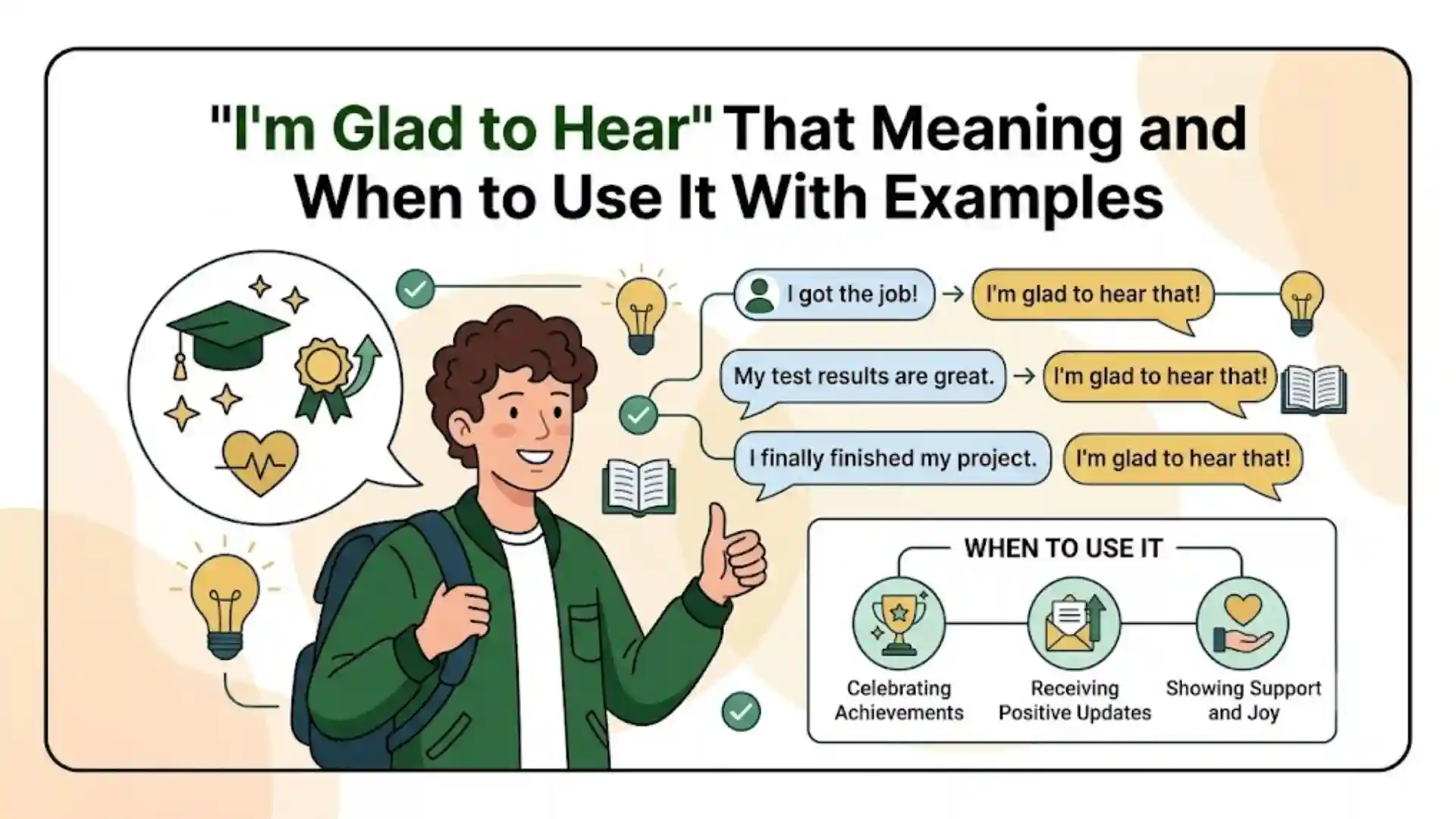
I’m glad to hear that means “I am happy to know this good news.” People use this friendly expression when someone shares something positive, such as passing an exam, getting a new job, or recovering from an illness. The phrase shows support, kindness, and genuine happiness for another person’s success or good fortune. 😊
If you’re wondering what does “I’m glad to hear that” mean or what does “I’m glad” mean, the answer is simple: both express positive feelings, but “I’m glad to hear that” specifically responds to good news someone has shared. It is a polite, natural, and common English expression used in both everyday conversations and professional communication.
TL;DR
The Core Difference
- “I’m glad” = Describes your own happy state or feeling about a situation (“I’m glad the weather is nice”).
- “I’m glad to hear that” = A direct, supportive reaction when someone shares good news (“You passed your test? I’m glad to hear that!”).
Quick Alternative & Response Guide
| Situation / Need | Expression | Tone |
| Formal / Business | “I’m pleased to hear that.” | Professional |
| Big Achievements | “I’m delighted to hear that!” / “That’s wonderful news!” | Enthusiastic |
| Casual Texting | “Good to hear!” / “That’s great!” | Informal |
| How to Reply | “Thank you!” / “I appreciate it.” / “That means a lot.” | Polite |
You Might Also Like That: Writing or Writting
What Does “I’m Glad to Hear That” Mean?
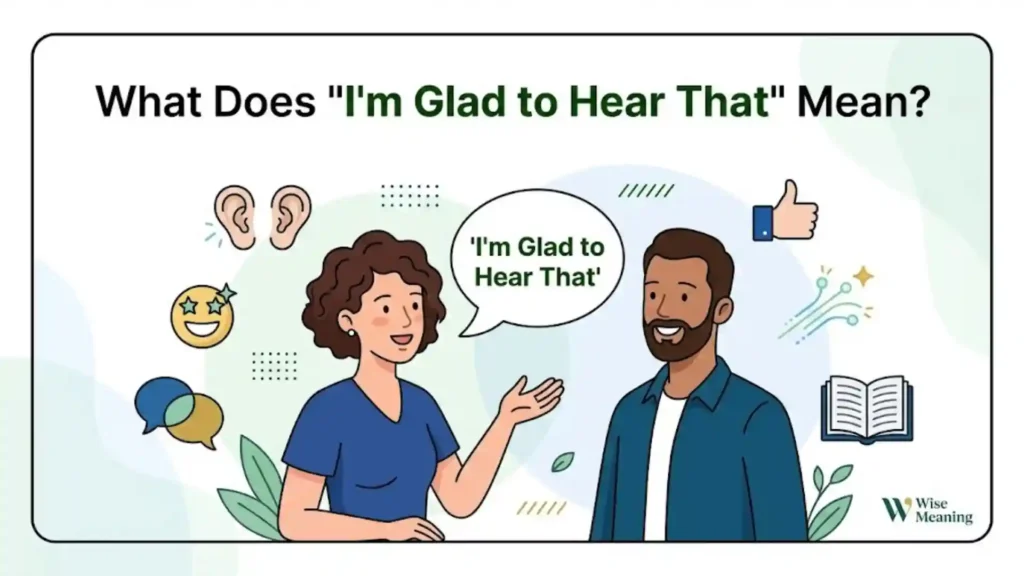
The meaning of “I’m glad to hear that” is to express that you feel happy, pleased, or relieved after hearing someone’s good news. It tells the other person that their positive update also makes you feel happy. Because of its warm and caring tone, native English speakers use this phrase in daily conversations, emails, and workplace discussions.
For example, if someone says, “I finally got my driver’s license,” replying with “I’m glad to hear that!” sounds friendly and encouraging. 🎉 This phrase fits many situations because it shows empathy without sounding too formal or overly emotional. Learning how to use “I’m glad to hear that” correctly can make your English sound more natural.
What Does “I’m Glad” Mean?
The “I’m glad” is simply “I feel happy” or “I feel pleased.” Unlike “I’m glad to hear that,” which responds to news, “I’m glad” can describe your own feelings about many situations. It is one of the most common expressions in spoken and written English.
Here are a few examples:
- 😊 I’m glad you came today.
- 🌞 I’m glad the weather is nice.
- 📚 I’m glad we finished the project early.
- 🤝 I’m glad we had this conversation.
Understanding the glad ” in English helps you use this expression naturally in everyday conversations. It is simple, polite, and suitable for both casual and professional situations.
Difference Between “I’m Glad to Hear That” and “I’m Happy to Hear That”
Many learners ask about the difference between I’m glad vs I’m happy. Both expressions show positive feelings, but they are not always used in exactly the same way. “I’m glad to hear that” often sounds warmer, more personal, and slightly more natural in conversations. “I’m happy to hear that” is also correct but sometimes sounds a little more direct.
| 😊 Phrase | ⭐ Best Used For | 🎯 Tone |
| I’m glad to hear that | Responding to someone’s good news | Warm, caring, natural |
| I’m happy to hear that | Positive responses in casual or professional settings | Friendly and cheerful |
In most everyday conversations, either phrase works well. However, many native speakers choose “I’m glad to hear that” because it feels a little more supportive and conversational.
When Should You Use “I’m Glad to Hear That”? 😊
You should use “I’m glad to hear that” whenever someone shares good news or a positive update. It is a polite way to show that you feel happy for them. Whether you’re talking to a friend, family member, coworker, or teacher, this phrase makes your response sound warm and thoughtful. Learning when to use “I’m glad to hear that” helps you communicate naturally in English.
Here are some common situations:
- 🎓 Someone passes an exam.
- 💼 A coworker gets a promotion.
- 🏥 A friend recovers from an illness.
- 🏡 Someone buys a new home.
- ✈️ A family member arrives safely.
- 🎉 Someone achieves a personal goal.
Using this phrase shows that you care about the other person’s happiness and want to celebrate their good news.
Is “I’m Glad to Hear That” Formal or Informal? 🤔
Many learners ask, “Is ‘I’m glad to hear that’ formal?” The answer is that this expression works well in both formal and informal situations. Its polite and friendly tone makes it suitable for everyday conversations as well as professional communication.
In casual conversations, you might say:
“I’m glad to hear that! You deserve it.” 😊
In a professional email, you could write:
“I’m glad to hear that your project was approved.”
Because it is respectful and natural, native English speakers often use this phrase in workplaces, schools, meetings, and personal conversations. It is one of the safest and most useful English expressions to learn.
You Might Also Like That: Writing or Writting
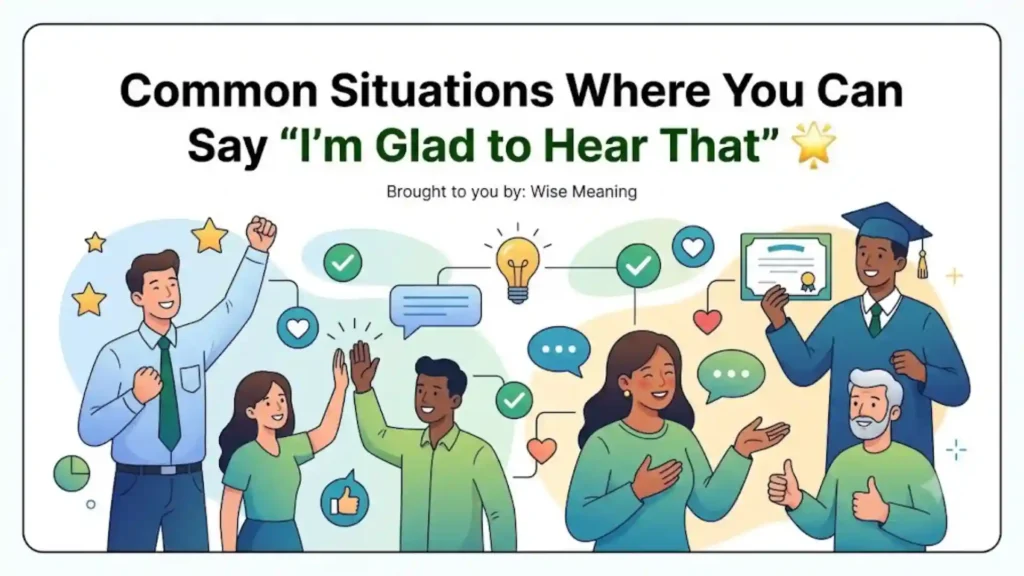
Common Situations Where You Can Say “I’m Glad to Hear That” 🌟
At Work 💼
If a colleague shares good news, such as completing a project or receiving positive feedback, saying “I’m glad to hear that” shows encouragement and professionalism. It helps create a positive workplace environment.
With Friends 👭
Friends often share exciting updates about travel, relationships, jobs, or achievements. Responding with “I’m glad to hear that!” makes your conversation feel genuine and supportive.
In School 🎓
Teachers and students use this phrase when discussing academic success. For example, if a classmate says they passed an important exam, this expression is a kind and natural reply.
In Emails 📧
Professional emails often include this phrase after receiving positive updates. It sounds polite without being too formal, making it ideal for business communication.
In Text Messages 📱
In texting, people commonly write:
- I’m glad to hear that! 😊
- Glad to hear that!
- That’s great to hear!
These short replies keep conversations friendly and encouraging.
Real-Life Conversation Examples 💬
Seeing real-life examples makes it easier to understand how to use “I’m glad to hear that” naturally.
Example 1
Emma: I finally got the job I wanted.
Noah: I’m glad to hear that! Congratulations! 🎉
Example 2
Sarah: My grandmother is feeling much better now.
James: I’m glad to hear that. I hope she keeps improving. ❤️
Example 3
Ali: I passed my driving test today.
Ahmed: I’m glad to hear that! You worked really hard for it.
These conversations show how the phrase expresses happiness, support, and kindness.
Examples in Sentences ✍️
Here are a few sentence examples to help you remember the meaning of “I’m glad to hear that” and use it confidently.
- 🌞 I’m glad to hear that your vacation went well.
- 📚 I’m glad to hear that you passed your final exams.
- 💼 I’m glad to hear that your interview was successful.
- 🏥 I’m glad to hear that you’re feeling better today.
- 🏡 I’m glad to hear that your family arrived safely.
- 🎉 I’m glad to hear that everything worked out for you.
These examples sound natural in both spoken and written English.
How to Respond to “I’m Glad to Hear That” 😊
If someone says “I’m glad to hear that,” they are sharing in your happiness. A simple and polite reply keeps the conversation positive.
Here are some common responses:
- Thank you!
- I really appreciate that.
- Thanks for your support.
- I’m happy too!
- That means a lot to me.
- Yes, it’s such a relief.
Other Ways to Say “I’m Glad to Hear That” 🌟
Sometimes, using a different expression makes your conversation sound more natural. If you’re looking for another way to say “I’m glad to hear that,” there are many polite and friendly alternatives. The best choice depends on the situation and how enthusiastic you want to sound.
| 😊 Expression | 📌 Best Used For | 🎯 Tone |
| That’s great to hear! | Everyday conversations | Friendly |
| I’m happy to hear that. | Casual and professional | Warm |
| That’s wonderful news! | Celebrating achievements | Cheerful |
| I’m pleased to hear that. | Formal situations | Professional |
| That’s fantastic! | Exciting news | Enthusiastic |
| Good to hear! | Informal chats | Casual |
| I’m delighted to hear that. | Very positive news | Formal |
| That’s excellent news! | Workplace or business | Professional |
| I’m so happy for you! | Personal success | Caring |
Using these alternatives to “I’m glad to hear that” keeps your English fresh and helps you sound more like a native speaker.
“I’m Glad” vs Similar Expressions 🔄
Although many English expressions share a similar meaning, each one has a slightly different tone. Understanding these differences helps you choose the most natural phrase for every conversation.
I’m Glad vs I’m Pleased 😊
I’m glad sounds warm, natural, and conversational. People use it every day with friends, family, and coworkers.
I’m pleased sounds a little more formal and is common in business emails, meetings, and official conversations.
Example:
- 😊 I’m glad you enjoyed the trip.
- 💼 I’m pleased to hear your application was approved.
I’m Glad vs I’m Delighted 🎉
Both phrases express happiness, but I’m delighted to show stronger excitement. People often use it for major achievements or wonderful news.
Example:
- 😊 I’m glad you arrived safely.
- 🎊 I’m delighted to hear you won the competition!
I’m delighted when you want to express a higher level of joy.
I’m Glad vs Good to Hear 👍
Good to hear is shorter and more casual. Friends often use it in text messages and informal conversations.
Example:
- 😊 I’m glad to hear you’re feeling better.
- 📱 Good to hear you’re doing well!
Both phrases are correct, but “I’m glad to hear that” sounds more thoughtful and supportive.
I’m Glad vs That’s Wonderful 🌸
That’s wonderful. It focuses on the good news, while I’m glad it focuses on your personal feelings about hearing it.
Example:
- 🌸 That’s wonderful! Congratulations!
- 😊 I’m glad to hear that. You deserve it.
Both responses are positive, and you can choose either depending on the situation.
Common Mistakes to Avoid ❌
Many English learners understand the meaning of “I’m glad to hear that,” but they sometimes use it incorrectly. Avoiding these common mistakes will help your English sound more natural.
- ❌ Using it after bad news. This phrase is meant for positive updates, not sad situations.
- ❌ Repeating it too often. Try alternatives like “That’s great to hear” or “I’m pleased to hear that.”
- ❌ Using the wrong tone. Match your response to the importance of the news.
- ❌ Forgetting the context. Choose expressions that fit both casual and professional conversations.
Using the right phrase at the right time makes your communication more polite and effective.
Grammar Breakdown of “I’m Glad to Hear That” 📖
The grammar of “I’m glad to hear that” is simple and easy to understand.
Sentence Structure:
Subject + Be Verb + Adjective + Infinitive + That Clause
Example:
I + am + glad + to hear + that you passed your exam.
Here’s what each part means:
- 👤 I = Subject
- 🔤 am = Be verb
- 😊 glad = Adjective showing emotion
- 👂 to hear = Infinitive explaining the reason
- 💬 that… = Introduces the information you heard
This structure is grammatically correct and is one of the most common patterns used in everyday English.
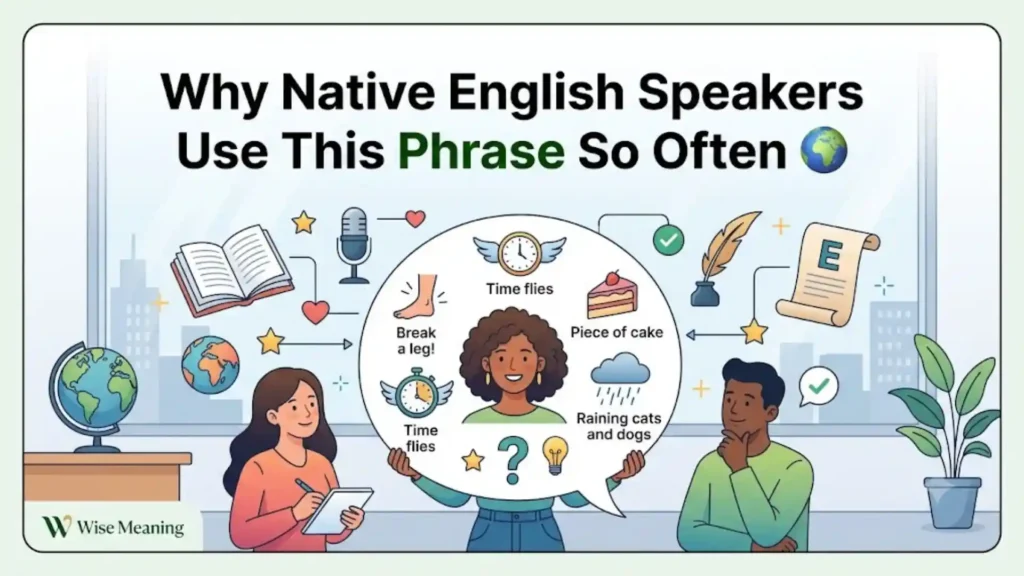
Why Native English Speakers Use This Phrase So Often 🌍
Native English speakers use “I’m glad to hear that” because it sounds kind, sincere, and natural. It quickly lets someone know that you care about their happiness or success. Instead of simply saying “Okay” or “Nice,” this phrase adds warmth to the conversation and makes the other person feel appreciated.
You’ll hear this expression in homes, schools, offices, customer service, and even professional emails. Since it works in so many situations, it has become a common part of everyday English. Learning how native speakers use “I’m glad to hear that” will help you speak more confidently and build stronger conversations.
You Might Also Like That: Writing or Writting
Frequently Asked Questions ❓
What does “I’m glad to hear that” mean?
“I’m glad to hear that” means “I am happy to know this good news.” People use this phrase to show happiness, support, or encouragement after hearing something positive. It is one of the most common and polite English expressions used in daily conversations.
What does “I’m glad” mean?
The I’m glad meaning is simply “I feel happy” or “I feel pleased.” You can use it to express your own positive feelings about a person, event, or situation. It is suitable for both spoken and written English.
Is “I’m glad to hear that” formal or informal?
This phrase works in both formal and informal situations. You can use it in conversations with friends, family, teachers, coworkers, or clients. Its polite and friendly tone makes it appropriate for emails, meetings, and everyday discussions.
What’s another way to say “I’m glad to hear that”?
There are many alternatives to “I’m glad to hear that,” including:
- 😊 That’s great to hear!
- 🎉 I’m happy to hear that.
- 🌟 That’s wonderful news!
- 💼 I’m pleased to hear that.
- 👏 That’s fantastic!
- 👍 Good to hear!
Choose the expression that best matches the situation and your level of enthusiasm.
How do you respond to “I’m glad to hear that”?
Some natural responses include:
- Thank you!
- I appreciate that.
- That means a lot to me.
- I’m happy too!
- Thanks for your support.
These replies keep the conversation friendly and show appreciation.
Can I use “I’m glad to hear that” in a professional email?
Yes. “I’m glad to hear that” is a polite and professional expression. It works well when responding to positive updates from colleagues, clients, or managers. It helps maintain a warm and respectful tone in workplace communication.
Conclusion 🎯
Understanding the meaning of “I’m glad to hear that” can help you communicate more naturally and confidently in English. This simple expression shows happiness, kindness, and genuine support when someone shares good news. Whether you’re speaking with friends, family, classmates, or coworkers, knowing when to use “I’m glad to hear that” allows you to respond in a warm and thoughtful way.
Now that you know the difference between “I’m glad to hear that” and “I’m happy to hear that,” along with useful examples, alternatives, and responses, you can use these expressions with confidence. Practice them in everyday conversations, emails, and text messages to sound more like a native English speaker and build stronger, more positive communication. 😊