
Have you ever ended a conversation by saying “See you then” or heard someone else use it? If you’re wondering about the see you then meaning, you’re not alone. This common English phrase is used every day in spoken English, text messages, emails, and face-to-face conversations. People often say it after they have agreed on a specific meeting, appointment, or future plan. Learning the meaning of “see you then” helps you communicate more naturally and confidently in both casual and professional situations.
In simple terms, “See you then” means “I will see you at the agreed time.” It acts as a friendly goodbye expression while also confirming a future meeting. Native speakers use this English expression in daily conversations, business communication, and text messaging because it sounds polite, natural, and clear. In this guide, you’ll learn what does “see you then” mean, how to use it correctly, when to say it, common examples, and how it compares with similar farewell phrases so you can use it with confidence.
Quick Answer
“See you then” means “I will see you at the agreed time.” It is a polite and friendly English expression used after two people have confirmed a meeting, appointment, or future plan. The phrase works well in daily conversations, text messages, emails, and business communication.
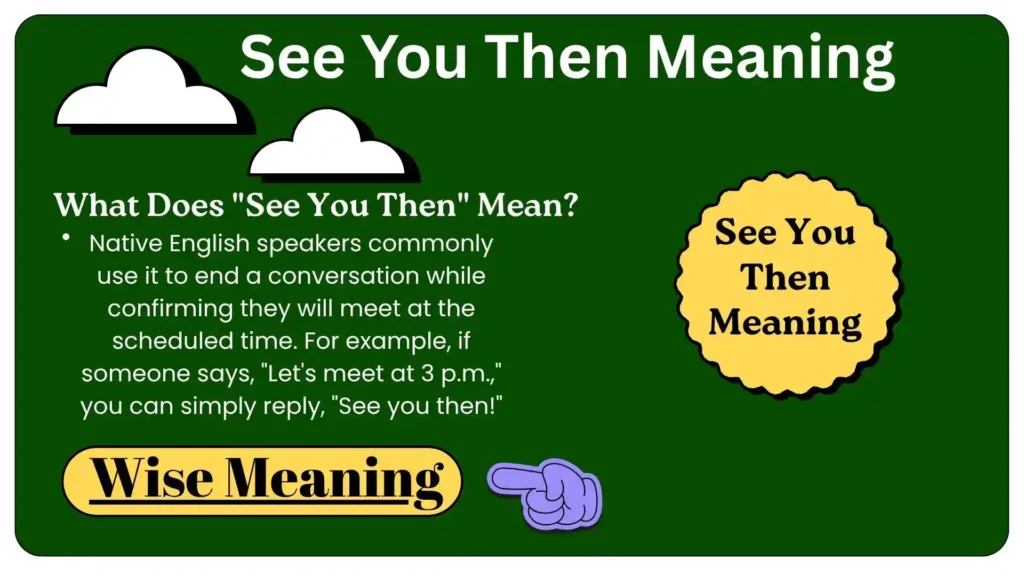
Native English speakers commonly use it to end a conversation while confirming they will meet at the scheduled time. For example, if someone says, “Let’s meet at 3 p.m.,” you can simply reply, “See you then!”
TL;DR
“See you then” means “I will see you at the agreed time.” It’s a friendly and polite English phrase used after confirming a meeting, appointment, or future plan. Native speakers commonly use it in everyday conversations, text messages, emails, phone calls, and workplace communication to end a conversation while confirming they’ll meet at the scheduled time.
Remember, “then” refers to the agreed time, while “there” refers to the agreed place, so only use “See you then” after a specific time or date has already been decided.
You Might Also Like That: Grammar Meaning
What Does “See You Then” Mean?
The meaning of “See You Then” is simple. It means you expect to meet someone at a time that has already been agreed on. This English phrase is often used when two people finish making plans. Instead of saying a long goodbye, they use this short farewell expression to confirm the meeting and end the conversation politely.
For example, if your friend says, “Let’s meet at 6 p.m.,” you can reply, “See you then!” This tells the other person that you understand the plan and will meet them at that time. It is one of the most common English expressions used in daily conversations.
Is “See You Then” an Idiom?
Many English learners wonder whether “See you then” is an idiom. The answer is no. It is a common English expression rather than an idiom.
An idiom has a meaning that cannot be understood from the individual words, such as “break the ice” or “hit the sack.” In contrast, “See you then” has a literal meaning. It simply means “I will see you at the agreed time.”
Because its meaning is clear and direct, this phrase is easy for English learners to understand and use. Native speakers say it every day when confirming appointments, meetings, or social plans.
Is “See You Then” Formal or Casual?
One of the best things about “See you then” is its flexibility. It works in both casual conversations and many professional situations.
Use it with:
- Friends and family
- Classmates
- Coworkers
- Teachers
- Customers
- Clients (in most everyday business settings)
However, avoid using it in formal speeches, legal documents, or official letters, where a more formal closing is appropriate.
Examples
Casual:
“Let’s play football after school.”
“See you then!”
Professional:
“Our meeting is scheduled for Thursday at 10 a.m.”
“Thank you. See you then.”
Common Synonyms for “See You Then”
If you don’t want to repeat the same phrase every time, you can choose from several natural alternatives. Each one has a slightly different meaning.
| Phrase | Best Used When |
| See you later | Meeting again, but no exact time |
| See you soon | Meeting in the near future |
| See you tomorrow | Meeting the next day |
| See you next week | Meeting on a specific future week |
| Catch you later | Very casual conversations |
| Catch you then | Casual, after agreeing on a time |
| Talk to you then | Future phone or video conversation |
| Until then | Formal writing or longer conversations |
| Looking forward to seeing you | Professional emails or invitations |
Choosing the right alternative helps your English sound more natural and varied.
Common Mistakes Native Speakers Never Make
Even advanced English learners sometimes misuse this phrase. Avoid these common mistakes to sound more fluent.
❌ Using it without confirming a time
Incorrect:
“Let’s meet sometime.”
“See you then.”
No specific time has been agreed on.
✅ Correct
“Let’s meet Friday at 6 p.m.”
“See you then!”
❌ Confusing “Then” and “There”
Incorrect:
“See you there at 3 p.m.”
If you’re emphasizing the time, use then.
Correct:
“See you then at 3 p.m.”
If you’re emphasizing the location, use there.
Correct:
“See you there at the restaurant.”
Why Native Speakers Prefer “See You Then”
Native English speakers often choose “See you then” because it is short, polite, and sounds natural. Instead of repeating the meeting details, the phrase confirms that everyone understands the plan.
For example, rather than saying:
“I will see you tomorrow at 3 p.m. as we discussed.”
Most native speakers simply say:
“See you then!”
This makes conversations smoother, friendlier, and more natural.
You Might Also Like That: Grammar Meaning
Can You Say “See You Then” at Work?
Yes. “See you then” is perfectly acceptable in most workplaces. Employees, managers, coworkers, and clients commonly use it after confirming a meeting or appointment.
Workplace Examples
Manager:
“Let’s discuss the project tomorrow morning.”
Employee:
“Sounds good. See you then.”
Client:
“Our video call is scheduled for Friday at 2.”
You:
“Thank you. See you then.”
It sounds professional without being overly formal.
“See You Then” vs. “Talk to You Then”
Although these expressions look similar, they are used in different situations.
See You Then
Use this phrase when you will meet the other person in person.
Example:
“The meeting starts at 9.”
“See you then.”
Talk to You Then
Use this phrase when you will speak by phone, video call, or voice chat instead of meeting face to face.
Example:
“I’ll call you after work.”
“Talk to you then.”
Knowing the difference helps you choose the most natural expression.
English Tip to Remember Forever
Here’s an easy way to remember when to use “See you then.”
🕒 Then = Time
📍 There = Place
If you’re talking about when you’ll meet, say “See you then.”
If you’re talking about where you’ll meet, say “See you there.”
This simple rule will help you avoid one of the most common mistakes English learners make.
💡 “See you then” does more than say goodbye. It also shows that both people have agreed on a future meeting or appointment. It tells the listener that the conversation is finished and the plan is confirmed.
Whether you are arranging lunch, a work meeting, or a family visit, this phrase helps avoid confusion. It gives confidence that everyone understands the agreed date or time.
Why People Say It
People like using “See you then” because it is friendly, polite, and natural. It sounds warmer than simply saying “Bye.” It also reminds the other person that you look forward to meeting them.
😊 Native speakers use this phrase because it makes conversations feel complete while confirming future plans.
When Do People Say “See You Then”?
People usually say “See you then” after deciding when they will meet. It is common in spoken English, emails, text messages, and phone calls. Once the time is clear, this phrase naturally ends the conversation.
📅 Here are some common situations:
- After scheduling a doctor’s appointment
- After confirming a business meeting
- While making dinner plans with friends
- Before ending an online meeting
- When arranging a school or family event
You should only use this phrase when a specific time or date has already been discussed.
How to Use “See You Then” Correctly
Casual Conversations
Friends and family use “See you then” every day. It sounds relaxed and friendly.
Example:
Friend: “Let’s meet at the café at 5.”
You: “Great! See you then.”
Business Conversations
💼 The phrase also works well in professional communication. It politely confirms a meeting without sounding too formal.
Example:
Manager: “We’ll discuss the report tomorrow morning.”
Employee: “See you then.”
Emails
You can end an email with “See you then” after confirming an appointment or meeting. It sounds polite and professional.
Text Messages
📱 In text messaging, people often use this phrase because it is short, clear, and friendly.
Example:
“Saturday at 2 works for me. See you then!”
Examples of “See You Then” in Sentences
Examples help you understand how to use “See You Then” correctly in different situations.
😊 Friends
- “Let’s watch a movie tonight.”
- “Sounds good. See you then!”
👨👩👧 Family
- “Dinner starts at seven.”
- “Perfect. See you then.”
💼 Work
- “The meeting begins at 10.”
- “See you then.”
🏫 School
- “Our study group starts after class.”
- “See you then.”
📞 Phone Call
- “I’ll call you tomorrow afternoon.”
- “See you then.”
💻 Online Meeting
- “We’ll join the Zoom meeting at 9.”
- “See you then.”
How to Respond to “See You Then”
When someone says “See you then,” you can reply with another friendly confirmation.
✅ Common replies include:
- See you!
- Sounds good!
- Looking forward to it.
- Can’t wait.
- Absolutely.
- See you tomorrow.
- See you soon.
😊 The best reply depends on the situation, but keeping it positive makes the conversation feel natural.
Is “See You Then” Formal or Informal?
The phrase is mostly informal, but it is also acceptable in many professional situations. It sounds natural in conversations with coworkers, classmates, customers, and friends.
📌 Quick Comparison
| Situation | Appropriate? |
| Friends | ✅ Yes |
| Family | ✅ Yes |
| Office meetings | ✅ Yes |
| Client meetings | ✅ Usually |
| Formal speeches | ❌ No |
| Official letters | ❌ No |
For very formal writing, longer closing sentences may be more suitable.
You Might Also Like That: Grammar Meaning
“See You Then” vs Similar Expressions
See You Then vs See You Later
See you then refers to an agreed time. See you later simply means you expect to meet again, but no exact time is required.
See You Then vs See You Soon
See you soon suggests the meeting will happen in the near future. See you then points to a specific time already discussed.
See You Then vs See You There
📍 See you there focuses on the place, while See you then focuses on the time.
See You Then vs Catch You Later
Catch you later is much more casual and is mostly used among friends.
See You Then vs Until Then
Until then often appears in writing or longer conversations, while See you then is a direct goodbye before meeting again.
Common Mistakes When Using “See You Then”
⚠️ Many English learners make small mistakes with this phrase.
Some people say “See you then” before deciding on a meeting time. This is incorrect because the phrase depends on an agreed schedule.
Another common mistake is confusing “See you then” with “See you there.” Remember:
- Then = Time
- There = Place
Using the correct phrase makes your English communication clearer.
Can You Use “See You Then” in Emails?
Yes. “See you then” is common in business emails, appointment confirmations, and friendly messages. It keeps your writing polite while confirming the meeting.
📧 Example
“Thank you for confirming tomorrow’s meeting at 2 p.m. See you then.”
Avoid using it if the meeting time has not been finalized because it may confuse the reader.
Does “See You Then” Confirm a Meeting?
✅ Yes, it usually does.
When someone says “See you then,” it means they accept the agreed appointment, meeting, or event. It acts as a final confirmation before ending the conversation.
Although it confirms the plan, it is still polite to inform the other person if your schedule changes later.
Is “See You Then” Polite?
😊 Yes. It is one of the most polite and friendly goodbye expressions in conversational English.
It shows respect for the other person’s time and lets them know you expect to meet as planned. Whether you are speaking with friends, coworkers, or teachers, the phrase creates a positive ending to the conversation.
Common Situations Where Native Speakers Use It
Native English speakers naturally use “See you then” whenever a future meeting has already been arranged.
⭐ Common situations include:
- Office meetings
- Coffee dates
- Family dinners
- School events
- Medical appointments
- Video calls
- Job interviews
- Travel plans
- Sports practice
- Study sessions
Because it is short and clear, it appears in everyday spoken English more often than many longer farewell phrases.
Alternative Ways to Say “See You Then”
🔄 If you want variety, try these alternatives:
- See you later
- See you soon
- See you tomorrow
- See you next week
- Catch you later
- Catch you then
- Until then
- Looking forward to seeing you
- Take care
- Bye for now
Choose the expression that best matches your conversation and the level of formality.
You Might Also Like That: Grammar Meaning
Frequently Asked Questions
Does “See You Then” Mean Goodbye?
Yes. It is a goodbye expression that also confirms a future meeting.
Can I Say It Before Ending a Phone Call?
📞 Absolutely. It is commonly used after confirming a meeting time during a phone conversation.
Is It Rude?
No. It is friendly, polite, and respectful.
Can I Use It in Text Messages?
📱 Yes. It is one of the most common phrases used in text messaging after making plans.
Is “See You Then” Grammatically Correct?
✅ Yes. It is a correct and natural English expression used by native speakers every day.
Conclusion
The meaning is simple: it confirms that you will meet someone at an agreed time. This friendly English phrase works well in daily conversations, business communication, emails, and text messages. It is polite, easy to understand, and widely used by native speakers.
By learning how to use “See You Then” correctly, understanding the difference between similar expressions, and avoiding common mistakes, you can speak more naturally and confidently. The next time you finish arranging a meeting or appointment, you can comfortably say, “See you then!”