
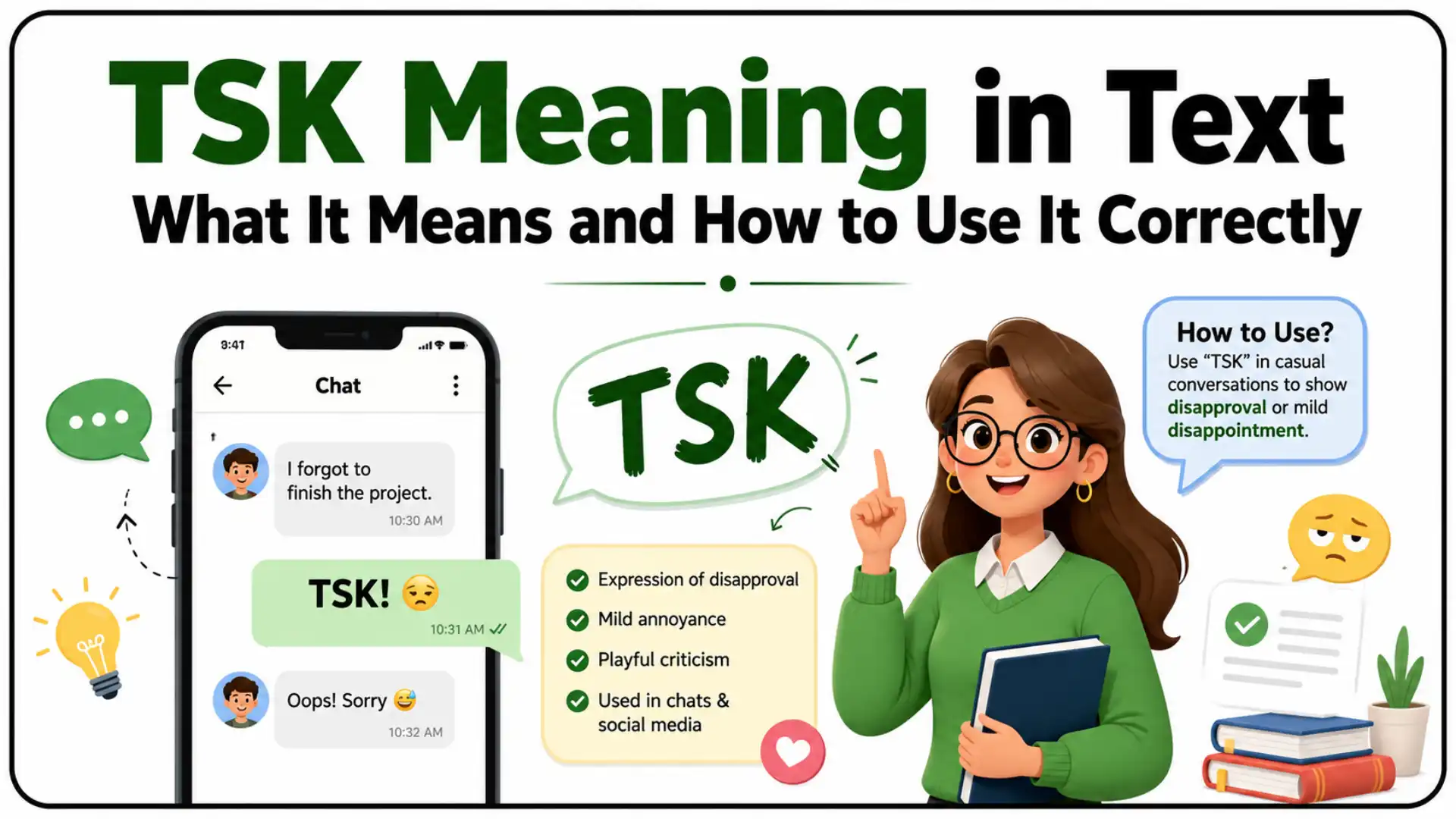
If you’ve ever received “TSK” in a message or seen someone type “tsk tsk” on social media, you may have wondered what it means. Unlike many texting abbreviations or internet slang, TSK isn’t a traditional acronym. Instead, it’s an expression that represents the familiar clicking sound people make with their tongue to show disapproval, disappointment, annoyance, or mild frustration. Today, you’ll find TSK in text, chats, comments, and online conversations across platforms like WhatsApp, Snapchat, TikTok, Instagram, Discord, and other messaging apps. Understanding the TSK meaning in text helps you interpret conversations more accurately and respond in the right way.
In this guide, you’ll learn what does TSK mean, how to use TSK correctly, and when people type TSK instead of using words or emojis. We’ll cover TSK meaning in texting, TSK meaning on social media, real conversation examples, whether TSK is rude or polite, and even compare it with similar expressions like SMH, sigh, and tut. By the end, you’ll know exactly what does TSK mean in text, how it changes depending on the context, and how to use it naturally in everyday online messaging and digital communication.
Quick Answer 📌
If you’re wondering what does TSK mean, the short answer is simple. TSK is an expression, not a typical texting abbreviation or acronym. It represents the clicking sound people make with their tongue to show disapproval, annoyance, disappointment, or mild frustration.
In text messages, online chats, and social media, people type “tsk” or “tsk tsk” to express those feelings without writing a full sentence. You’ll often see TSK in text, WhatsApp, Snapchat, TikTok, Instagram, and other messaging apps when someone reacts to another person’s actions or choices.
TL;DR ⚡
- ✅ TSK is an interjection, not a typical texting abbreviation or acronym.
- 💬 The TSK meaning in text is a tongue-click sound that expresses disapproval, annoyance, disappointment, or mild frustration.
- 📱 You’ll commonly see TSK in text messages, WhatsApp, Snapchat, TikTok, Instagram, Discord, and other social media platforms.
- 😊 The exact TSK meaning depends on the conversation and the relationship between the people chatting.
- 🤝 Between friends and family, TSK is usually playful or lighthearted rather than rude.
- ⚠️ Avoid using TSK in professional communication, formal emails, or academic writing.
- 🗣️ TSK represents a real tongue-click (dental click) sound instead of standing for a phrase.
- 📖 Similar expressions include Tut, SMH, Sigh, and 🙄 Eye Roll, but each conveys a slightly different emotion.
- 💡 Understanding what does TSK mean in texting helps you interpret online conversations more accurately and respond naturally.
- 🚀 When used in the right context, TSK adds personality and emotion to digital communication without needing a long explanation.
You Might Also Like That: Cancellation vs Cancelation
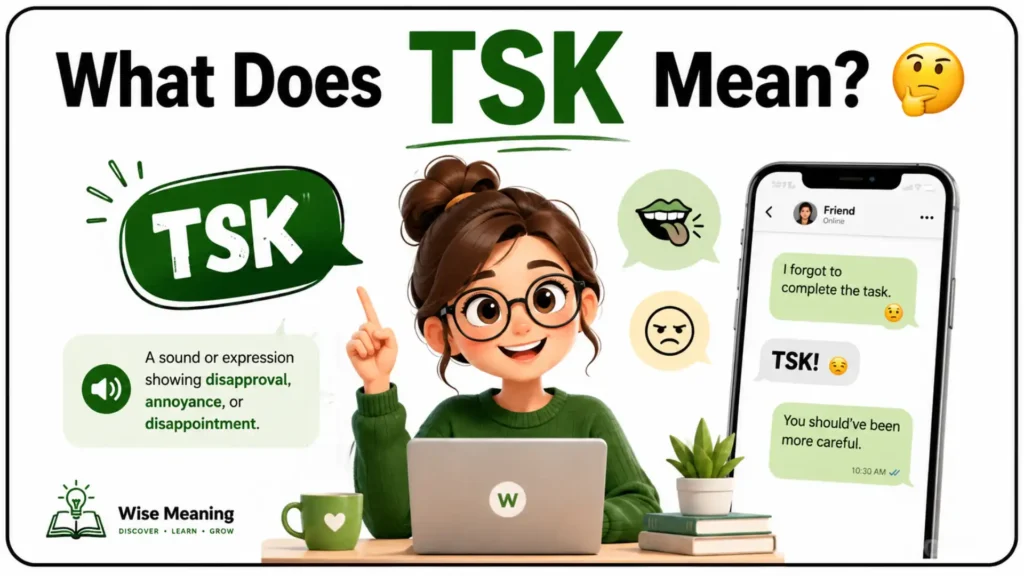
What Does TSK Mean? 🤔
TSK is an English interjection that imitates the clicking sound made by the tongue against the roof of the mouth. Instead of speaking the sound, people type TSK in online messaging and digital communication to show that they are disappointed or do not approve of something. Unlike many internet slang terms, TSK meaning does not stand for a phrase. It simply represents a sound that carries emotion.
In everyday conversations, the TSK expression usually means, “I don’t agree,” “That wasn’t a good idea,” or “You should have known better.” The exact TSK meaning in text depends on the conversation. Sometimes it sounds playful between friends, while in other situations it can express genuine frustration. Understanding the context helps you know what emotion the sender wants to convey.
TSK Meaning in Text 💬
The TSK meaning in text is almost always connected to disapproval, annoyance, or mild disappointment. Instead of typing a long reply, someone may simply write “tsk” to show their reaction. This makes conversations quicker while still expressing emotion. Since TSK in text is easy to understand, it has become a common part of texting slang and chat language.
Examples in Text Messages
📱 Friend: “I forgot your birthday.”
You: “TSK! I can’t believe you forgot.”
📱 Friend: “I stayed up all night before my exam.”
You: “TSK… You should have gone to bed earlier.”
📱 Sibling: “I broke Mom’s favorite mug.”
You: “TSK! She’s not going to be happy.”
These examples show that TSK meaning in texting changes slightly depending on the situation, but it usually expresses a gentle correction or disappointment rather than anger.
TSK Meaning on Social Media 🌐
You can find TSK on many social media platforms because it quickly communicates a reaction. Whether someone is commenting on a funny video or responding to a friend’s mistake, TSK meaning on social media usually stays the same. It expresses disapproval, surprise, or playful criticism without sounding too harsh.
| 📱 Platform | ✅ How TSK Is Commonly Used |
| Snapchat | Reacting to a friend’s story or message |
| TikTok | Commenting on funny or questionable videos |
| Replying to posts or reels with playful disappointment | |
| Chatting with family and friends | |
| Facebook Messenger | Responding to casual conversations |
| Discord | Reacting during gaming or group chats |
| X (Twitter) | Showing mild criticism or disagreement |
No matter the platform, what does TSK mean in chat usually depends on the conversation’s tone. Most of the time, it is meant to be lighthearted rather than offensive.
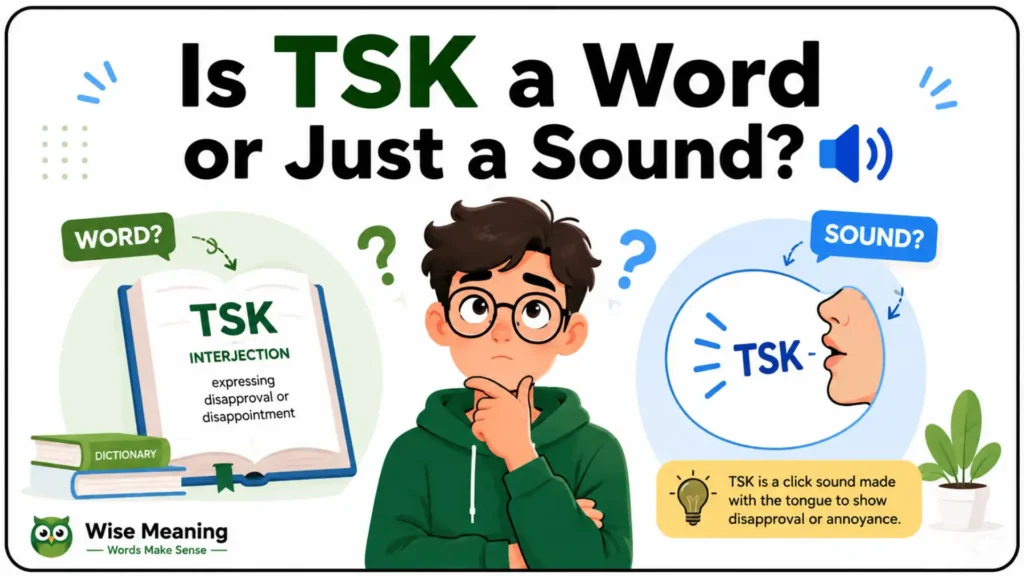
Is TSK a Word or Just a Sound? 🔊
Many people ask whether TSK is a real word. The answer is yes and no. It appears in major dictionaries as an interjection, but it represents a tongue click or dental click instead of a traditional spoken word. That means people recognize it as part of the English language even though it mainly imitates a sound.
When someone types TSK, they are writing the sound they would normally make in person. This is why TSK definition often describes it as an expressive sound used to show disapproval, impatience, or disappointment. Knowing this helps you understand what does TSK mean whenever you see it in text conversations or online communication.
You Might Also Like That: Cancellation vs Cancelation
How to Use TSK Correctly ✅
Using TSK is simple because it fits naturally into casual conversations. You can type it before or after your message to show how you feel. Since TSK meaning in text depends on context, always think about your relationship with the other person. Friends and family usually understand it as playful, while strangers may see it differently.
Examples in Everyday Conversations
💬 Friend: “I forgot to lock the door.”
You: “TSK! Be more careful next time.”
💬 Parent: “You skipped breakfast again?”
Child: “TSK… I was running late.”
💬 Gaming Chat: “Our teammate left the match.”
Player: “TSK. That ruined the game.”
These examples show how to use TSK naturally without making your message sound too serious.
What Emotion Does TSK Express? 😊😕😒
The TSK expression can show different emotions depending on the conversation. Most often, it represents disapproval, disappointment, annoyance, or mild frustration. Sometimes, it can even express sympathy or playful teasing between close friends. Since TSK meaning changes with context, reading the rest of the message helps you understand the sender’s real intention.
Here are the most common emotions behind TSK in text:
| 😊 Emotion | 💬 Meaning |
| 😒 Disapproval | Someone thinks an action was a bad idea. |
| 😞 Disappointment | The sender expected something better. |
| 😑 Annoyance | A small mistake or irritating situation. |
| 😕 Frustration | Something did not go as planned. |
| 🤝 Sympathy (Rare) | Gentle understanding mixed with concern. |
In most online messaging and text conversations, TSK meaning in texting is not meant to be harsh. Instead, it adds emotion to a message without using many words.
Is TSK Rude or Polite? 🤷
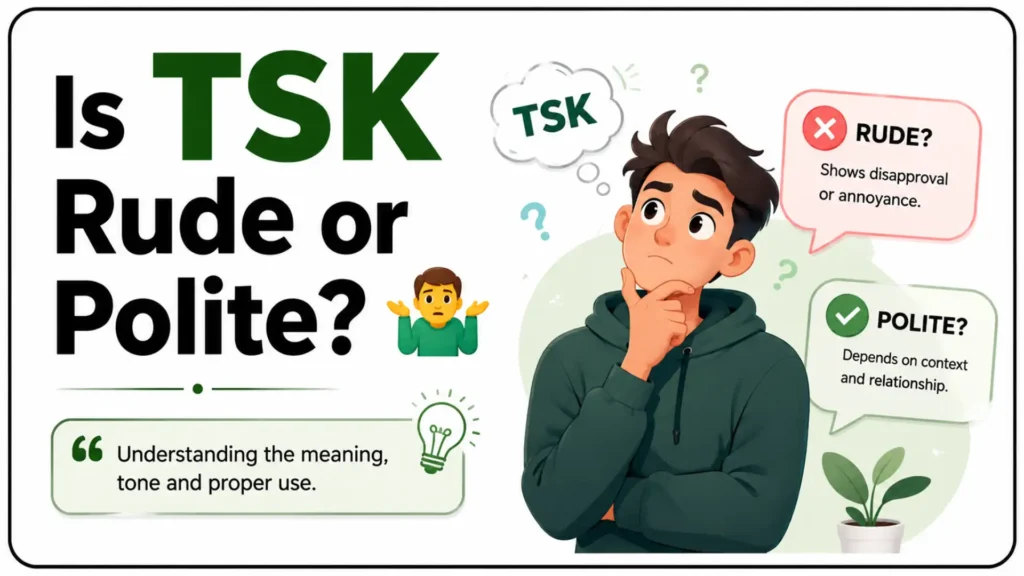
Many people ask, “Is TSK rude?” The answer depends on how and where you use it. Between close friends or family, TSK often sounds playful or lighthearted. It may simply show mild disappointment or friendly teasing. However, if you use it with someone you don’t know well, they may think you are criticizing them.
Before typing TSK in text, consider your relationship with the other person. In casual chats, it usually feels natural. In professional conversations or serious discussions, it is better to choose clear words instead of texting slang. Understanding the context will help you avoid misunderstandings and communicate more effectively.
You Might Also Like That: HY Meaning in Text
Real Conversation Examples 💬
Seeing TSK in real conversations makes it easier to understand how to use TSK naturally. The examples below show how the TSK meaning in text can change depending on the situation while still expressing a similar emotion.
👥 Friend
Friend: “I forgot our movie night.”
You: “TSK! I was really looking forward to it.”
👨👩👧 Parent
Parent: “You didn’t finish your homework again?”
Child: “TSK… I’ll do it now.”
🎮 Gaming Chat
Player 1: “I left the match early.”
Player 2: “TSK! We almost won.”
🌐 Online Chat
User: “I clicked the wrong link again.”
Friend: “TSK, slow down next time.”
These examples show that TSK meaning in chat usually expresses disappointment or gentle criticism rather than anger.
When Should You Use TSK? ✅
Knowing when to use TSK is just as important as knowing its meaning. It works best in informal communication, where people already understand your tone. You can use TSK when reacting to a small mistake, a poor decision, or a funny situation that deserves light criticism. It is common in text messages, social media, and online conversations.
Use TSK when:
- ✅ A friend makes a harmless mistake.
- ✅ You want to express mild disappointment.
- ✅ You are joking with family or close friends.
- ✅ You are reacting to a funny post on Snapchat, TikTok, or Instagram.
Avoid using TSK in business emails, school assignments, or formal discussions. In those situations, clear and respectful language is a better choice.
Common Mistakes When Using TSK ⚠️
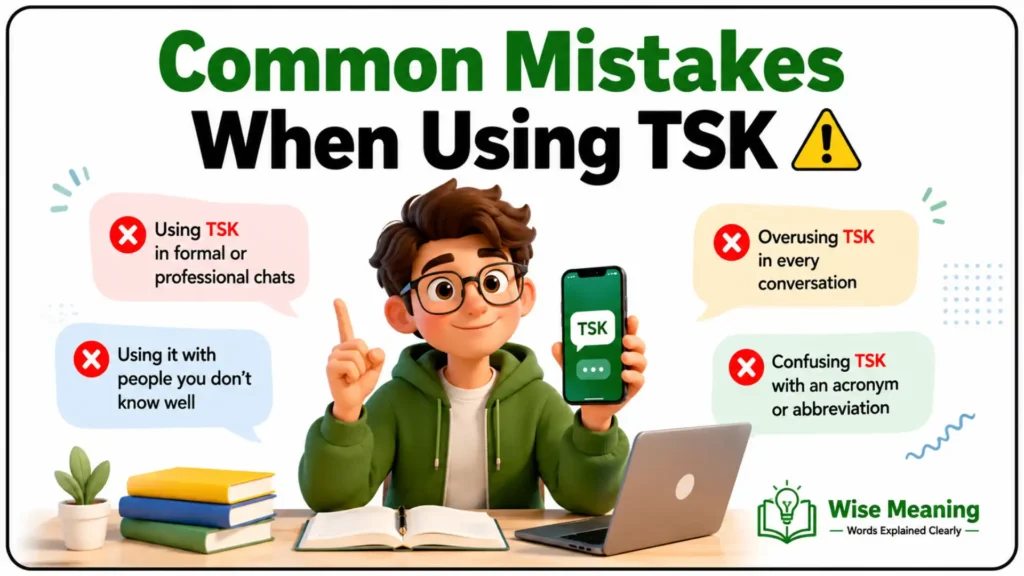
Although TSK is easy to use, people sometimes make mistakes that change the meaning of their message. The biggest mistake is assuming everyone understands TSK meaning in text. Some people may not recognize the expression, especially if they are unfamiliar with internet slang.
You Might Also Like That: Cancellation vs Cancelation
Here are a few common mistakes:
- ❌ Using TSK in formal emails or professional communication.
- ❌ Confusing TSK with a texting abbreviation or acronym.
- ❌ Using it repeatedly, making messages sound overly critical.
- ❌ Ignoring the conversation’s tone before typing TSK.
Using TSK thoughtfully keeps your digital communication clear, friendly, and easy to understand.
TSK vs Similar Expressions 🔄
Many texting expressions share similar meanings, but each one has a slightly different purpose. Understanding these differences helps you choose the right reaction in online messaging.
| 📝 Expression | 💡 Meaning | 📱 Best Used For |
| TSK | Mild disapproval or disappointment | Casual chats |
| Tut | Spoken sound showing disapproval | Face-to-face conversations |
| SMH | Disbelief or frustration | Social media and texting |
| Sigh | Tiredness or disappointment | Emotional conversations |
| 🙄 Eye Roll | Annoyance without words | Messages and comments |
| Oh No | Surprise or concern | Friendly conversations |
While TSK and Tut are very similar because both imitate a tongue click, SMH often expresses stronger frustration. Choosing the right expression makes your message sound more natural and matches the emotion you want to share.
Other Meanings of TSK 🔍
Although TSK meaning usually refers to the familiar tongue click that shows disapproval or disappointment, it can have other meanings in specific industries or organizations. These meanings are much less common than the TSK meaning in text, so you should always look at the context before deciding what someone means.
Here are a few examples:
| 📌 Context | 💡 Possible Meaning |
| 💬 Texting & Chat | A tongue-click sound showing disapproval or annoyance |
| 🏢 Company or Organization | Initials of a business or group |
| 🛠️ Technical Fields | A project code or abbreviation |
| 🎮 Gaming Communities | A clan, team, or custom abbreviation |
In most text messages, social media posts, and online conversations, what does TSK mean almost always refers to the expressive sound, not an acronym. Looking at the surrounding message will help you understand the correct meaning.
Why People Type TSK Instead of Using Emojis 🤔📱
Many people choose TSK instead of an emoji because it feels more natural and adds personality to a message. While an emoji can show emotion, TSK copies a real-life sound that many people already use during face-to-face conversations. This makes online messaging feel more expressive and human.
For example, typing “TSK, you forgot again!” sounds more conversational than sending only a 😒 emoji. Some people even combine both for extra emphasis. Using TSK in text helps readers imagine the speaker’s reaction, making conversations more engaging and easier to understand.
Can TSK Be Used in Professional Communication? 💼
In most cases, TSK is not suitable for professional communication. Because it belongs to texting slang and informal communication, it may sound unprofessional or disrespectful in workplace emails, business messages, or official documents. Clear language is always a better choice when communicating with colleagues, clients, or managers.
However, there are exceptions. If your team has a relaxed culture and everyone understands the tone, TSK might appear in casual internal chats. Even then, use it carefully. When in doubt, replace TSK with polite words that explain your thoughts clearly and avoid confusion.
How Different Generations Use TSK 👥
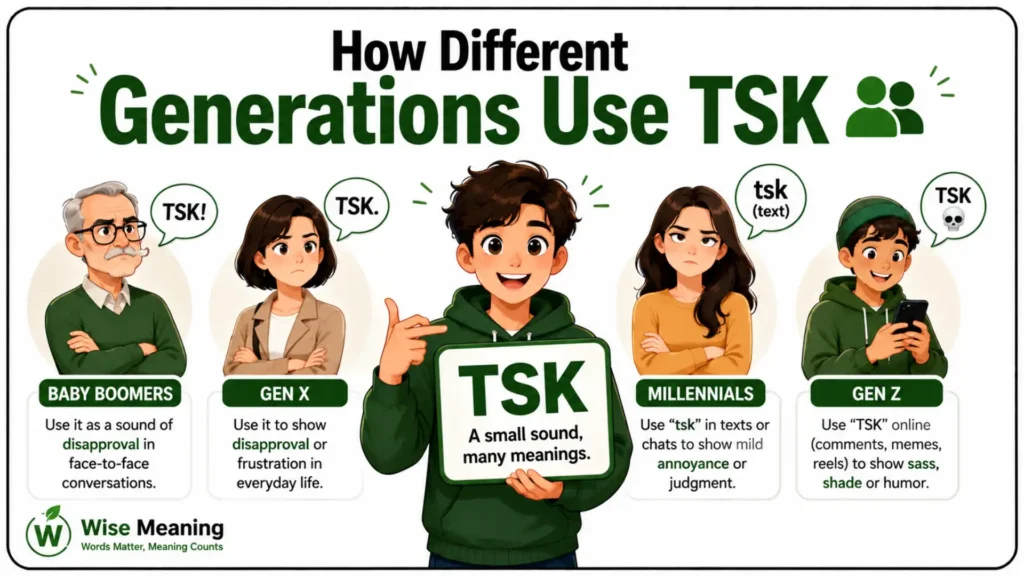
The way people use TSK often depends on their age and communication style. Older generations may recognize it as the real tongue-click sound used in everyday speech, while younger users are more likely to type TSK during text conversations or on social media.
- 👴 Older Adults: Often use the actual sound in face-to-face conversations.
- 👨 Millennials: Use TSK in chats, texts, and online discussions.
- 👩🎓 Gen Z: May combine TSK with emojis, GIFs, or other internet slang for a more playful tone.
Although styles change, the core TSK meaning remains the same—expressing mild disapproval, annoyance, or disappointment.
You Might Also Like That: Long Term or Long-Term
Similar Internet Slang 🌐
If you understand TSK, learning a few related internet slang terms can make your digital communication even easier. These expressions appear regularly in text messages, social media, and online chats.
| 💬 Slang | 📖 Meaning |
| SMH | Shaking my head in disappointment |
| TBH | To be honest |
| NGL | Not gonna lie |
| IMO | In my opinion |
| FR | For real |
| IKR | I know, right? |
| ICYMI | In case you missed it |
Each expression has a different purpose, but they all help people communicate emotions quickly. Knowing these terms along with TSK meaning in texting makes it easier to understand modern chat language and social media slang.
Frequently Asked Questions ❓
What does TSK mean in text?
TSK is an expression that represents a tongue-click sound used to show disapproval, annoyance, disappointment, or mild frustration. It is commonly used in text messages, chats, and social media.
What does TSK mean in text?
TSK is an expression used in texting and online chats to show disapproval, annoyance, disappointment, or mild impatience. Its meaning depends on the context and tone.
What is TSK in Gen Z slang?
In Gen Z slang, “tsk” is generally used as a reaction rather than a specific slang word. It can express disapproval, disbelief, annoyance, or playful teasing, depending on the conversation.
What is the word for “tsk”?
“Tsk” represents a clicking sound made with the tongue, often used to express disapproval or annoyance. It is commonly described as an interjection or a sound of disapproval.
Why do people say “tsk-tsk”?
People say “tsk-tsk” to show disapproval, disappointment, or mild criticism. It can also be used playfully when reacting to someone’s behavior.
What does TSK mean in chat?
In chat, TSK usually communicates a reaction such as “that’s not good,” “come on,” or “I disapprove.” The exact meaning depends on the message and relationship between the people chatting.
What does TSK mean on WhatsApp?
On WhatsApp, “tsk” generally has the same meaning as in other chats: it expresses annoyance, disapproval, disappointment, or teasing. It is not normally an abbreviation for a specific phrase.
What does TSK mean on Snapchat?
On Snapchat, “tsk” is typically a reaction showing disapproval, annoyance, disappointment, or playful judgment. Context determines whether it sounds serious or humorous.
What does TSK mean on Instagram?
On Instagram, “tsk” can be used in comments, DMs, or captions to express disapproval, annoyance, or playful teasing.
What does TSK mean in Urdu?
The TSK meaning in Urdu can be expressed as “اف”, “ہونہہ”, or a tongue-clicking sound showing ناپسندیدگی، ناراضی، یا افسوس. The best translation depends on the context.
What does TSK mean in Tagalog chat?
In Tagalog chat, “tsk” is commonly used as a sound of disapproval, irritation, disappointment, or frustration, similar to a tongue-clicking reaction.
Is it “tut” or “tsk”?
Both “tut” and “tsk” can represent a sound of disapproval. Tsk specifically imitates the tongue-clicking sound, while tut is another spelling used for a similar expression.
Is TSK rude?
Not usually. TSK is generally playful or lighthearted when used with friends and family. However, it may seem rude if used with someone who does not understand your tone.
Is TSK an acronym?
No. Although some people think it is a texting abbreviation, TSK is actually an interjection that imitates a real sound rather than standing for a phrase.
What does TSK mean on Snapchat and TikTok?
On Snapchat, TikTok, Instagram, and other platforms, TSK has the same meaning. It expresses mild criticism, disappointment, or playful disapproval in comments, captions, and direct messages.
How do you pronounce TSK?
You pronounce TSK as a short clicking sound made by placing your tongue against the roof of your mouth. It is often written as “tsk tsk” to imitate the repeated sound.
Can TSK be used in formal writing?
No. TSK is best suited for informal communication. In formal writing, business emails, or academic work, it is better to use clear words instead of texting slang.
Final Thoughts 🎯
Now you know what does TSK mean, how to use TSK, and why it appears so often in text messages, online messaging, and social media. Although TSK meaning in text is simple, its tone depends on the conversation and your relationship with the other person. Most of the time, it expresses mild disapproval, annoyance, or disappointment in a friendly and natural way.
Whether you see TSK on WhatsApp, Snapchat, TikTok, Instagram, or in everyday chats, understanding the context will help you interpret it correctly. By using TSK appropriately and avoiding common mistakes, you can make your digital communication feel more natural, expressive, and easy to understand.