
Have you ever tried to understand how someone feels during a difficult moment? That ability is called empathy. The empathy meaning goes beyond simply feeling sorry for someone. It means understanding another person’s feelings, emotions, or point of view and trying to see the world through their eyes. The definition of empathy focuses on recognizing what others experience, even when their feelings differ from your own. Whether you support a friend, listen to a family member, or help a coworker, empathy can make your response more thoughtful and caring.
Understanding what empathy means can also help you build stronger relationships and communicate more effectively. People often confuse empathy with sympathy, but these words have slightly different meanings. Learning the difference, exploring real-life examples of empathy, and discovering how to show empathy can help you understand others more clearly. In this guide, you’ll learn the meaning of empathy in simple words, its different types, why it matters, and how you can use it in everyday life.
Quick Answer: What Does Empathy Mean? 💗
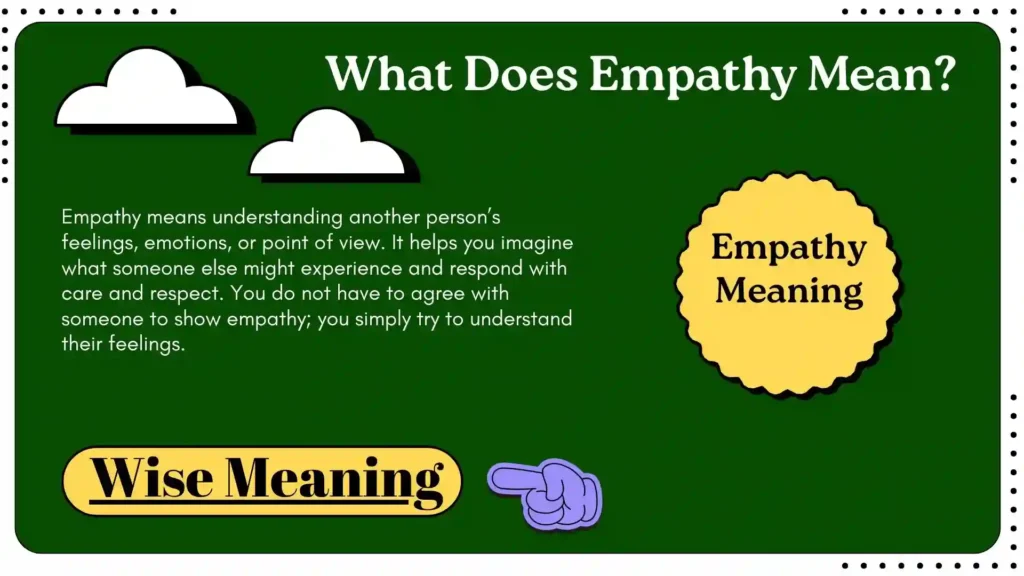
Empathy means understanding another person’s feelings, emotions, or point of view. It helps you imagine what someone else might experience and respond with care and respect. You do not have to agree with someone to show empathy; you simply try to understand their feelings.
For example, when a friend feels sad after failing an exam, you listen to their concerns instead of judging them. You recognize their disappointment and offer support. This is a simple example of empathy in everyday life. 🤝
TL;DR: Key Points About Empathy 📝
- 💗 Empathy meaning: Understanding another person’s feelings and experiences.
- 📖 Empathy definition: The ability to recognize and understand how someone else feels.
- 🤝 Empathy vs. sympathy: Empathy involves understanding another person’s feelings, while sympathy often involves feeling concern for their situation.
- 🧠 Types of empathy: Cognitive, emotional, and compassionate empathy.
- 💬 Examples of empathy: Listening carefully, respecting feelings, and offering support.
- 🌱 Why empathy matters: It can improve communication, strengthen relationships, and reduce misunderstandings.
- ❤️ How to show empathy: Listen without judging, ask thoughtful questions, and respect other people’s experiences.
You Might Also Like That: Fein Meaning
What Is the Definition of Empathy? 📖
The definition of empathy is the ability to understand another person’s feelings, emotions, or point of view. It helps you recognize what someone may be experiencing, even when you have never faced the same situation. Empathy does not mean you must feel exactly what another person feels. Instead, you make an effort to understand their experience.
In simple English, empathy means putting yourself in someone else’s shoes. 👟 For example, if your coworker feels stressed about a deadline, you try to understand their pressure rather than dismissing their concerns. Empathy can help you respond with patience, kindness, and respect.
Examples of Empathy in Everyday Life 💗
People show empathy in many everyday situations. You might comfort a friend, listen to a family member, or help a classmate who feels left out. These actions show that you care about another person’s experience and want to understand their feelings.
Here are some common examples of empathy:
- 🤗 With friends: Listening when a friend feels upset about a breakup.
- 👨👩👧 With family: Understanding why a family member feels worried about an important decision.
- 🎓 At school: Supporting a classmate who struggles with an assignment.
- 💼 At work: Recognizing a coworker’s stress and offering reasonable help.
These examples show how empathy can make everyday interactions more caring.
Empathy vs. Sympathy vs. Compassion 🤝
People often use empathy, sympathy, and compassion as if they mean the same thing. However, each word highlights a different response to another person’s experience. Understanding these differences helps you choose the right word and respond more thoughtfully.
| Term | Simple meaning | Example |
| Empathy 💗 | Understanding another person’s feelings | “I understand why you feel disappointed.” |
| Sympathy 💐 | Feeling concern for someone’s difficulty | “I’m sorry you’re going through this.” |
| Compassion ❤️ | Caring about someone’s suffering and wanting to help | “Can I help you work through this?” |
These meanings can overlap. Empathy focuses on understanding feelings, sympathy often expresses concern, and compassion adds a desire to ease suffering.
What Are the Different Types of Empathy? 🧠
People can understand and respond to emotions in different ways. Many explanations describe three common types of empathy: cognitive empathy, emotional empathy, and compassionate empathy. Each type helps people connect with others, but each works a little differently.
1. Cognitive Empathy 🧠
Cognitive empathy means understanding another person’s thoughts, feelings, or point of view. For example, you may understand why your friend feels nervous about speaking in public, even if you enjoy giving speeches yourself.
2. Emotional Empathy 💗
Emotional empathy, also called affective empathy, means sharing or responding emotionally to another person’s feelings. You might feel sad when someone you care about cries.
3. Compassionate Empathy 🤝
Compassionate empathy combines understanding with a desire to help. For example, you listen to a struggling friend and offer practical support when they need it.
Why Is Empathy Important? 🌟
Empathy is important because it helps people understand one another and build stronger relationships. When you try to see a situation from another person’s perspective, you may find it easier to communicate clearly and avoid quick judgments. Empathy can also help people handle disagreements with greater patience.
Empathy offers several benefits in everyday life:
- 💬 Better communication: You listen carefully and respond thoughtfully.
- ❤️ Stronger relationships: People may feel heard, respected, and supported.
- 🤝 Fewer misunderstandings: You consider different points of view before reacting.
- 🌱 More cooperation: You become more aware of other people’s needs.
Although empathy cannot solve every problem, it can help people treat one another with greater understanding.
How Can You Show Empathy to Others? 💬
You can develop empathy skills through everyday actions. You do not need special training to start understanding people better. Begin by listening carefully, paying attention to how others feel, and avoiding quick judgments. You can also ask gentle questions when you do not understand someone’s experience.
Try these simple ways to show empathy:
- 👂 Listen actively: Give the person your attention without interrupting.
- 💗 Acknowledge feelings: Say, “That sounds really difficult.”
- ❓ Ask thoughtful questions: Ask, “Would you like to tell me more?”
- 🤝 Offer support: Ask what would help instead of assuming.
- 🌍 Respect differences: Remember that people may react differently to similar situations.
You can show empathy even when you have never experienced the same problem.
Common Misconceptions About Empathy 💡
Some people believe that empathy means agreeing with everyone or feeling every emotion another person experiences. However, empathy does not require agreement. You can understand why someone feels angry without supporting their actions. Likewise, you can care about another person without taking responsibility for solving every problem they face.
Another misconception is that empathy always comes naturally. In reality, people can practise listening, ask better questions, and learn to consider different points of view. 🌱 Empathy also differs from simply catching another person’s mood. Understanding someone’s feelings requires attention and perspective, not just sharing their emotional state.
Empathy in a Sentence ✍️
The word empathy describes the ability to understand another person’s feelings or experiences. You can use it when discussing relationships, communication, education, or emotional support. Reading example sentences can help you understand how the word works in everyday English.
Here are some simple examples:
- 💗 “Her empathy helped her comfort her upset friend.”
- 🤝 “Good teachers show empathy toward students who struggle.”
- 💬 “He listened with empathy instead of judging her.”
- ❤️ “Empathy helps us understand different points of view.”
- 🌱 “She showed empathy when her coworker faced a difficult day.”
These sentences show how empathy can describe both a personal quality and an action.
Frequently Asked Questions (FAQs) ❓
1. What does empathy mean in simple words?
Empathy means trying to understand how another person feels. It involves listening, considering their point of view, and responding with care. 💗
2. What is an example of empathy?
Listening to a friend who feels disappointed and acknowledging their feelings is an example of empathy. You try to understand their experience instead of judging them. 🤝
3. Can empathy be learned?
Yes, people can develop empathy by listening carefully, asking thoughtful questions, and considering different points of view. Regular practice can improve these skills. 🌱
4. What is the opposite of empathy?
There is no single perfect opposite in every situation. Lack of empathy, indifference, and an inability or unwillingness to consider another person’s feelings can express the opposite idea.
5. What is an empathetic person?
An empathetic person tries to understand other people’s feelings and perspectives. They listen carefully, respect emotions, and respond thoughtfully without assuming they know exactly how someone feels. ❤️
6. What is the difference between empathy and compassion?
Empathy focuses on understanding or sharing another person’s feelings. Compassion involves concern for their suffering and a desire to help. The two often work together. 🤗
Final Thoughts 💗
Understanding the empathy meaning can help you communicate more thoughtfully and build better relationships. Empathy allows you to recognize another person’s feelings, consider their point of view, and respond with care. Whether you practise cognitive empathy, emotional empathy, or compassionate empathy, the goal is to understand people rather than judge them too quickly.
You can develop empathy through small actions, such as listening without interrupting, respecting differences, and offering support when someone needs it. 🌱 You do not need to have the same experiences as another person to understand that their feelings matter. A little more empathy in everyday life can help create stronger connections, better communication, and a kinder world. 🌍❤️